Floods Cut Off Care for 20,000 Homes in Somalia
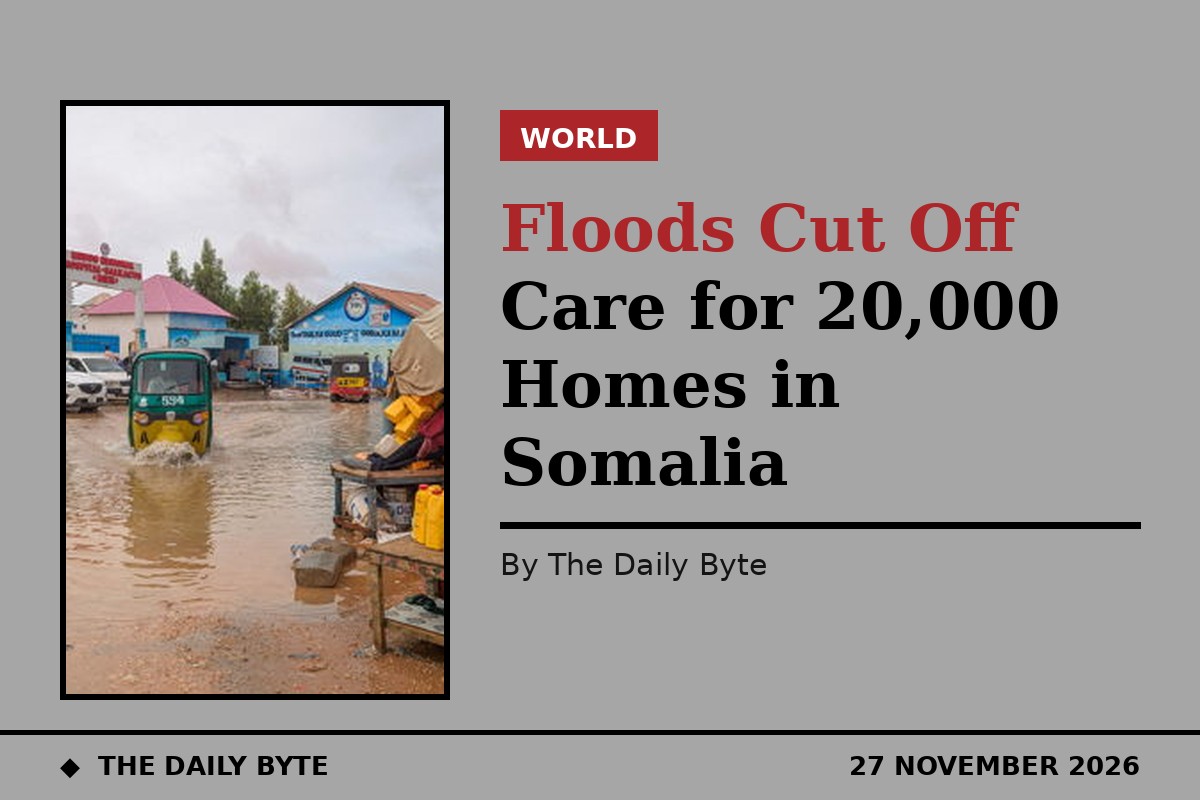
Flash floods in Somalia's Galmudug state have cut more than 20,000 households off from healthcare, leaving families to wade through floodwater with sick children as cases of waterborne disease climb sharply, Doctors Without Borders has warned.
The flooding followed the Deyr rains that began in October, in a year of El Niño conditions. In a single week in October, more than 20,000 households were affected across Galmudug, including in Galkayo district, according to the authorities.
Farhia Hassan Aden's 18-month-old son had been vomiting and suffering diarrhoea for 15 days. There is no clinic in her village in Mudug region, and since the October rains the motorised rickshaws that carry families to hospital have not been able to get through the water. The fare, four to five US dollars, was more than the family could pay. So Farhia walked through the floodwater with her son to Mudug Regional Hospital in Galkayo, which Médecins Sans Frontières (MSF) supports. He was admitted.
"It forced us to walk in the water with our sick children," she said.
Bisharo Badal Yusuf could not get her 14-month-old son to hospital for five days. He was vomiting, had diarrhoea and would not eat, but floodwater had cut off the roads. "We are cut off, which has forced families to keep sick children at home," she said. "I eventually brought him to the hospital in critical condition." Two days into his treatment, his fever had come down.
Standing floodwater is also making people ill. Toilets have overflowed, floodwater has mixed with sewage, and stagnant water collecting between houses fills with flies and mosquitoes. "The children are constantly scratching, and insects are swarming around them," Farhia said.
At MSF-supported facilities in Mudug, teams recorded 748 cases of acute watery diarrhoea in October 2026, more than double the 356 recorded in October 2025. Some patients have travelled more than 200 kilometres for care. In early November, admissions to the inpatient malnutrition ward at Mudug Regional Hospital were almost double last year's, and nearly two in three children admitted had acute watery diarrhoea. The ward has been expanded from 28 to 70 beds.
Two cholera cases have now been confirmed at Mudug Regional Hospital. With the health authorities, MSF teams are strengthening cholera case management and sending mobile clinics to the communities hit hardest. The United Nations humanitarian office had already reported five cholera cases, including one death, in the wider Gaalkacyo area earlier in November, alongside more than 5,800 cases of acute watery diarrhoea across Mudug this year.
MSF works alongside the Ministry of Health at Mudug Regional Hospital and Galkayo TB Hospital, supporting emergency, maternity, neonatal and paediatric care, treatment for children with severe acute malnutrition, tuberculosis care and community health activities, all free of charge. Since the rains began, its teams have added staff, strengthened disease surveillance, trained teams on cholera, dengue and measles, and put supplies in place.
Shrinking humanitarian funding is compounding the crisis. "Funding has been shrinking across the whole of Somalia, and access to healthcare with it," said Dr Janvier Bahati, MSF's project medical referent in Mudug. "In the long run, El Niño will make the current situation worse, reducing people's capacity to cope, to the point where they are vulnerable to disease and malnutrition."
MSF is calling on donors to make flexible funding available for the wider response to flash floods in areas such as Mudug, not only to riverine floods, and on health authorities and aid agencies to strengthen a coordinated response to urgent health, water and sanitation needs. The mothers MSF spoke to asked for simpler things: spraying for mosquitoes, pumping out the floodwater, better sanitation and channels for the water to drain away.


