France civil servants join 17 November strike over pay
France’s largest trade union, the CFDT, has joined a nationwide strike planned for Tuesday, 17 November, after pay talks with Prime Minister Sébastien Lecornu failed to produce the improvements public sector workers were seeking.
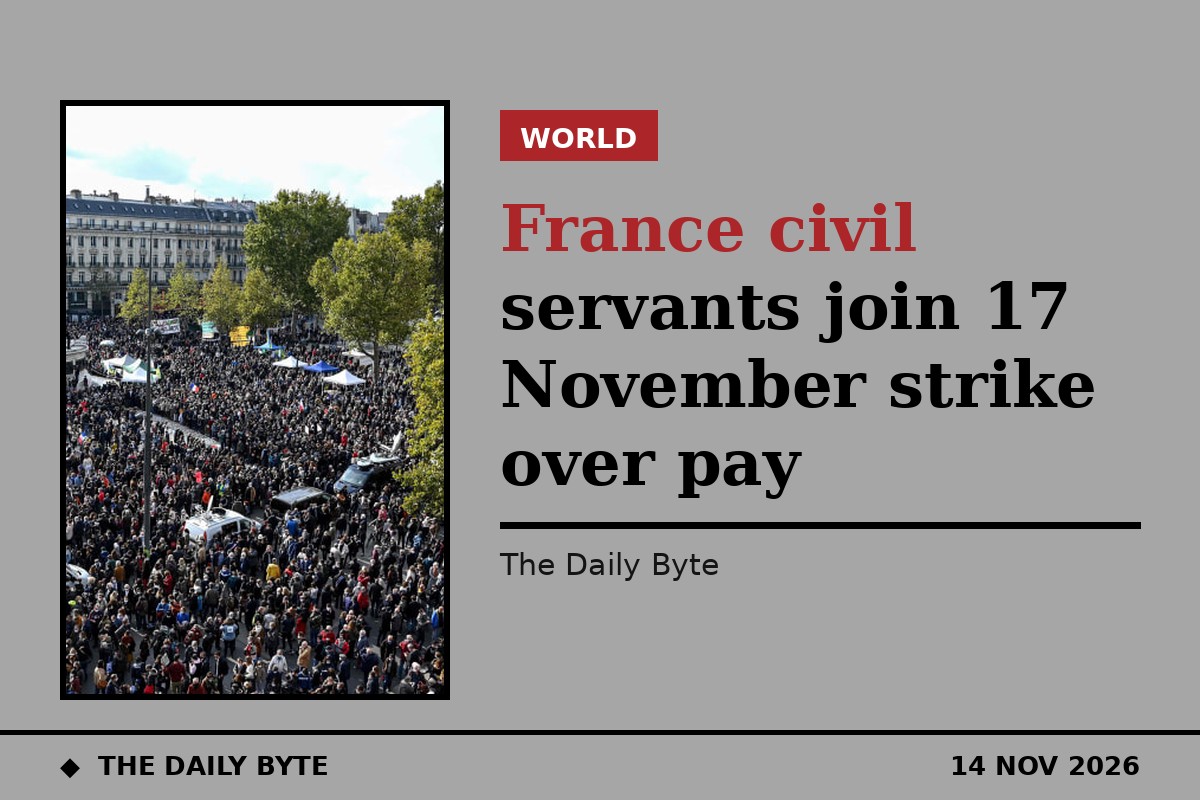
The decision, announced on Friday, 13 November, strengthens a strike call already backed by six public sector unions and comes as the government faces continuing protests over the cost of living, with demonstrators marching in Paris and other cities on Saturday, 14 November.
Matignon meeting ends in disappointment
Representatives of France’s 5.8 million public sector employees were received at Matignon, the prime minister’s office, on Friday morning, in a meeting of its kind that had not taken place for almost 20 years. The unions came with three demands: higher pay scales, an end to the freeze on the civil service index point, and the abolition of the waiting day before sick pay begins.
Lecornu offered a month of talks on five areas, including a pay rise for the lowest-paid staff, and said he would meet the unions again on 11 December, after professional elections in the civil service. He also announced a 1.6 per cent rise in the minimum pay of civil servants from 1 December, with extra index points for staff at the lowest grades.
But the unions judged the offer insufficient. CFDT leader Marylise Léon described the prime minister’s announcements as “insufficient or even nonexistent”, and the CFDT said the proposals “do not represent any real progress”.
Hundreds of thousands still below the minimum wage
At the heart of the dispute is the gap between public sector pay and the national minimum wage. The government is raising the minimum wage, known as the SMIC, to €1,502 net a month from 1 December, an increase of €24. Unions point out that about €18 of that rise would have happened anyway under the automatic annual adjustment due on 1 January, leaving a real increase of only a few euros.
Before the government’s measures, the basic salaries of about 1.2 million public sector workers would have fallen below the new minimum wage level from 1 December. Even after the announced adjustments, about 660,000 employees will still need a differential allowance to bring their pay up to the minimum wage, according to AFP. No civil servant may legally be paid less than the minimum wage, so the allowance tops up their pay.
The unions are demanding an increase of about €150 net a month, with wages indexed to inflation, which reached 3.4 per cent in October. They also want the value of the index point used to calculate civil service pay to rise. It has been frozen for a fourth year running, and the government has said a 1 per cent rise would cost €2.4 billion.
Strike widens as discontent grows
The CFDT had initially preferred to keep negotiating rather than strike, but its decision to join the 17 November action is a setback for Lecornu, who had won some goodwill from the union after agreeing to raise the minimum wage on Monday, 9 November. Force Ouvrière, another major union, has not joined the strike call.
The six-union public sector coalition — the CGT, UNSA, FSU, Solidaires, CFE-CGC and FAFP — had already called the strike, and the CGT has extended its call to the private sector, students and high school organisations. Railway unions have also called on staff to strike on 17 November.
Lecornu has said he wants to “seal progress by mid-December”, but the unions see the month-long delay as a stalling tactic. With the government also facing street protests, a contested police bill and a difficult budget debate, the 17 November strike is shaping up as the next major test of whether the prime minister can ease the discontent or whether the dispute will deepen as winter approaches.
Sources: Le Monde; The Fact Wire (reporting AFP).


