France Deploys 70,000 Officers for Cost-of-Living Protests
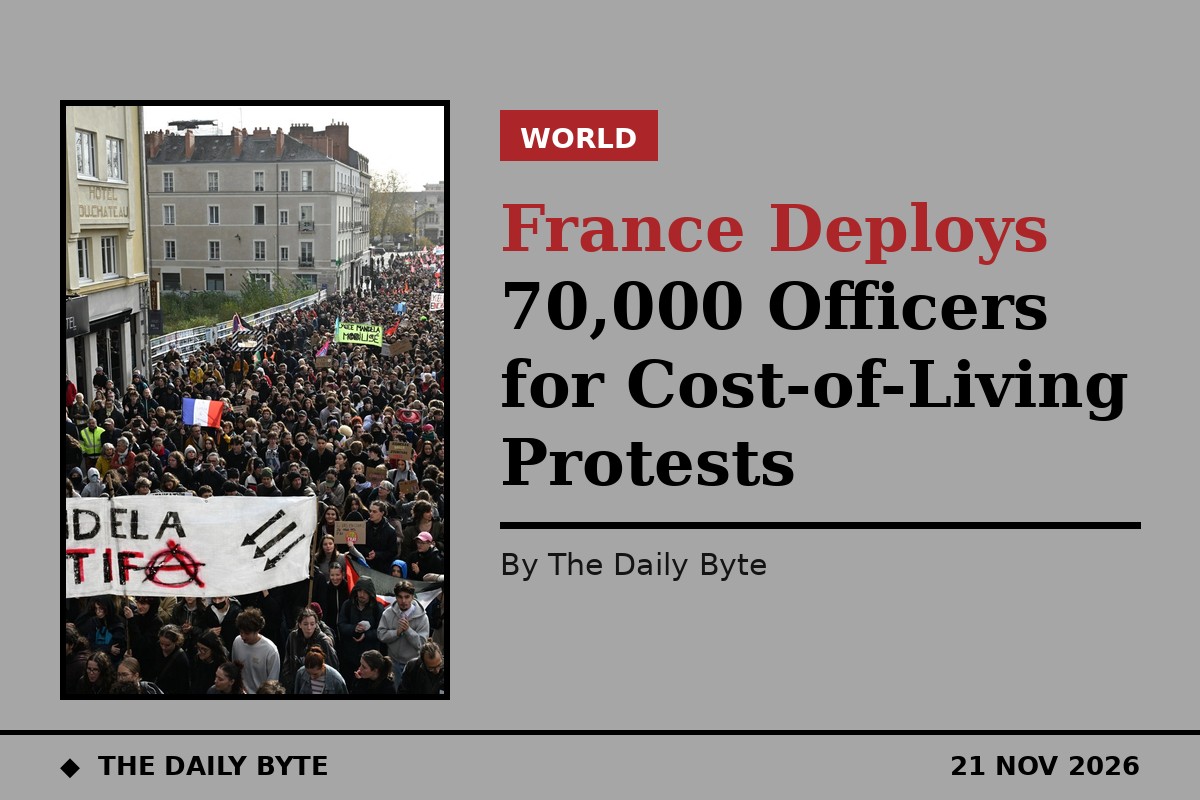
France has deployed about 70,000 police officers and gendarmes across the country as cost-of-living protests reach their sixth Saturday, with unions, students, housing campaigners and Yellow Vests marching together in Paris.
The Paris march sets off at 2pm from Place de la République and follows Boulevard Voltaire to Place de la Nation, in the east of the city. It is the only route the Paris police prefecture approved for Saturday. A separate Yellow Vests gathering planned for the Champs-Élysées was not authorised, and a march route towards Place de la Concorde was refused. Taking part in a banned gathering outside the approved route carries a fixed fine of 135 euros.
Interior Minister Laurent Nuñez told BFMTV that around 70,000 police and gendarmes would be deployed across France on Saturday, the same number as the previous Saturday. Specialist units including RAID, BRI and GIGN are on standby, with the authorities warning of possible violence and pillaging after intelligence reports.
On the union side, the Île-de-France inter-union group brings together the CGT, CFDT, FO, FSU and Solidaires. Youth organisations including Fage, Unef, the Union étudiante and the Union syndicale lycéenne are also taking part, alongside the Right to Housing association, known as DAL. The Yellow Vests bring up the rear of the united front, after marching alone or apart from the unions on previous Saturdays.
A sixth Saturday, and an eighth anniversary
Saturday marks the sixth weekend of the protest wave that began on 17 October, and it falls during the Yellow Vests’ eighth anniversary week. The movement began with roundabout blockades on 17 November 2018, and its national coordination called on supporters to mark the anniversary from Tuesday 17 November to Sunday 22 November, including a return to roundabouts and toll plazas over the weekend.
Turnout has fallen from the early weeks, but the crowds remain large. On Saturday 14 November, the Interior Ministry counted 106,000 demonstrators across France, including 24,000 in Paris, compared with 146,000, including 46,000 in the capital, a week earlier. Organisers put the 14 November turnout higher, at about 200,000 nationwide, including 100,000 in Paris. Police sources expect between 15,000 and 30,000 people in Paris on Saturday.
The protesters’ demands centre on the cost of living: higher wages and pensions, lower energy and food prices, the right to housing, public services and tax justice. France’s 5.8 million public sector workers have staged three united strike days since September, after talks with Prime Minister Sébastien Lecornu failed to satisfy union demands for across-the-board pay rises.
Protests across seven countries
This weekend’s mobilisation goes beyond France. Trade unions, housing groups and social movements in seven countries — France, Spain, Italy, Greece, Portugal, Belgium and the United Kingdom — have called joint demonstrations under the slogan “People before profits”. Organisers say 539 demonstrations are planned across the continent this weekend.
Italy saw the largest of the linked actions on Friday, when the CGIL union staged a nationwide general strike, with the union claiming more than one million people took part in demonstrations in more than 100 cities against Prime Minister Giorgia Meloni’s 2027 budget. A separate rail strike in Italy runs from Friday evening until Saturday evening.
Whether the united front, the anniversary effect and the Europe-wide call give the French movement fresh momentum will be clear by Saturday evening. For now, the authorities’ message is one of containment: a single approved route in Paris, a heavy police presence across the country, and fines for anyone who marches outside it.


