France extends firework mortar ban to 12 December
France has extended its temporary ban on the sale and use of firework mortars until 12 December, the government announced on Saturday, keeping the restriction in place through the continuing wave of school and university blockades.
Decree No. 2026-1098, dated 27 November, renews the measure that has been in force since 14 November. It bans the sale and use of category F2 and F3 pyrotechnic devices - rockets, roman candles, fuse firecrackers and high-detonation firecrackers - across metropolitan France until 12 December inclusive.
The devices were previously legal to buy from the age of 18 in authorised shops, under strict limits on public use. The first temporary ban ran from 14 to 27 November, after mortars were fired at police officers and used near schools during nationwide street protests and school blockades.
The Interior Ministry said the extension was needed to prevent serious risks to public order during blockades outside schools and universities and during demonstrations. Between 14 and 27 November, ministry services carried out 24,861 checks and seized 7,329 category F2 or F3 devices. The government says about 6,000 mortar firings have been aimed at security forces since 17 October.
Penalties and exemptions
Authorised pyrotechnicians and public bodies keep an exemption from the ban and may continue to use the devices under the required approvals. The government has also convened sellers, specialists and online platforms to block illicit sales and enforce compliance.
Breaking the ban carries fines under the penal code: 150 euros for breaching the ban on sales, and 750 euros for breaching the ban on use. Deliberate endangerment of others can also be charged where a device is used against people.
The ban is part of a wider official response to the student-led protest movement. Pupils and students have blockaded secondary schools and universities across France for weeks, and in Paris the police prefecture also issued a five-day ban on unauthorised gatherings or marches within 100 metres of ten secondary schools and five university sites, running from 16 to 20 November, after persistent blockades and violence at educational institutions.
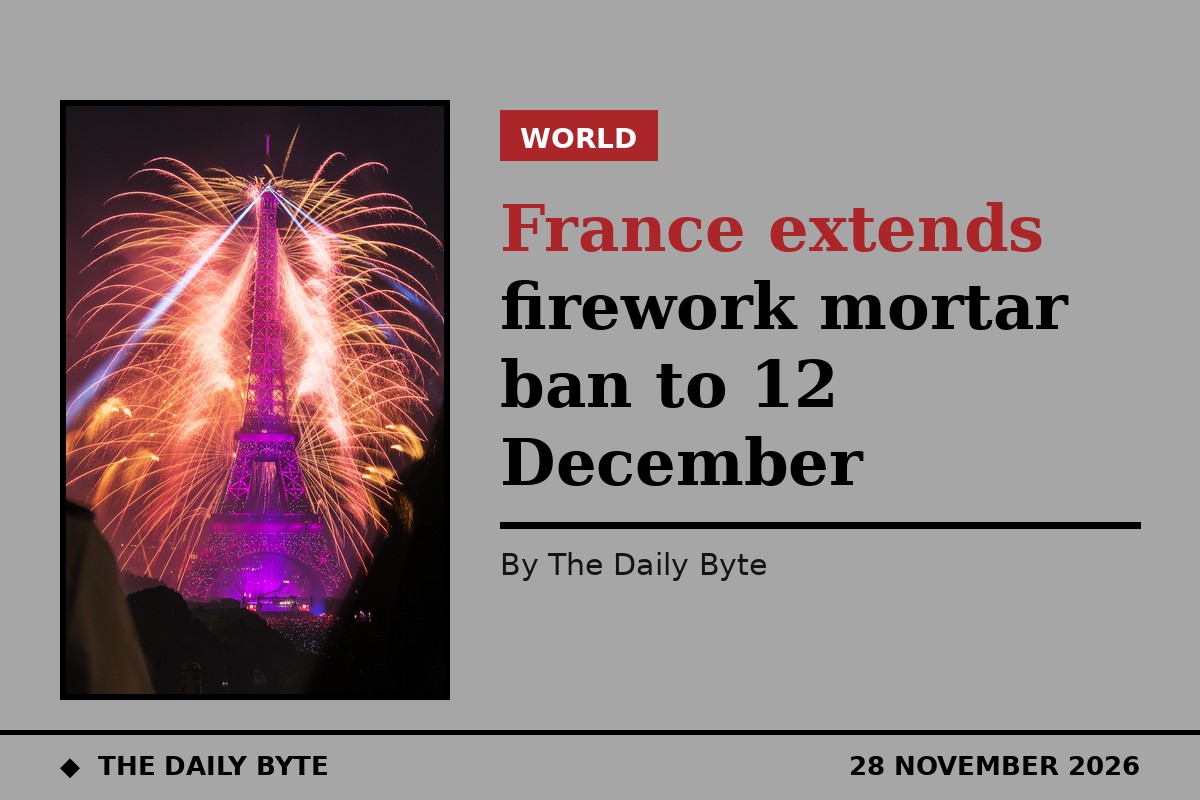
The mortars at the centre of the ban are tubes used to launch pyrotechnic shells, which burst in the air in a display of light, colour and sound. In the hands of protesters they have been turned into projectiles, fired at police lines and set off close to school gates. The government says the restriction is aimed squarely at that misuse, not at professional firework displays, which continue under the exemption for accredited operators and public authorities.
Officials say the extension is intended to cut injuries to students, teachers and staff near school blockades and to shape how police and schools manage demonstrations as checks and seizures continue. The first ban was announced on 15 November, when the Interior Ministry said on X that the measure was designed to address the risks of pyrotechnic devices being used during unrest. With the school protest movement continuing into its second month, the government has now chosen to keep the restriction in force for a further two weeks rather than let it lapse.


