France Reports First Human Shamonda Virus Case
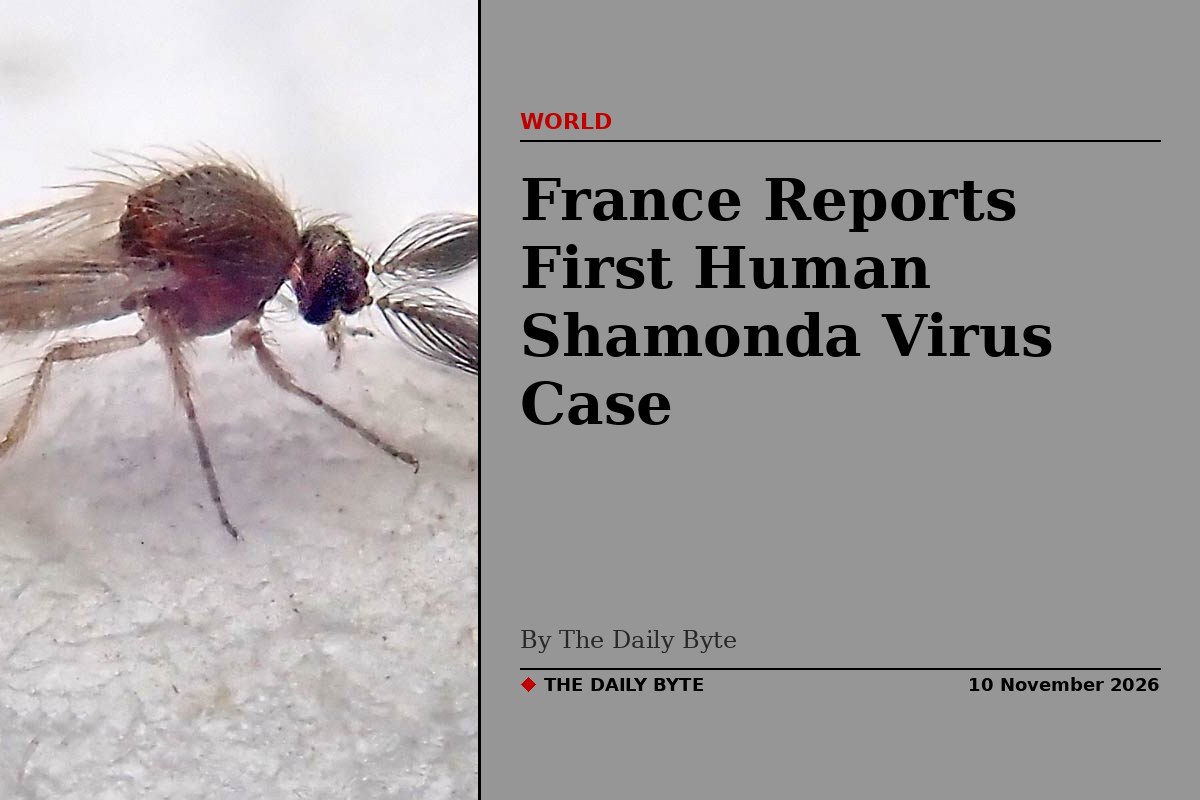
France has confirmed the first documented human infection with Shamonda virus, a midge-borne pathogen previously found only in livestock, after a patient died at a hospital in Lyon in early October.
The French agriculture and health ministries announced the case on Thursday 22 October, saying the patient was severely immunocompromised and was being treated for a serious underlying illness at the Hospices Civils de Lyon. The case first came to the attention of French authorities on 7 October, after advanced laboratory testing identified the virus in the patient's samples.
How the patient was infected
Investigators believe the patient was most likely bitten by an infected Culicoides biting midge in eastern France, where Shamonda virus had been circulating among cattle during the spring and summer of 2026. The patient lived in the Lyon area, according to local reports.
Shamonda is an orthobunyavirus, a group of viruses carried mainly by insects. It is transmitted to animals, chiefly cattle, by biting midges of the genus Culicoides. Until this case, the virus was considered non-transmissible to humans, making the Lyon patient the first documented human case anywhere in the world.
Investigators have not established whether the Shamonda infection caused or contributed to the patient's death, and that question remains under investigation. The French health ministry described the death as an exceptional event, explained by the patient's poor underlying health.
No risk to the general public, officials say
French authorities have stressed that, based on current knowledge of the virus, no health risk to the general population has been identified. There is no evidence of human-to-human transmission, and no further human infections have been reported.
The World Health Organization said it was in contact with French authorities and described the case as isolated, adding that wider spread was unlikely at this time. France also notified the European Centre for Disease Prevention and Control, and both bodies are following the investigation.
What is Shamonda virus?
Shamonda virus was first identified in cattle in Nigeria in 1965, and for more than six decades it had only been documented in animals. It was first confirmed in Europe in late July 2026, after genomic tests on sick cattle in southern Germany, Switzerland and eastern France.
By mid-October, cattle infections had been confirmed in roughly half of mainland France's departments, as the virus spread through European herds during the summer. French health and agriculture officials said surveillance of livestock and of the midges that carry the virus would continue, alongside the clinical and epidemiological investigation into the Lyon case.


