France-Germany Clash Over 'Made in Europe' Arms Rules
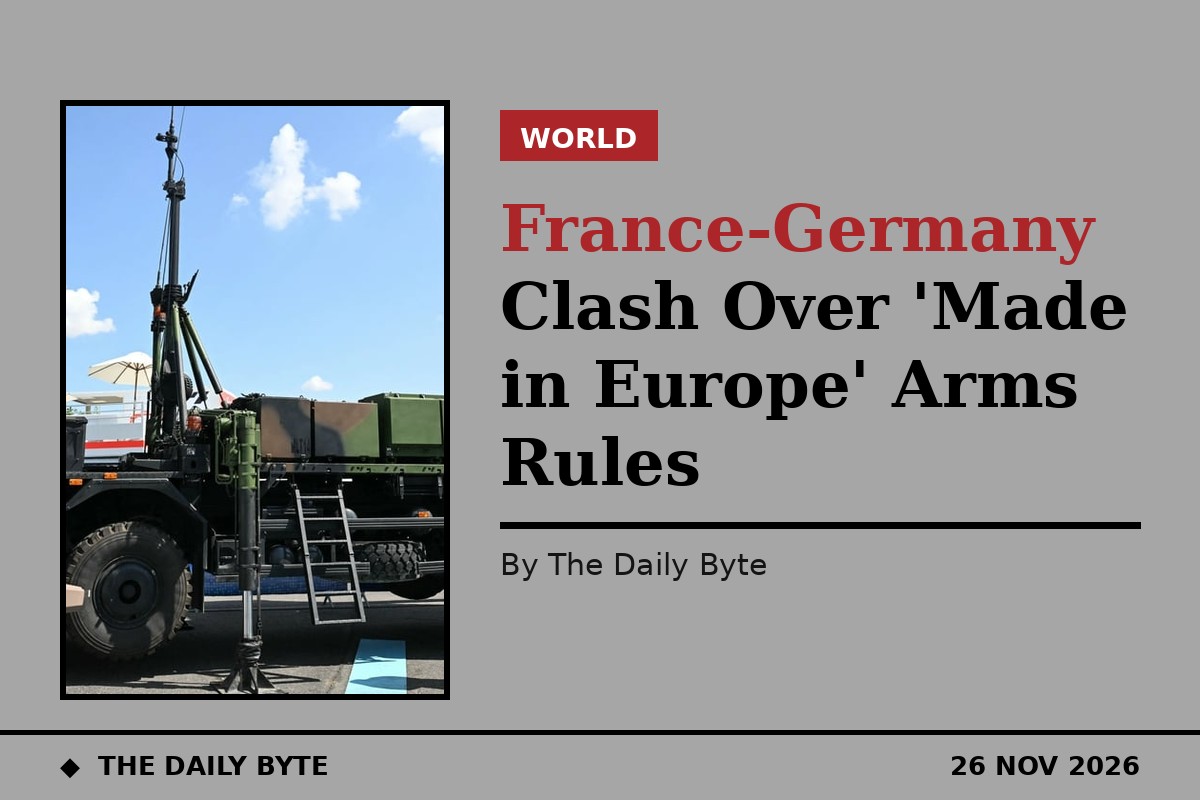
France and Germany are at odds over the European Union's next seven-year budget, with Paris demanding that billions of euros in EU defence funding be reserved for European-made weapons and Berlin leading a coalition of member states opposed to the idea.
The dispute, reported on Thursday 26 November, has emerged as one of the sharpest fault lines at the EU leaders' summit in Brussels, where the bloc's 2028-2034 long-term budget is under negotiation. According to the Financial Times, citing four diplomats involved in the negotiations, France wants the tens of billions of euros allocated through the new European Competitiveness Fund, the flagship instrument for defence, security and space, to go to equipment substantially produced in Europe.
Germany is leading opposition to the French demand, backed by a coalition of at least 12 member states including Italy, the Netherlands and Sweden. Berlin argues that procurement must remain open to trusted NATO allies such as Norway, Canada and the United Kingdom, to ensure interoperability and political flexibility, and that national governments should retain authority over defence procurement. Germany is itself a purchaser of American military equipment.
The disagreement goes beyond the current rules. Existing EU instruments such as the SAFE loan scheme and the European Defence Industry Programme already apply a threshold under which around 65 percent of a product's value must be European. France wants stricter European preference rules for the new fund, going beyond that threshold. The current budget proposal would allow Ukraine, the United Kingdom, Norway and Canada to access EU defence industrial funding, with other countries able to participate under specific conditions where they hold defence and security agreements with Brussels.
France views investment in Europe's defence industry as central to reducing dependence on American weapons and strengthening the bloc's strategic autonomy, and French arms manufacturers would be among the principal beneficiaries of restrictions favouring European suppliers. Germany's position is that shutting out allies would weaken the alliance at a time when Europe is trying to build capabilities currently provided by Washington.
The procurement dispute forms part of a wider budget battle between the EU's net contributors, which want to limit spending, and net recipients seeking to protect agricultural subsidies and regional development funds. Proposed defence and security funding for 2028-34 has fallen from 131 billion euros to 92 billion euros in the latest compromise, although the revised figure remains more than three times the allocation under the existing 2021-27 budget.
EU Defence Commissioner Andrius Kubilius warned that the reductions could jeopardise major joint European defence programmes. “Putin escalates, EU cuts. Wrong signal!” he said. Baltic governments have also opposed further reductions, arguing that the countries responsible for securing the EU's eastern borders require greater financial support, and pointing to the assistance provided to southern European countries during the Covid-19 pandemic.
German Chancellor Friedrich Merz said the overall spending proposals remained unacceptable to Berlin as he arrived at the summit on Thursday. No deal is expected at this summit: leaders aim to pave the way for a final agreement when they meet again on 17 and 18 December, before a year of elections across Europe, including in France, where far-right leader Marine Le Pen leads the polls.


