France Makes Google and Meta Pay Publishers for News
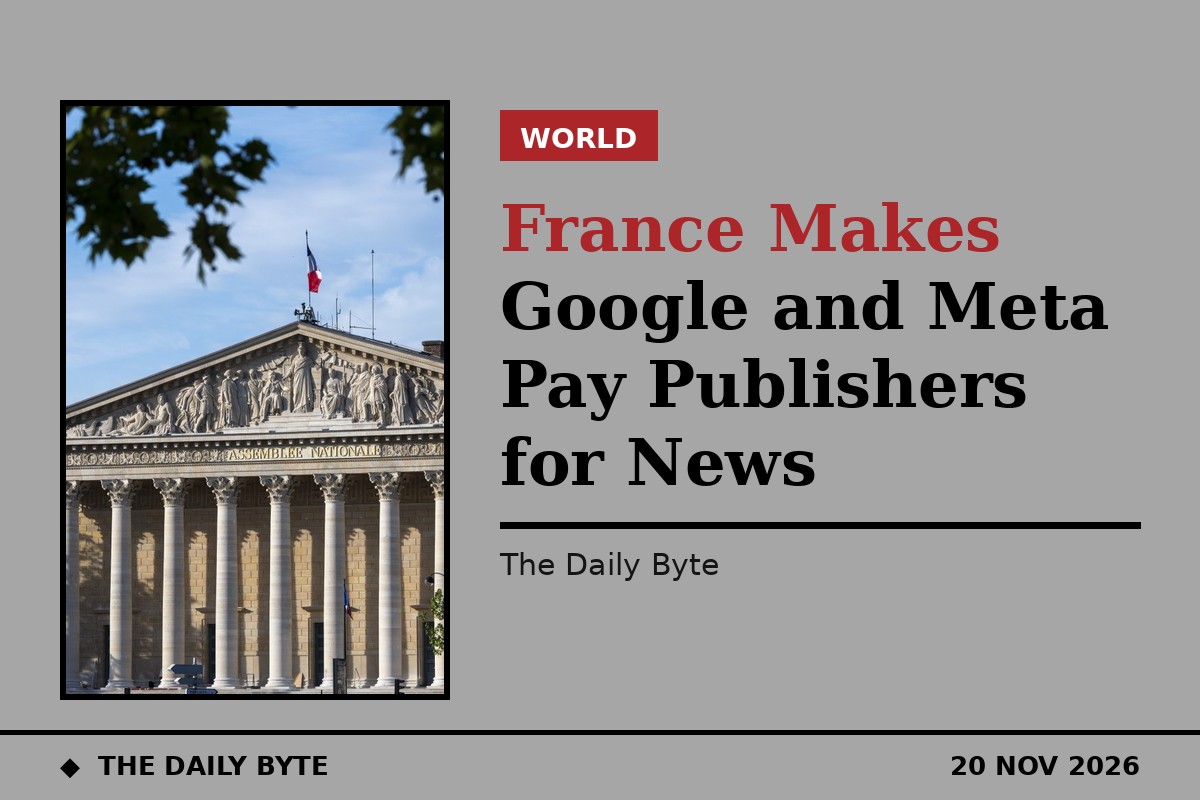
France's parliament has definitively adopted a law requiring large online platforms to pay news publishers when their journalism is shown in search results or shared on social media, in a move welcomed by French media groups.
The law, adopted after approval in the Senate, gives publishers a statutory right to a share of the revenue generated by major internet companies, including Google and Meta, when their content is displayed to users. It builds on the European Union's 2019 copyright directive, which created a so-called neighbouring right for press publishers.
Years of stalled talks
France was the first EU country to transpose the neighbouring right into national law, but publishers say the system has been undermined ever since by long, difficult negotiations and repeated legal challenges from US-based technology companies. Media groups have also struggled to obtain the data they need to judge how their content is used and what they are owed.
Reaching agreement has become harder still in recent years. Changes to Google's search algorithms have cut the traffic sent to news websites, while AI-assisted search tools such as ChatGPT and Claude have made it more difficult for publishers and platforms to agree on what content is worth.
What changes now
Marc Feuillee, who leads the Alliance for General News, which represents French news publishers, said the new framework means major platforms will no longer be able to drag out negotiations indefinitely or obscure how they use publishers' content.
The law is intended to rebalance a relationship in which cash-rich technology companies have profited from widely read journalism while many of the publishers producing it struggle financially. Other EU countries facing the same dispute over payment for news are expected to watch closely how the French framework works in practice.
Sources: Briefly (The Local France); Wansom.


