France minimum wage rises to €1,502 from December
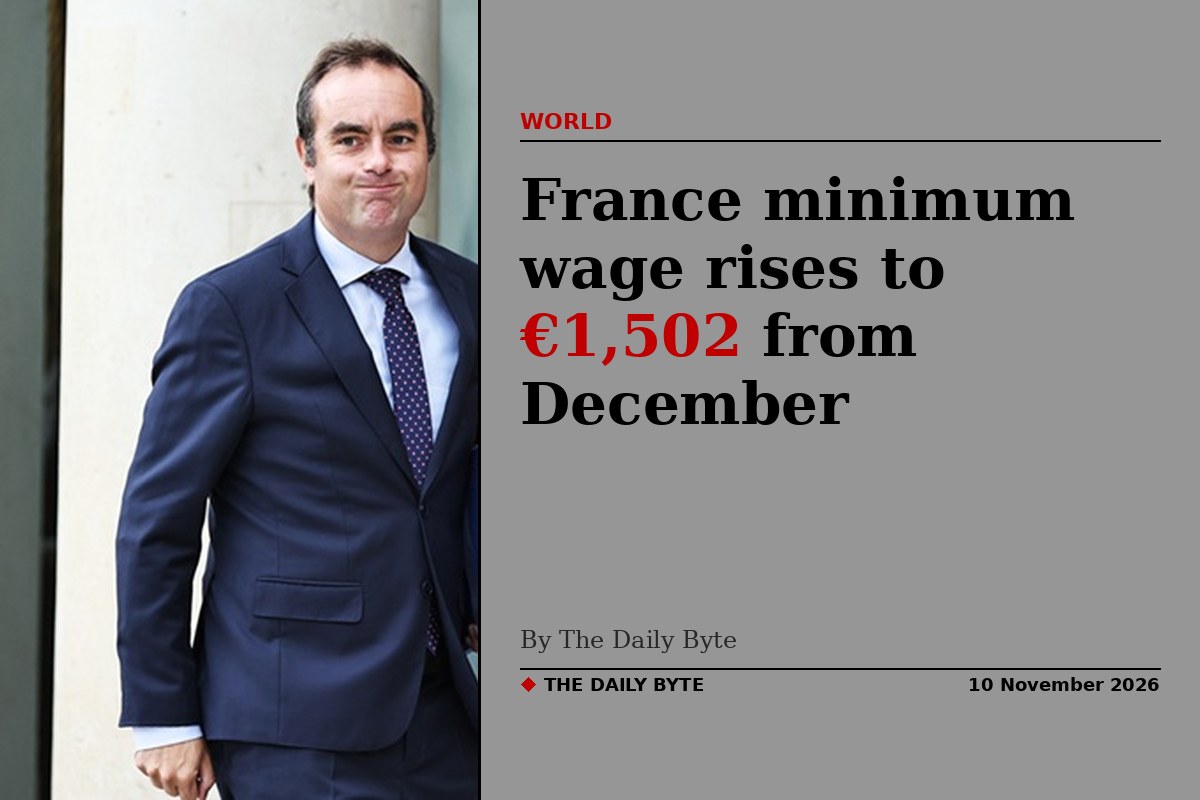
France will raise its national minimum wage by 1.6% on 1 December 2026, taking net monthly pay for a full-time worker to about €1,502, Prime Minister Sébastien Lecornu announced on Monday.
The rise, worth about €24 a month, brings forward the annual inflation adjustment that would normally have taken effect on 1 January, and adds a small discretionary increase on top. Labour Minister Jean-Pierre Farandou set out the figures at a press conference after a social conference at Matignon, where the prime minister met trade union and employer representatives to discuss wages and purchasing power.
The announcement follows weeks of protests over the cost of living across France, including a nationwide day of strikes and demonstrations on 5 November. The government is under pressure to show it is responding, five months before France's presidential election.
What the rise is worth
The current minimum wage, known as the SMIC, stands at €1,867.02 gross and €1,477.93 net a month. Under the new measure, net monthly pay will rise by €23.65 to €1,502.
The 1.6% is made up of two parts. About one percentage point is the automatic adjustment for inflation, which the government is bringing forward by a month. The remaining 0.6% is a discretionary top-up, known as a coup de pouce, the first such boost since 2012.
Mr Lecornu described the increase as the second-largest in 20 years. The SMIC has already risen twice in 2026, by 1.18% on 1 January and by 2.41% on 1 June, when inflation crossed the threshold that triggers an automatic mid-year rise.
The decree putting the new rate into law was still to be published when the announcement was made. The government also promised tax breaks for employers as part of the same package, including exemptions on overtime pay, to encourage wage growth in sectors and companies.
Unions say it is not enough
The unions were unimpressed. The CFDT, France's largest union, had called for a €100 monthly rise, while the CGT demanded 10%, worth about €150 a month. CGT chief Sophie Binet said the government had offered workers only “crumbs”.
“We did not come here to beg for charity, but to demand respect and recognition for our work,” Ms Binet said, calling on workers, pensioners and young people to take to the streets again on 17 November.
Six public-sector unions have called a nationwide day of strikes and demonstrations for 17 November, and education unions held a strike and demonstrations on Tuesday 10 November. The government is counting on sector-level negotiations to extend the rise in pay beyond the minimum wage.
Why the government acted
Protests began in French high schools in September and have since spread into a broader movement over living costs, public services and political stagnation. The 5 November strike drew 575,000 people by the Interior Ministry's count, and about 1.6 million by the CGT's estimate.
Mr Lecornu has been trying to defuse the crisis since taking office, but the government has little room for manoeuvre because of France's mounting debt. The minimum wage rise is one of the few levers it can pull quickly, and bringing the January adjustment forward by a month costs the state less than a larger discretionary rise.
Whether it calms the streets will be tested on 17 November, when the unions measure their strength in a fresh day of action. For the lowest-paid workers, the extra €24 a month arrives on 1 December, a month earlier than planned.


