France to Monitor Top YouTubers for Election Bias
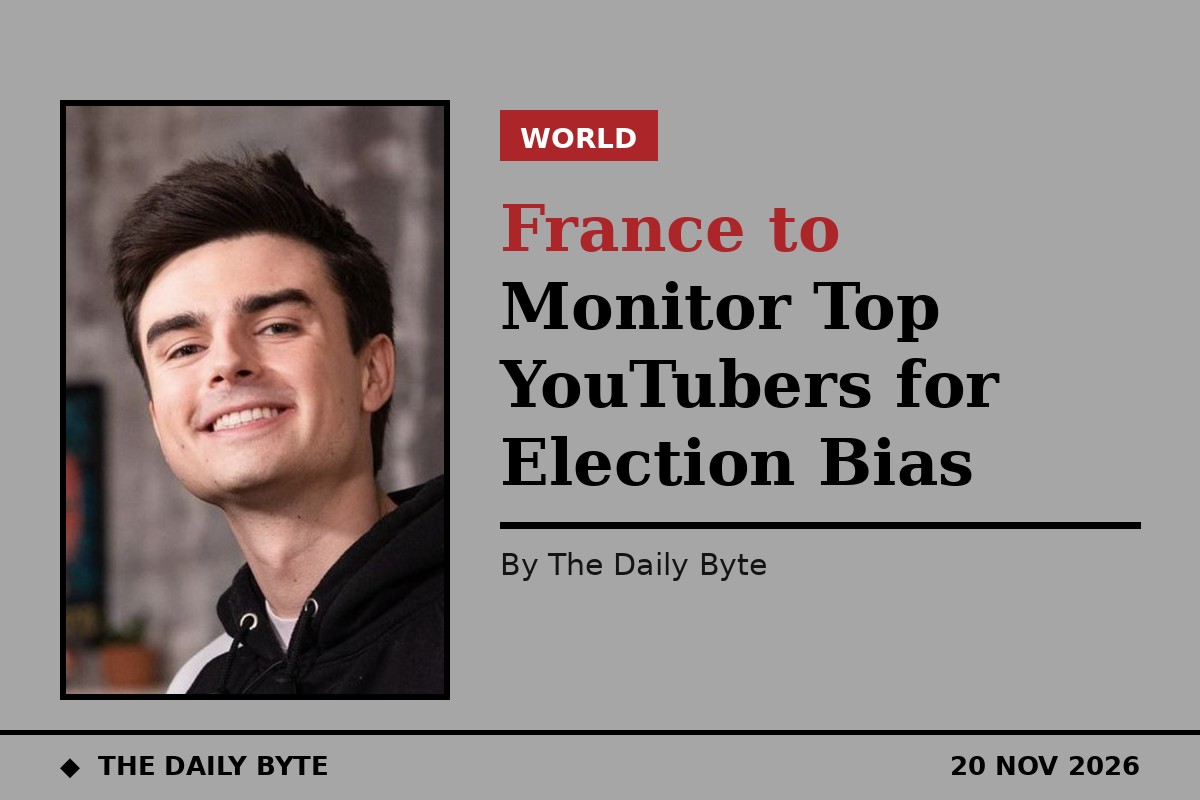
France's media regulator Arcom will monitor the country's most influential online video creators for political bias in the run-up to next year's presidential election, in a major extension of its powers. The announcement was made on Thursday 19 November 2026 at a press conference in Paris by Arcom president Martin Ajdari.
Arcom already plays a central role in French election campaigns, ensuring that news channels and radio stations give airtime to all presidential candidates or parties running for office. The new decision extends that campaign function to the online creators whose followings can exceed the audiences of established outlets.
Under the existing rules, presidential candidates have to be given airtime relative to their projected score in the first phase of campaigning, and equal treatment from 5 to 30 April. Arcom said it would monitor only the most significant French video creators, naming news YouTuber HugoDecrypte and streamer Guillaume Pley as examples. France 24 reported that audio-only podcasters would not be covered.
France heads to the polls on 18 April and 2 May next year to elect a new president. France 24 reported that far-right leader Marine Le Pen currently leads in the polls, followed by Jean-Luc Melenchon. Parliamentary elections to choose the National Assembly are expected to follow, probably in June.
Regulator defends the move
On Friday 20 November, Arcom defended the plans after critics questioned whether such requirements could realistically be enforced. Under the proposals, certain influencers and streamers with large audiences would have to give presidential candidates equal or proportionate exposure during election periods, similar to rules that already apply to television and radio broadcasters.
"We are not there to bother influencers," Ajdari said, responding to criticism of the measures a day after they were announced. He told RTL radio that the weight of influencers in democratic life is new, and Arcom said some online creators now play a sufficiently prominent role in political debate that similar principles should apply to them.
The move highlights governments' growing efforts to address the political influence of content creators, whose audiences can rival those of traditional media, particularly among younger voters. French law already requires broadcasters to reflect a range of political views, with television and radio stations tracking politicians' airtime and adjusting coverage to reflect factors such as election results and polling support.
Questions over enforcement
Exactly how the rules would be enforced remains unclear, however, and some creators have already questioned whether they can be made to comply. Reports of the announcement do not explain how monitoring will work in practice, what sanctions would apply, or when monitoring begins.
Ajdari described the rise of influential creators as a new phenomenon, telling the press conference it is here and it is massive. The decision puts France among the first countries to apply broadcast-style political balance rules directly to individual online video creators ahead of a national election.


