France Questions Official Over RN Leak Allegations
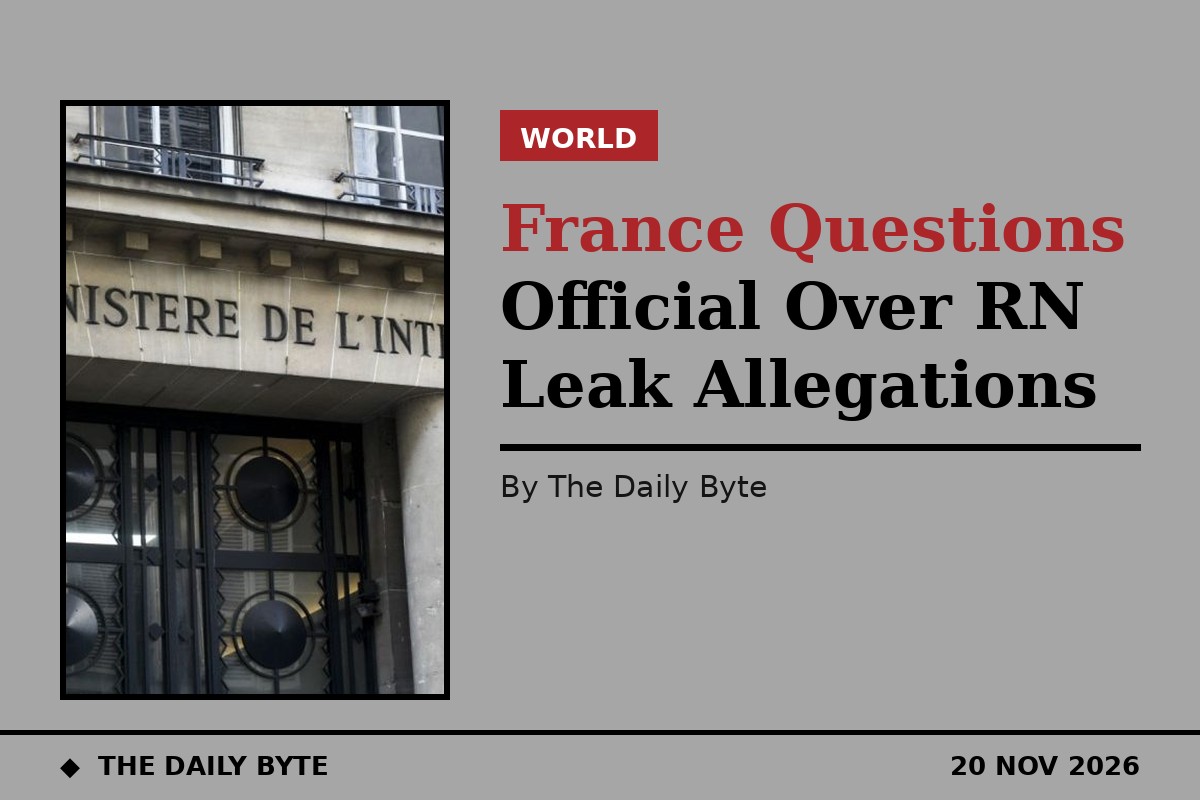
France's interior minister met on Friday with a senior official who is suspected of passing confidential details from criminal investigations into the far-right National Rally (RN) to the party, in a case that has embarrassed both the government and the party. Interior Minister Laurent Nunez summoned Hugues Moutouh, the government's top representative in the Centre-Val de Loire region, after the newspaper Le Monde broke the story on Thursday.
Nunez told broadcaster BFM that he was meeting Moutouh on Friday morning, but said he had no further information to provide. He added that a judicial investigation was under way and that, if the allegations were substantiated, the matter would obviously be very serious. Moutouh, who previously held a senior post inside the interior ministry, declined to comment.
The Paris prosecutor's office said it opened an investigation in July into alleged breaches of professional secrecy, breaches of the secrecy of an investigation, and the handling of information obtained through those offences. The office did not name Moutouh. Investigators searched the RN's headquarters in Paris on 9 November, and the prosecutor's office said the inquiry remained open, with nobody placed under formal investigation so far.
A search with an unexpected encounter
French media reported that investigators were surprised during the 9 November search to find a deputy prosecutor from the Paris prosecutor's office at the RN headquarters. Christian de Rocquigny, a former senior anti-narcotics police officer, said he was meeting a friend there, according to the reports. He did not respond to a request for comment, and neither did the Paris prosecutor's office.
RN lawmaker Jean-Philippe Tanguy played down the incident, asking France Inter whether people were no longer allowed to visit a friend at the party's headquarters. RN spokespeople Laurent Jacobelli and Tanguy said they had no information about the leak allegations themselves. Le Monde reported that the suspected leaks took place while Moutouh was working in the interior ministry, and that the suspicions first emerged after a June raid by France's anti-corruption police as part of a separate inquiry opened by the European Public Prosecutor's Office in July 2025.
Why the case matters
The episode is politically awkward for both sides. President Emmanuel Macron's government must show that its own senior officials did not tip off a party under investigation, while the RN, which is riding high in the polls ahead of next April and May's presidential election, has been dogged by a series of graft scandals. Marine Le Pen, the party's figurehead and the frontrunner for next year's election, is appealing a graft conviction handed down by a Paris appeals court in July.
The case also offers a rare glimpse into how the RN's hardline views on immigration and crime have drawn support from some people inside the French state. Reuters noted that the party has long been treated as a pariah by the rarefied ranks of the French bureaucracy, whose members have typically shunned it. That an official at Moutouh's level is even suspected of helping the party will fuel questions about how far that support reaches.
What happens next
For now, the allegations remain unproven and no one has been charged. Moutouh has been asked to explain himself to the minister, and the judicial investigation continues. The interior ministry declined to comment on the continuing inquiry when contacted by Le Monde, and Nunez gave no indication of what action, if any, he would take after Friday's meeting.
The outcome will matter well beyond one official's career. If the investigation establishes that confidential material about the RN's own cases was passed to the party, it would raise serious questions about the handling of sensitive judicial information inside the ministry. If it does not, the RN will present the episode as further evidence that it is being pursued unfairly. Either way, the case is set to run alongside a presidential campaign in which the party, and the state's treatment of it, will be under constant scrutiny.


