French unions call December 1 public sector strike
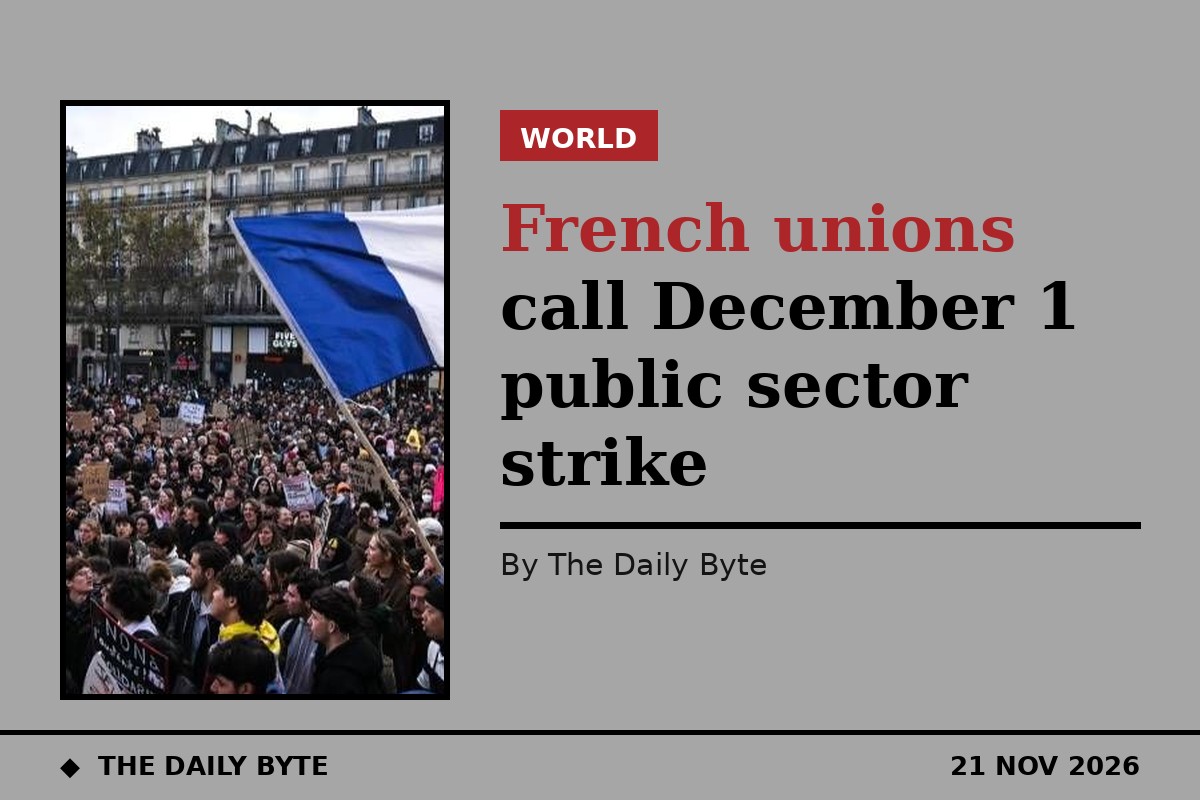
Eight French trade unions have called a new public-sector strike for Tuesday 1 December, saying the government's latest pay measures fall short of what is needed to end a dispute that has now run for more than two months.
The call was made on Friday 20 November, three days after the last nationwide public-sector strike, and it sets up another test for Prime Minister Sebastien Lecornu's minority government as it struggles to pass its 2027 budget. The unions said the government's latest offer was insufficient and demanded the unfreezing of the index point that determines public-sector pay, an overhaul of salary scales to improve career progression, and equal pay and professional opportunities for men and women.
Frozen pay at the heart of the dispute
The index point is the value used to calculate the base salaries of France's 5.8 million public-sector employees. The unions say that if it stays frozen, the lowest salaries will remain at or just above the minimum wage, even after the government's other measures.
The government has ruled out a general pay rise for a fourth consecutive year in its draft 2027 budget. Instead, it has offered eight extra index points for the lowest-paid workers, a measure that would add an average of about 350 euros gross a year for some 1.3 million public employees, according to the specialist publication Acteurs publics. It has also brought forward the annual rise in the minimum wage by a month, lifting it by 1.6 per cent to 1,502 euros net a month from 1 December.
The unions say that is not enough. They estimate that public-sector purchasing power has fallen by 16 per cent since 2017, and they say about 1.2 million public employees will find their base pay below the new minimum wage from 1 December. The government puts the combined cost of its concessions at just over 1 billion euros.
A dispute now in its third month
The movement began in September as student protests over conditions in high schools, then spread to universities, workers and pensioners. Tuesday's strike on 17 November was the third united day of action in the public sector since September. The Interior Ministry put turnout at 146,000 nationwide, including 28,000 in Paris, while the CGT union said more than 500,000 people marched across the country, 175,000 of them in the capital.
The previous nationwide day of action, on 5 November, drew about 600,000 people according to the Interior Ministry and about 1.57 million according to the CGT. CGT general secretary Sophie Binet said that in just two months, 11 national days of action had brought together 5 million people, calling it an unprecedented social mobilisation.
Talks with Lecornu on Friday 13 November failed to satisfy the unions. The CFDT, the reformist union that had preferred to keep negotiating, joined the 17 November strike after that meeting. Lecornu has promised a month of talks covering five areas of public-sector employment, including emergency measures for low salaries, and another meeting with the unions on 11 December. The Senate began examining the government's draft budget on 20 November, after the National Assembly rejected its revenue section on 4 November.
What the unions want next
The unions' central demand is the immediate unfreezing of the index point and a significant increase in its value, alongside rebuilt career scales and the restoration of full sick-pay compensation. Binet has said the government must make immediate, substantial announcements if it hopes to bring the protests to an end.
The dispute is unfolding against a tight budget backdrop. The government is seeking 43 billion euros in savings to bring the deficit down to 5 per cent of GDP in 2027, and it argues that a general pay rise would cost about 2.4 billion euros for each 1 per cent increase in the index point. The unions argue that public-sector workers should not be used to absorb austerity.
The protests also come less than six months before the presidential election due in April 2027, with opinion polls putting Marine Le Pen's National Rally in the lead. The 1 December strike will be the next test of whether the movement is losing strength or holding it, as the unions and the government both count the cost of a dispute that has already produced repeated nationwide stoppages.


