Friedrich Merz Warns Russia Over Dangerous Provocations
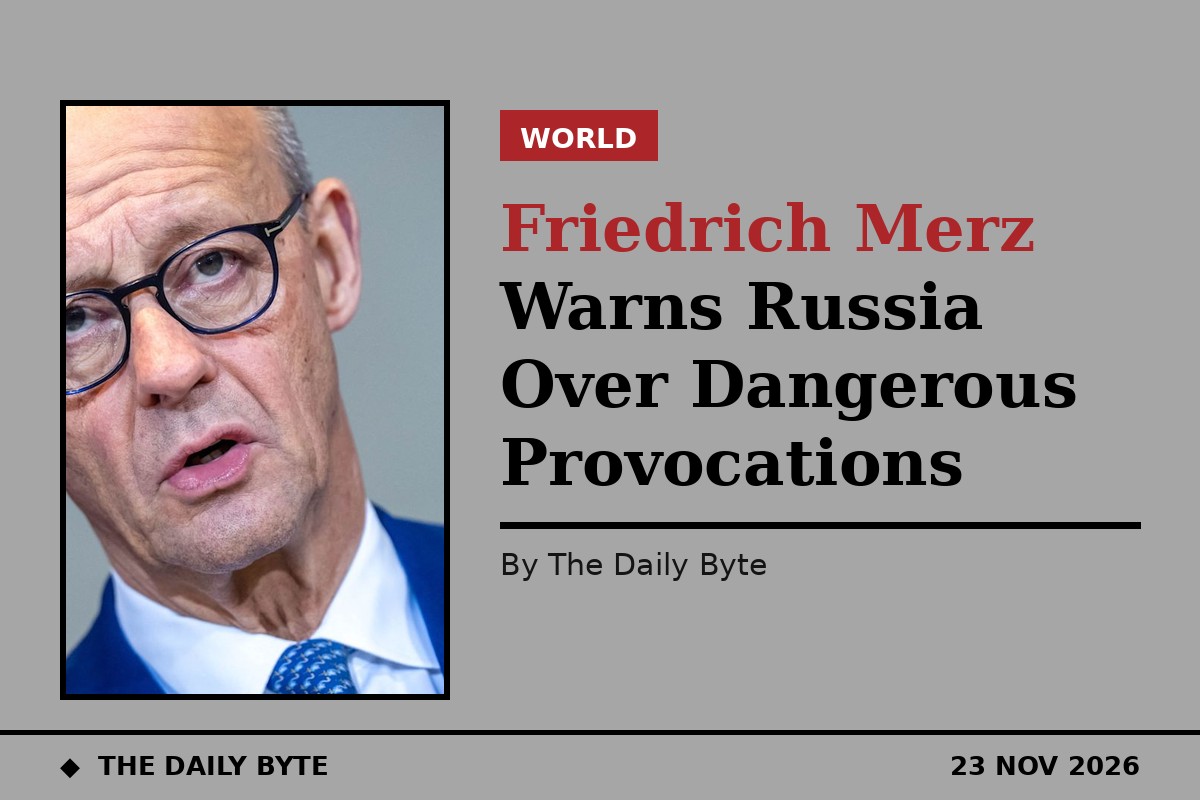
German Chancellor Friedrich Merz has called on Russia to end what he described as "dangerous provocations", after Russian missiles crossed into fellow NATO member Poland. He spoke in Berlin on Monday, 23 November 2026, alongside NATO Secretary General Mark Rutte, as reported by Reuters.
Merz also described as "shocking" reports that Russia was preparing to launch a nuclear-capable satellite into space. He added that no NATO member had any interest in an escalation in the Baltic Sea region, underlining the concern in Berlin about incidents spilling beyond Ukraine's borders.
The remarks came at a joint news conference after Merz and Rutte met at the Federal Chancellery, three days after the missiles came down on Polish soil. Both men used the appearance to stress that the alliance stood behind Poland while keeping the door open to diplomacy.
Three missiles came down in Poland
On Friday, 20 November, three flying objects entered Polish airspace during large Russian air strikes on western Ukraine and crashed in the south-east of the country. No one was injured. The prosecutor's office in Lublin said all three were Russian Kh-101 cruise missiles, according to the German news agency dpa.
Rutte said the incident was a dangerous one that had clearly originated with Russia. Polish authorities had already confirmed that at least one Russian Kh-101 cruise missile was recovered near Nowy Lipowiec, in the Lublin region.
The crossing was the latest in a series of Russian weapons entering the airspace of NATO states during attacks on Ukraine, and it prompted an extraordinary meeting of NATO allies in Brussels on Monday to discuss Poland's security.
Solidarity with Poland
Merz used the Berlin appearance to give Poland a public guarantee. "Poland can count on our full solidarity. And if necessary, NATO will of course defend every inch of allied territory," he said, as reported by dpa.
He added that protection of the external borders of Europe and NATO must be strengthened further, a message aimed at allies who have been pressing for more air defence along the alliance's eastern flank.
Rutte, who visited Warsaw on Saturday, had already told Poland's national press agency that NATO would defend every inch of Polish territory, and directed the alliance's top military commander to examine whether its deterrence arrangements needed adjustment.
Europe ready to negotiate
Alongside the warning, Merz struck a diplomatic note. He said Europe was ready to negotiate with Russia, adding that adviser-level peace talks involving Ukraine, Russia, Europe and the United States could take place again in Abu Dhabi in the coming weeks.
Merz said Europe wanted a "just" and "lasting" peace in Ukraine, and called on Moscow to halt airspace violations against NATO's European allies. The twin message, firm on security and open to talks, reflects the position Berlin has taken as the war continues into its fifth year.
Whether the talks in Abu Dhabi materialise will depend on all sides agreeing to return to the table. For now, the chancellor's words set out both the warning and the offer: provocations must stop, and negotiation remains possible.
Frequently asked questions
What did Friedrich Merz say about Russia? He called on Moscow to end its "dangerous provocations" after Russian missiles crossed into Poland, and called reports of a nuclear-capable Russian satellite launch "shocking".
What happened in Poland on 20 November? Three flying objects entered Polish airspace during Russian strikes on western Ukraine and crashed in the country's south-east. No one was injured, and Polish prosecutors said they were Russian Kh-101 cruise missiles.
Is Europe willing to negotiate with Russia? Merz said Europe is ready to negotiate and that adviser-level peace talks involving Ukraine, Russia, Europe and the United States could resume in Abu Dhabi in the coming weeks.


