Defensive shares rise as FTSE 100 sell-off deepens
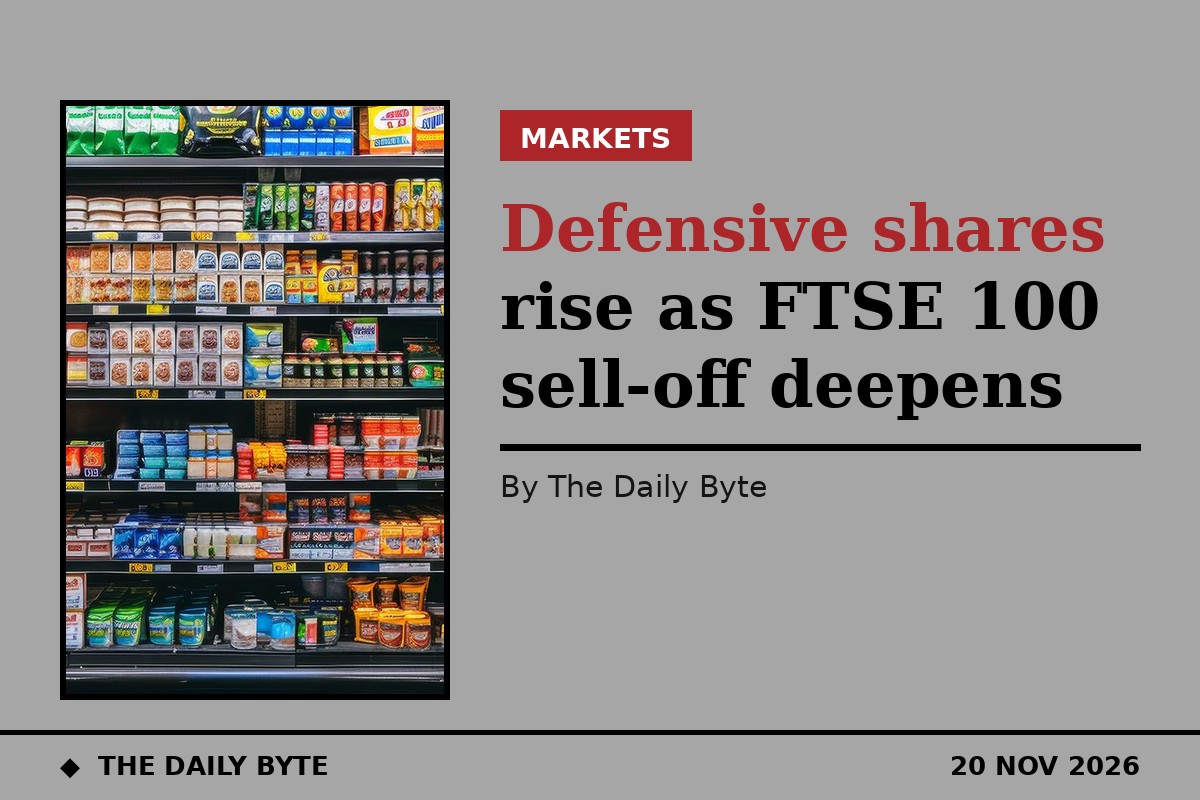
Defensive shares rose in London on Friday as investors sought shelter from a global sell-off, with Unilever, Reckitt Benckiser and British American Tobacco among the few FTSE 100 stocks to finish the day higher.
The FTSE 100 closed down 106.34 points, or 1.0%, at 10,346.34, its lowest close in five months, while the FTSE 250 fell 2.2% to 23,651.73. Decliners outnumbered advancers by 5.7 to one across the London market, yet the companies that sell everyday goods, tobacco, medicines and power held their ground or gained.
Unilever led the risers, climbing 103.50p to 4,887.50p, a rise of about 2.2%. Coca-Cola Europacific Partners added 185p to 8,875p, British American Tobacco rose 54p to 4,401p, and Compass Group gained 0.43 dollars to 33.55 dollars. Rentokil Initial was also higher, up 4.50p at 367.20p. National Grid rose 1.1% and GSK added 0.8%, while Reckitt Benckiser was also among the gainers.
Investors dust off the defensive playbook
Russ Mould, investment director at AJ Bell, said the pattern was familiar. "In times of trouble, investors dust off the defensive playbook, with that firmly in action on Friday as consumer staples, telecoms, tobacco, insurance and grocery stocks were bid up."
Defensive shares are the companies whose products people keep buying in good times and bad: food, cleaning products, cigarettes, medicines and electricity. Their earnings tend to hold up when the economy slows, and many pay steady dividends, which makes them attractive when investors are worried about growth and want somewhere to wait out a storm.
That appeal was on display all week. Broker Panmure Liberum told clients that UK equities were the best "hiding place" as the artificial intelligence boom comes under strain, naming GSK, AstraZeneca and Unilever as its top three hedges against a further sell-off. The note argued that the S&P 500 trading below its 200-day average was a warning sign for the wider market.
Tech trusts bore the brunt
The contrast with the day's losers could hardly have been starker. Polar Capital Technology Trust fell 8.3% to 515p and Scottish Mortgage Investment Trust dropped 4.9%, as investors sold the funds most exposed to the artificial intelligence trade. Halma fell 238p to 3,256p and Lion Finance Group dropped 910p to 12,020p.
The selling began in Asia and spread through Europe and the United States, driven by doubts about whether the huge spending on artificial intelligence infrastructure will pay off, and by rising expectations that the US Federal Reserve will raise interest rates in December. Traders now put the chance of a December rise at about 97%, according to CME Group's FedWatch tool.
Stronger than expected UK retail sales, up 0.7% in October, did little to lift the wider market, but they may have helped the mood around consumer stocks. Supermarkets reported stronger demand for long-life food after the government's Be Ready campaign, a reminder that household spending has held up better than many feared.
What to watch next
Whether the defensive rally lasts will depend on whether the sell-off in technology shares spreads further or stabilises. If investors keep cutting exposure to artificial intelligence stocks, the steady earners could keep attracting money. But defensive shares are not immune to a broad market fall: if selling turns indiscriminate, even Unilever and British American Tobacco can be dragged down with everything else.
For now, though, Friday's trading sent a clear message. When markets turn fearful, investors still reach first for the companies that make the things people cannot do without.