Heavy Snow Isolates 1,500 People in Fukushima
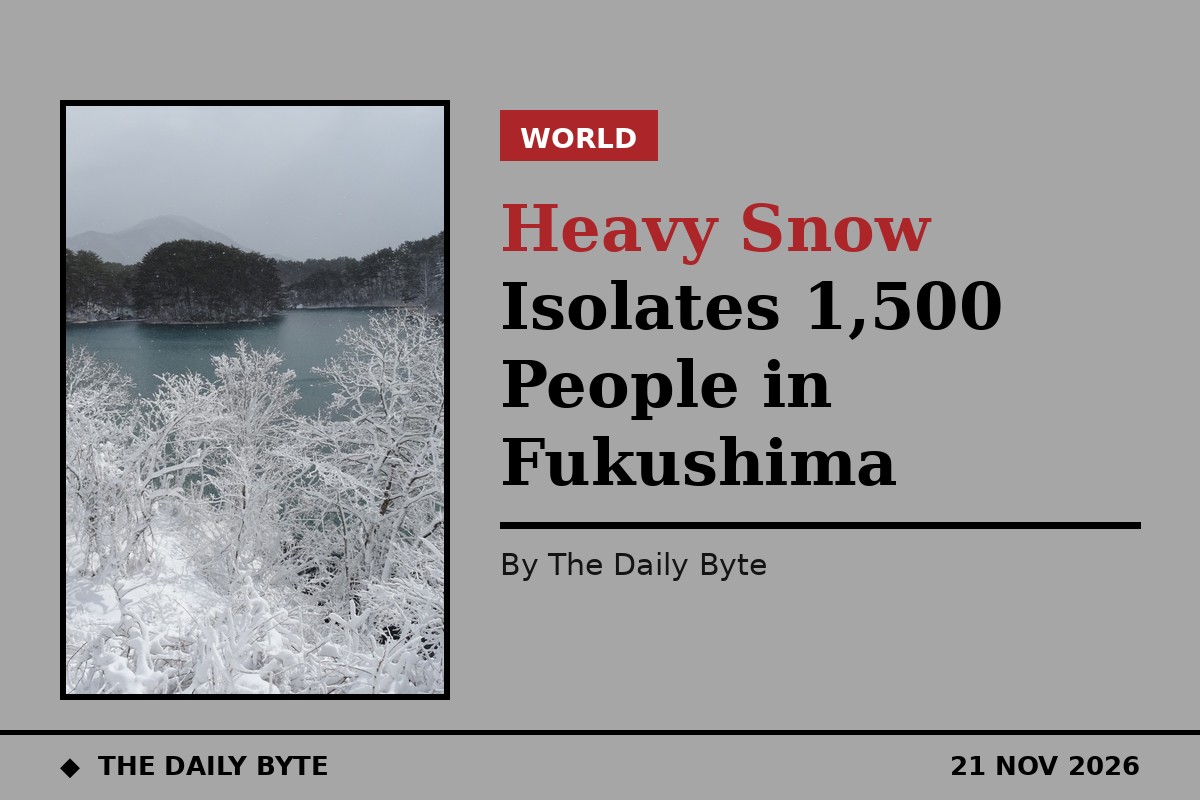
About 1,500 people have been left cut off in a village in Japan's Fukushima Prefecture after the season's first cold wave dumped heavy snow across the region, toppling trees onto the only road in and out.
Kitashiobara Village, in the Urabandai highlands, was isolated after fallen trees blocked National Route 459, which links the village with the neighbouring town of Inawashiro. According to the village, 372 households were cut off in the Hibara and Urabandai districts by Saturday morning, including residents and guests staying at local hotels. A later report put the figure at 514 households, or 948 people, with no prospect of the road reopening soon.
Power supplies were also hit. About 2,400 households across Fukushima Prefecture were without electricity by late morning, most of them in the Aizu region, as wet snow brought down lines as well as trees.
Record snow for November
The snowfall has been exceptional for the time of year. In Inawashiro, 53 centimetres of snow had accumulated by Saturday morning, the deepest recorded anywhere on Honshu, Japan's main island, this autumn. Snow began falling there late on 19 November and reached 22 centimetres by mid-afternoon, the first time in 31 years that the depth has passed 20 centimetres by mid-November.
Local television reported that snow in the Urabandai area could approach one metre, with the heavy, wet snow making roads slippery and bringing down trees across the district. The cold wave has been driven by a winter pressure pattern that has settled over northern and eastern Japan, sending temperatures sharply lower.
Transport brought to a halt
A train on the JR Ban'etsu West Line derailed after colliding with a fallen tree, and services on the line were suspended for the whole day. A section of the Ban'etsu Expressway between Bandai-Atami and Aizu-Wakamatsu was also closed, and vehicles were stranded on roads across the area as crews struggled to clear the fallen timber.
Road workers and local drivers have been cutting and moving trees by hand in places, but as soon as one stretch is cleared, more trees come down elsewhere under the weight of the snow. The prefecture has warned that the work cannot keep pace while the snow keeps falling.
More snow on the way
The Japan Meteorological Agency and the transport ministry had warned in advance that the cold outbreak would last from 19 to 22 November, with heavy snow and blizzards possible across the Tohoku region and Hokkaido. Forecasters expect up to 50 centimetres more snow in parts of Tohoku by the morning of Sunday, 22 November, and up to 30 centimetres in Hokkaido, with gusts of up to 30 metres per second.
More than 400 observation points across Japan recorded their coldest temperatures of the season on Saturday, and Tokyo fell to 5 degrees Celsius. The storm has struck at the start of a three-day weekend, disrupting travel for holidaymakers as well as residents, and the authorities have urged people to avoid unnecessary journeys until the snow eases.