Gabon seeks $2bn to revive Mabounie rare earths project
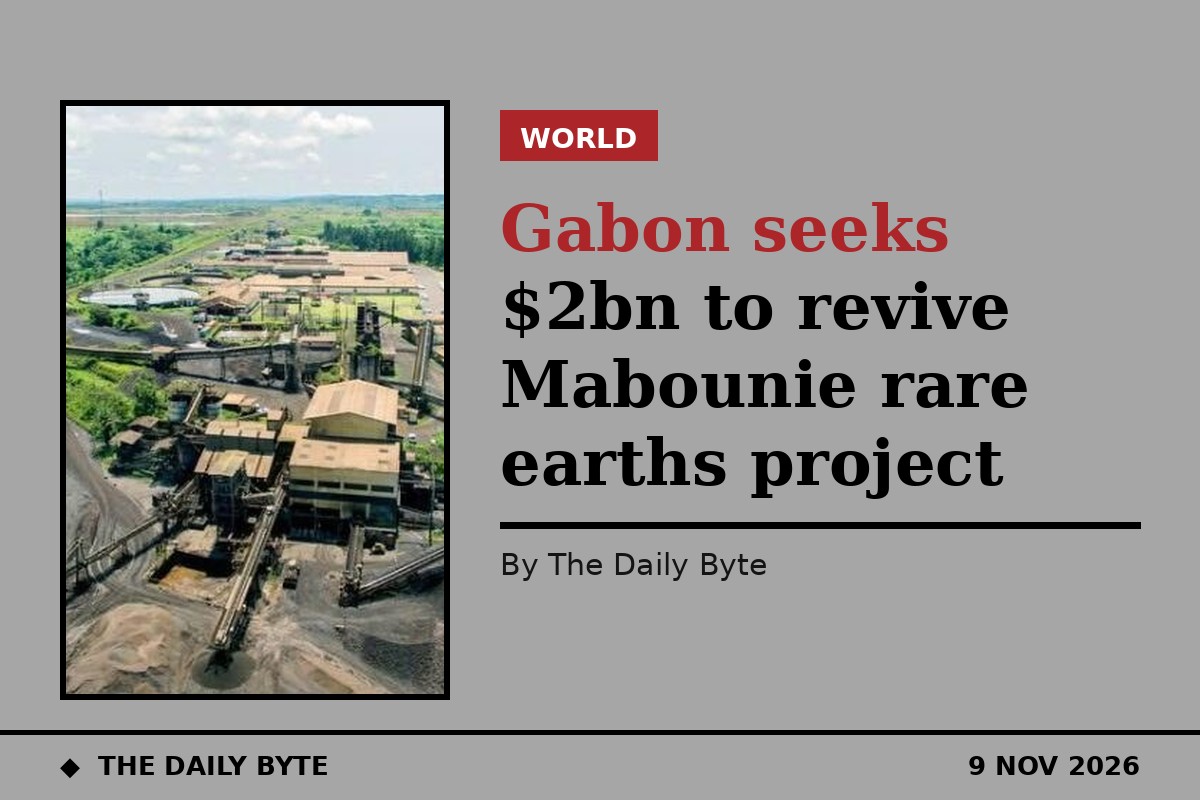
Gabon is seeking $2 billion to revive its long-stalled Mabounié niobium and rare earths project, in a move that could turn the Central African country into a new supplier of critical minerals. The proposal, presented to President Brice Clotaire Oligui Nguema during his state visit to China last week, targets the start of construction in 2027 and promises more than 2,500 direct jobs.
The plan brings together UAE-backed New Energy Metals (NEM), through its subsidiary Dusk Gabon, and Chinese engineering group China ENFI Engineering Corporation. The partners handed the president a technical study for the project while he was in Beijing, according to a statement from the Gabonese presidency and reporting by Bloomberg.
Mabounié, about 200 kilometres south-east of the capital, Libreville, in Moyen-Ogooué province, has been explored for years but has never reached commercial production. If the revival succeeds, it would give Gabon a second major mining pillar alongside manganese, and a foothold in minerals that underpin steelmaking, electric vehicles and wind power.
What the $2 billion plan involves
Unlike earlier attempts, the new proposal is built around processing the minerals inside Gabon rather than shipping raw ore abroad. The development concept involves six to seven processing plants producing up to nine finished products, according to Construction Review Online, which reported the plan on 9 November.
The deposit is polymetallic, containing niobium, rare earth elements, tantalum and phosphate. According to Dusk Gabon, it holds certified resources of 2.3 million tonnes of niobium oxide at 1.2 per cent and 2 million tonnes of rare earth oxides at 1 per cent, with projected annual output of about 14,500 tonnes of niobium and 14,300 tonnes of rare earth elements. The company describes Mabounié as the world's second-largest identified niobium deposit.
Niobium is used mainly in high-strength, low-alloy steel for construction, pipelines and vehicles, and in specialist superalloys. Rare earth elements are essential for permanent magnets used in electric vehicle motors and wind turbines, as well as in electronics.
Preparatory earthworks have been assigned to a local company, the government has indicated, offering early work for domestic contractors and suppliers before the main construction programme begins.
A long history of false starts
Mabounié has a lengthy record of unfulfilled promise. French mining group Eramet and its Gabonese subsidiary Comilog spent years studying the deposit, including building a demonstration plant to test how niobium and rare earths could be recovered. But the project never reached commercial production, and in November 2022 Eramet and Comilog handed their interests and project assets back to the Gabonese government.
Gabon then sought new investors. In late 2024, New Energy Metals signed an agreement with the state, through Dusk Gabon, to fast-track development, and in early 2025 the company set out a roadmap for the project. The $2 billion proposal presented in Beijing is the latest attempt to turn the deposit into a working mine and processing complex.
Financing still unclear
Important details remain outstanding. No lender, equity split or final investment decision has been made public, and the presidency's statement did not set out how the venture would be funded or how NEM and ENFI would divide responsibilities. The exact engineering, procurement and construction roles have also not been disclosed.
The revival comes as Gabon pushes to capture more value from its minerals at home. The government has set 1 January 2029 as the date from which raw manganese ore exports are to stop, and it signed a manganese memorandum and a rail and power package for the Belinga iron ore project during the same Beijing visit. Whether Mabounié meets its 2027 construction target will depend on financing and technical work that is still to be completed.