Gaza Aid Trucks Jump 90% in a Week
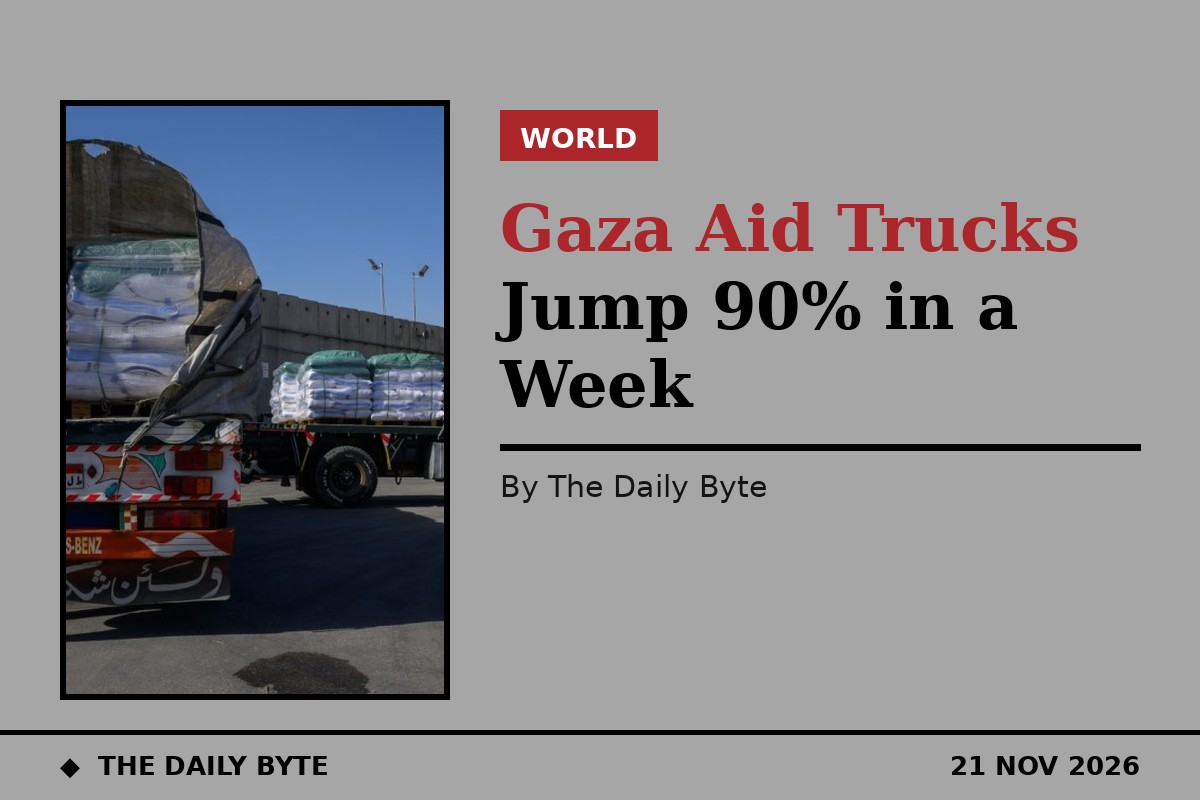
Aid trucks entering Gaza rose by 90 per cent in a week, the United Nations said in its latest humanitarian report, as Egypt resumed shipments and corridors from Jordan and the West Bank expanded. But the UN warned that winter supplies were still falling far behind what displaced families need as the cold season sets in.
According to the Logistics Cluster, 474 UN and partner trucks carrying humanitarian supplies were manifested for entry into Gaza between 9 and 15 November. Of these, 433 were offloaded on the Israeli side of Kerem Shalom, including 159 from Ashdod, 127 from Egypt, 43 from Israel, 33 from the West Bank and 71 from Jordan. That represented a 90-per-cent increase compared with the preceding week, when 228 trucks were manifested.
The increase reflected higher shipments through several corridors, including the resumption of operations through Egypt following a four-day suspension imposed by Israeli authorities. Shipments from Jordan increased from 18 to 71 trucks, while those from the West Bank doubled, the UN Office for the Coordination of Humanitarian Affairs said in its situation report dated 18 November.
A new screening route at Erez
Part of the flow now passes through a new screening point. Aid trucks began arriving at the Erez crossing this week for security inspection before continuing under escort to Kerem Shalom, Channel 14 reported. The trucks are scanned using German-donated equipment installed at the crossing in August, and only after a second check at Kerem Shalom does the aid enter Gaza. At least for now, aid will not enter Gaza directly through Erez itself.
The decision to operate Erez for inspection followed heavy political pressure on Israel, primarily from Germany, the United States and the UN Security Council, according to the report. Initially, dozens of trucks a day were expected to arrive at Erez. Residents of Israeli border communities objected, saying they had been promised truck traffic would not pass through the area, and warning that the step could become a broader opening of the crossing.
Food and markets still fragile
Despite the rise in humanitarian deliveries, commercial supplies have fallen sharply. According to the World Food Programme's October Palestine Market Monitor, commercial truck entries into Gaza fell by more than half, from an average of 129 per day in September to 60 in October, contributing to shortages and price fluctuations. Three-quarters of surveyed households reported difficulties accessing markets, with 96 per cent of those affected citing financial constraints.
Unemployment stood at approximately 80 per cent in October 2026, the UN report said. In a joint statement issued on 17 November, the International Organization for Migration and the World Food Programme warned that recent improvements in food security remained fragile, driven largely by humanitarian assistance rather than the recovery of livelihoods, markets or local food systems. The World Food Programme reported that funding shortfalls had already forced a shift to alternate-month food distributions for some beneficiaries, reductions in hot meals and limits on full-value cash transfers.
Winter is the urgent test
As Gaza enters its fourth winter since October 2023, heavy rainfall between 6 and 8 November exposed the vulnerability of displaced families living in deteriorating tents and makeshift shelters. Preliminary assessments indicated that approximately 46,000 households, or 226,000 people, may have been affected, with more than 5,000 households reportedly sleeping without shelter. Damage was reported to over 40,000 shelters, including more than 9,000 beyond repair, and 960 latrines.
At least five people were reportedly killed when a sand bank collapsed onto a tent, the UN said. Winterisation activities had been reported at 162 of the 356 identified flood-risk hotspots, hosting about 147,000 displaced people, but more than half of the hotspots had no reported winterisation work. The Site Management Cluster estimated that at least 9 million US dollars would be required in the coming months to extend support to all displacement sites.
More than 150,000 tents procured by humanitarian partners and member states remained outside Gaza awaiting entry, most of them in Al Arish, Egypt, the Humanitarian Country Team said on 13 November. Despite the increase in truck movements, the entry of sufficient winterisation supplies, including tents, tarpaulins and heaters, remained constrained, primarily by limited funding and, in some cases, restricted opportunities to bring in items classified by the Israeli authorities as having dual use.
Between 10 and 16 November, 97 patients, including 34 children, and 145 companions were medically evacuated from Gaza through the Rafah and Kerem Shalom crossings, the report said.