Gaza Bakeries Close as Flour Runs Out
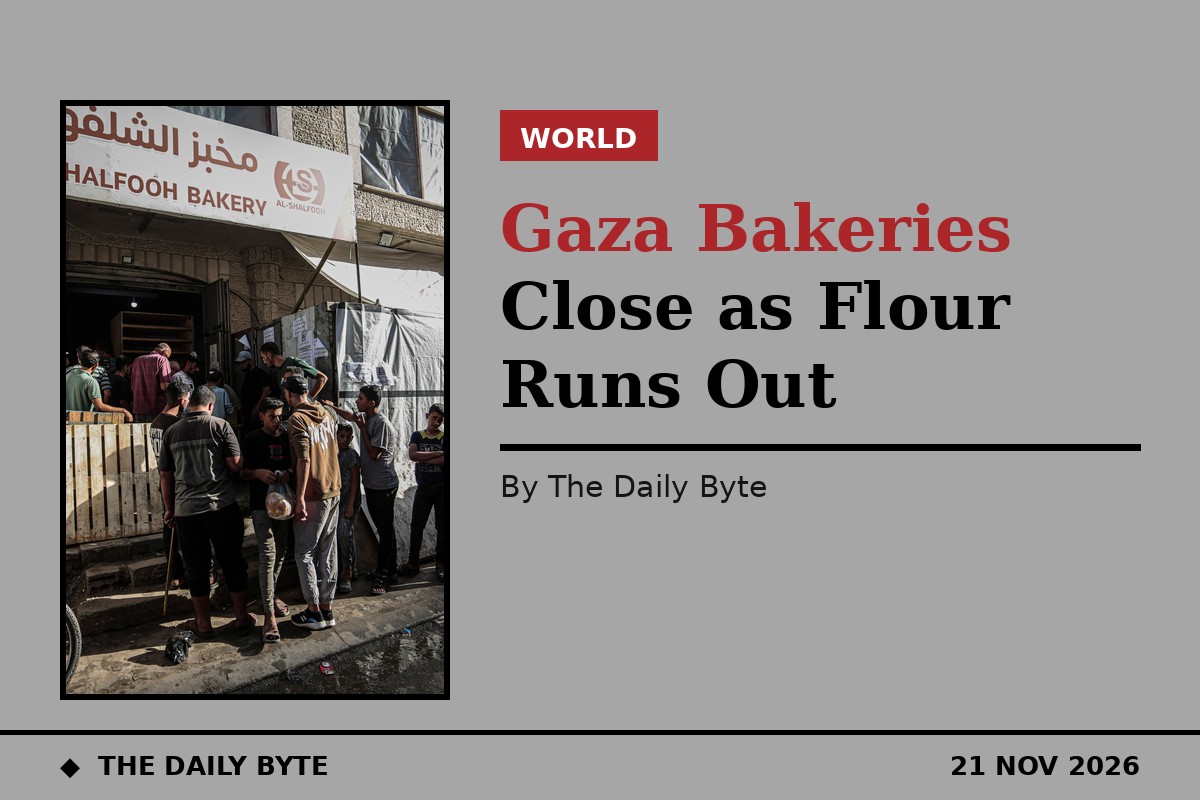
Bakeries across Gaza are shutting down or warning they will close within days as flour and cooking fuel run out, cutting off the daily bread that more than two million people depend on. Aid agencies say the flour they have left will not last long, and families are already cutting back to a single meal a day.
The head of Gaza's Bakeries Association, Abdul Nasser Al-Ajrami, told the Palestine News Agency on Thursday that flour stocks in warehouses across the territory had run out. Only seven of Gaza's 20 bakeries were still operating, he said, and those could be forced to close within 48 hours unless fresh supplies were allowed in.
By Friday, reporting from the region described several bakeries as already closed, with others posting signs saying they were shut until further notice. The World Food Programme said the flour it had set aside for bakeries was enough to feed about 800,000 people a day, but only for a short remaining period.
Seven bakeries left out of 20
Al-Ajrami said the flour still available in local markets came from the World Food Programme, while commercial bakeries that depend on shipments through the crossings had stopped operating altogether. Israel's closure of Gaza's crossings over the past week, and its continued refusal to allow commercial flour shipments through despite a partial reopening, had exhausted supplies, he said.
The shortage has been made worse by cuts to United Nations assistance. The World Food Programme's acting executive director, Carl Skau, said on 18 October that funding constraints had forced the agency to reduce the number of people receiving assistance in Gaza from 1.8 million to about 500,000. The cuts reflected a lack of money, not a decline in need, as winter approaches.
Aid agencies stretch what is left
Aid groups have halved regular food rations in order to prioritise bakeries and communal kitchens, according to reports from the region. Public kitchens have increased the number of prepared meals they serve by about 25 percent, reaching nearly a million servings a day, as charities try to compensate for the missing bread.
But those measures burn through dwindling stocks more quickly, and agencies warn they cannot be sustained without renewed access to bulk food and fuel. Market traders report sharp increases in the price of flour and cooking gas, forcing many households to cook on open fires. Aid groups also report restrictions on their movement and damage to infrastructure that limit distributions.
Families cut back to one meal a day
Bread is a staple in Gaza, eaten at most meals and often provided at subsidised prices from bakeries and through food parcels. With production curtailed and supplies scarce, families are reducing meals to one a day and relying on canned goods, rice, pasta or soup when they can find them.
Children, elderly people and those already malnourished face the greatest immediate risk if bread production stops across large parts of the territory, aid agencies warn. Health facilities already operating under shortages of medicines and fuel would come under further strain from rising malnutrition.
Crossings closed and no resupply in sight
It remains unclear when border crossings and commercial routes will reopen to allow large-scale deliveries of flour, cooking gas and other essentials. The Rafah crossing also remains closed to evacuations of sick and wounded Palestinians.
Humanitarian organisations warn that once bakery flour and other key food stocks are exhausted, large-scale interruptions to bread production will follow, increasing the risk of severe malnutrition and starvation for large numbers of people. Some agencies say they hold emergency contingency stocks, such as fortified biscuits, but those reach far fewer people than the daily bread rations the bakeries produce.


