Gaza Peace Plan Scores Just 4 Out of 26
Five leading humanitarian organisations have given the Gaza peace plan a failing grade one year after it was launched, scoring it just 4 out of 26 in a humanitarian scorecard published on Thursday.
The Danish Refugee Council, Norwegian Refugee Council, Oxfam, Refugees International and Save the Children assessed the Trump administration's 20-point plan against its own stated objectives — civilian protection, humanitarian access, reconstruction and economic development, and freedom of movement and return.
The plan, endorsed by the UN Security Council, scored worse than at the six-month mark in April, when the same organisations gave it 5 out of 26. Humanitarian access was graded zero, as it was in April, and civilian protection earned only one point.
"One year ago, the world was promised that Gaza's children would finally see safety, relief and a chance to rebuild their lives. Instead, they are colder, hungrier, more traumatized and more at risk than they were before," said Inger Ashing, chief executive of Save the Children International.
Deaths continue under the ceasefire
At least 1,650 Palestinians have been killed and 5,975 wounded since the ceasefire was declared in October 2025, according to the scorecard — more than double the death toll recorded at the six-month mark. The United Nations has reported near-daily Israeli airstrikes in densely populated areas over the past year.
Israeli forces now control up to 70 per cent of Gaza, up from 58 per cent at the start of the ceasefire, the organisations said. Around 1.8 million people are squeezed into displacement sites lacking clean water and sanitation, and families who have already fled up to a dozen times are being forced to move again when gunfire and explosions erupt, often with no warning.
"A year into the ceasefire, Palestinians in Gaza are being confined as the Yellow Line expands," said Lilu Thapa, the Danish Refugee Council's executive director for the Middle East, Asia and Europe. "This is displacement by design, and a ceasefire that allows it is a ceasefire in name only."
Aid far below the agreed minimum
The ceasefire, endorsed by UN Security Council Resolution 2803 on 17 November 2025, stipulates an agreed minimum of 600 UN-coordinated aid trucks entering Gaza each day. In September, an average of only 49 such trucks entered daily, and only 2 per cent of them carried medical supplies.
Critical shortages of basic medicines and supplies have resulted in deaths from treatable injuries and illnesses, the scorecard says. The Government of Israel continues to obstruct the delivery of shelter materials, medical equipment and supplies needed to restore water and sanitation services, while nearly the entire population of 2.1 million civilians struggles to access clean water, healthcare and adequate food.
All six wastewater treatment plants in Gaza remain out of service and not a single hospital is fully operational, according to the organisations.
A fourth winter in tents
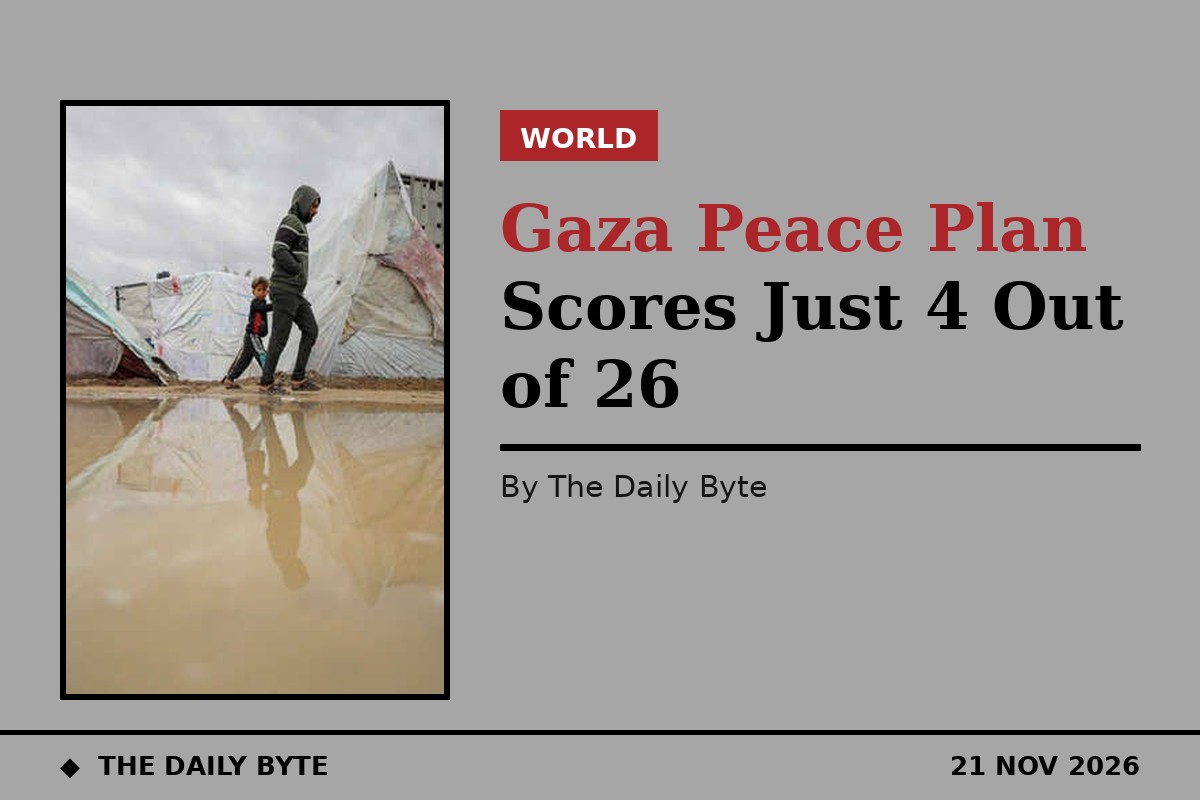
As Gaza faces its fourth winter with little protection from cold and rain, nearly one million Palestinians live in sites at medium or high risk of flooding, and 89 per cent of households report rodents inside their shelters.
Already this month, a rainstorm flooded more than 70,000 tents, and a nine-month-old child was reported to have died of hypothermia, the scorecard says.
The five organisations urged the UN Security Council, the Board of Peace and member states to use their leverage to secure immediate humanitarian access and enforce the ceasefire. Their recommendations include pressing Israel to open all crossings, replacing Israeli approval and inspection processes with independent aid verification, establishing UN-mandated monitoring and quarterly humanitarian reporting, and ensuring recovery protects Palestinians' freedom of movement and prevents forced displacement.
"One year into the so-called ceasefire, Palestinians are still waiting for the safety and humanitarian relief they were promised," said Jeremy Konyndyk, president of Refugees International. "The commitments made a year ago mean little if they do not change the reality on the ground."


