Gaza Strikes Kill Six as Floods Deepen Crisis
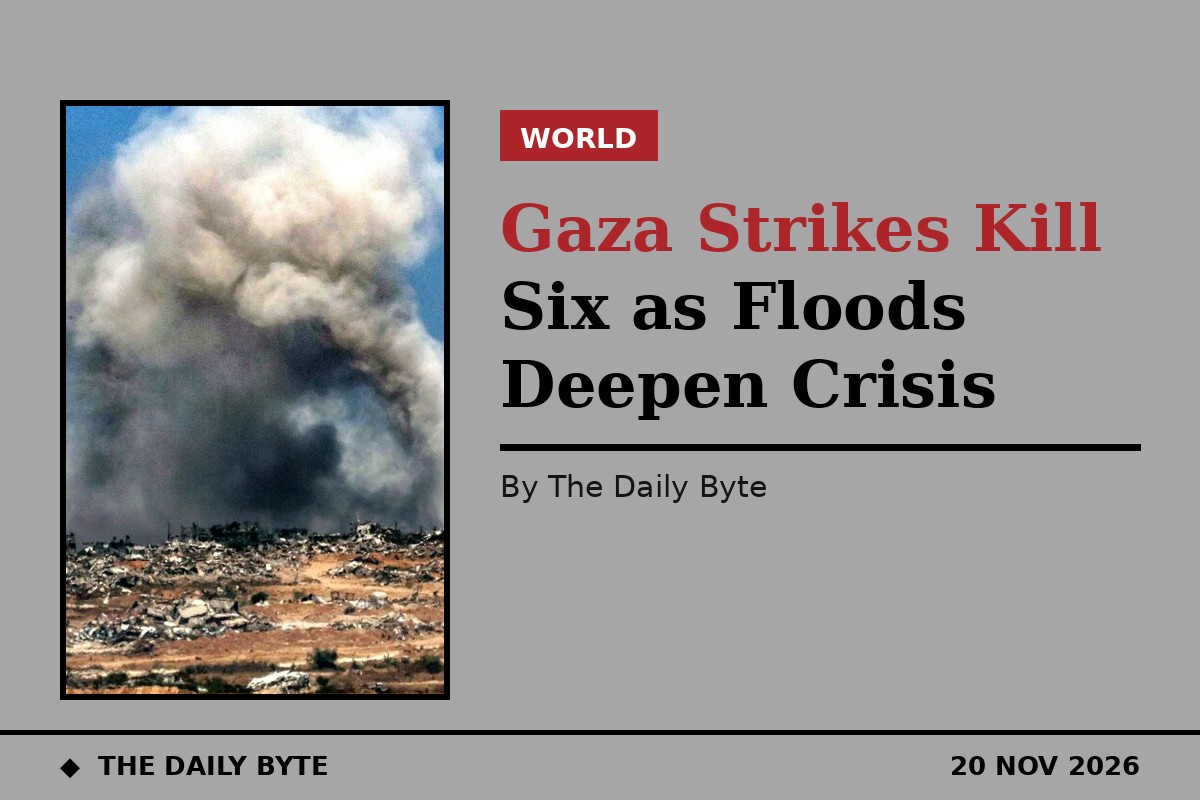
Israeli strikes killed six people in the Gaza Strip on Friday, the territory's civil defence agency told the AFP news agency, in the latest violence despite a ceasefire that has been in force for more than a year.
Four Palestinians were killed and several others wounded in an Israeli airstrike south-west of the Bureij refugee camp in central Gaza, according to Mahmoud Bassal, a spokesman for the civil defence agency, which operates as a rescue force under Hamas authority. The nearby Al-Aqsa Martyrs Hospital and Al-Awda Hospital each confirmed receiving two bodies after the strike.
The agency said one more person was killed when an Israeli drone struck a tent in the Al-Munasara camp for displaced people in Deir al-Balah, and another person was killed in a drone strike north of the Nuseirat refugee camp. The Israeli military told AFP it had targeted multiple military operatives in several strikes across the territory.
Friday's deaths came a day after the Israeli military said it had completed a rare ground operation in central Gaza. Tanks and troops had crossed the ceasefire's Yellow Line, the boundary between Israeli-held and Hamas-held areas, to dismantle what the military described as a tunnel that posed a threat to its forces. The operation, which began on Wednesday, displaced thousands of people from the area around the Nuseirat and Bureij camps.
Floods add to hardship in Gaza
The strikes came as the United Nations warned that winter flooding is worsening Gaza's humanitarian crisis. In a statement on Friday, the UN said floods were destroying shelters and food supplies while Israeli restrictions on aid deliveries left displaced families struggling to obtain food and shelter. It called for urgent, sustained funding and safe, predictable humanitarian access to deliver life-saving aid.
The warning follows heavy rainfall earlier in the month. The UN humanitarian affairs office reported that rain between 6 and 8 November damaged shelters and essential service facilities, and that aid operations continued to face insecurity, access restrictions and shortages of supplies and equipment.
Health services have also come under pressure. The UN reported that an Israeli airstrike on the Nasser Medical Complex in Khan Younis on 12 November killed six people, including a health worker, and injured at least 27 others, according to the World Health Organization. Gaza's health ministry reported 38 fatalities across the territory between 10 and 16 November, including people newly killed, those who died of wounds sustained earlier and bodies recovered from under the rubble.
Ceasefire under strain
The ceasefire between Israel and Hamas took effect in October 2025, after two years of war that followed the Hamas-led attack on Israel on 7 October 2023. Israel and Hamas regularly accuse each other of violating the agreement, and Israeli strikes in Gaza have continued through the truce.
More than 1,600 Palestinians have been killed since the ceasefire began, according to an AFP tally based on data from the Gaza health ministry, whose figures the United Nations considers reliable. Over the same period, the Israeli military says seven of its soldiers have been killed, as well as one civilian contractor.
The body overseeing the US-brokered ceasefire plan, the Board of Peace, warned this week that the agreement risks collapse if its terms are not fully implemented, saying the distance between what was agreed and what is happening on the ground is the principal risk to the process. The wider plan, which calls for Hamas to disarm, Israeli troops to withdraw and reconstruction to begin, has effectively stalled.
With winter rains now flooding tent camps and strikes continuing, aid agencies say the coming weeks will test whether the ceasefire can hold and whether enough winter supplies can reach the families still living in tents and damaged buildings.


