GCC Agrees Forward Military Command in Kuwait
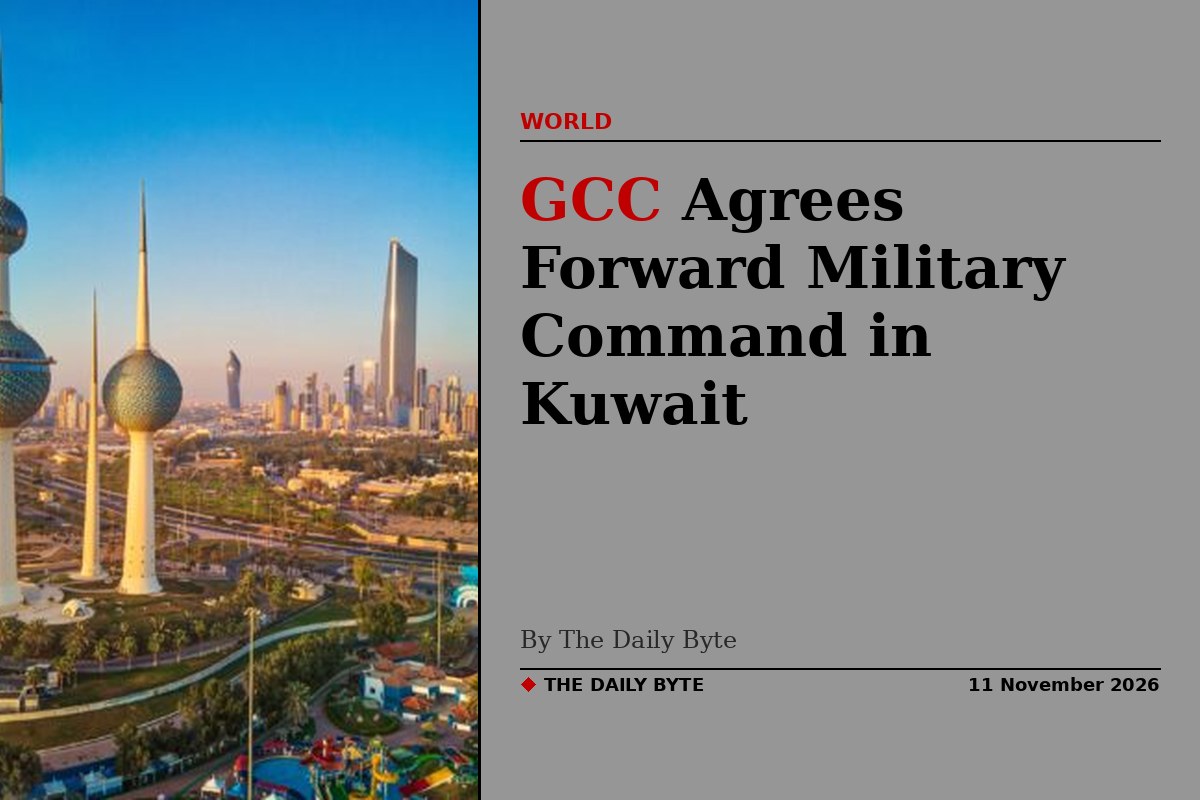
Defence ministers from the Gulf Cooperation Council (GCC) have agreed to establish a forward military command centre in Kuwait and assign forces to support its operations, in a move aimed at strengthening the bloc’s collective defence after Iranian attacks against Gulf states.
The decision was taken on Tuesday, 10 November, during the 23rd meeting of the GCC Joint Defence Council in Manama, Bahrain. The meeting was chaired by Bahrain’s Minister of Defence Affairs, Lieutenant General Abdullah bin Hassan Al Nuaimi, and attended by the defence ministers of Bahrain, Kuwait, Oman, Qatar, Saudi Arabia and the United Arab Emirates.
GCC Secretary-General Jasem Mohamed Albudaiwi announced the decision after the meeting. He said the new facility would operate under the GCC’s Unified Military Command, bringing together military personnel and resources from member states to improve operational coordination and their ability to respond to shared threats.
A command post at the top of the Gulf
The new arrangement is a forward command post, positioned closer to potential security flashpoints than the bloc’s main headquarters. Kuwait sits at the northern end of the Gulf, bordering Iraq and Saudi Arabia and facing Iran across the water, giving the proposed headquarters a strategic location.
The Unified Military Command was established at a GCC summit in Kuwait in December 2013 to plan and manage joint operations and to strengthen member states’ defence capabilities. It is headquartered in the Saudi capital, Riyadh.
The decision follows a summit in Jeddah last April, at which Gulf leaders called for closer military cooperation and greater preparedness to confront regional security threats. Mr Albudaiwi said the new command came in implementation of the directives issued by GCC leaders at that meeting.
Important details remain undisclosed. The GCC has not said where in Kuwait the forward command will be based, how many personnel will staff it, which units or capabilities will be assigned, or when it will become operational. The council’s statement approved “the opening of an Advanced Command for the Unified Military Command in the State of Kuwait and the allocation of appropriate forces to it”, without further specifics.
Response to attacks on Gulf states
The announcement comes against a backdrop of regional hostilities that Mr Albudaiwi said had demonstrated the importance of cooperation among Gulf armed forces. He condemned Iranian attacks against GCC countries, particularly those affecting civilian areas and critical infrastructure, while praising the coordination demonstrated by member states in responding to the strikes.
He also commended the professionalism and operational readiness of Gulf military personnel confronting what he described as Iranian aggression, saying their cooperation reflected a shared commitment to protecting the region’s security and stability.
During his remarks, the secretary-general paid tribute to service members killed while performing their duties, offered condolences to their families and wished those wounded a speedy recovery.
He separately condemned attacks attributed to Yemen’s Houthi movement against Saudi Arabia, including incidents involving locations considered sacred by Muslims, and reaffirmed the GCC’s support for the kingdom’s efforts to protect its security and territorial integrity.
The agreement signals a further step in the institutionalisation of Gulf defence cooperation at a time of continued tension over Iran. Whether the new command changes the practical balance of forces in the northern Gulf will depend on details the bloc has not yet published, including its size, its capabilities and the date it becomes operational.


