GCC Tells UN: Iran Fired 7,000 Missiles at Gulf States
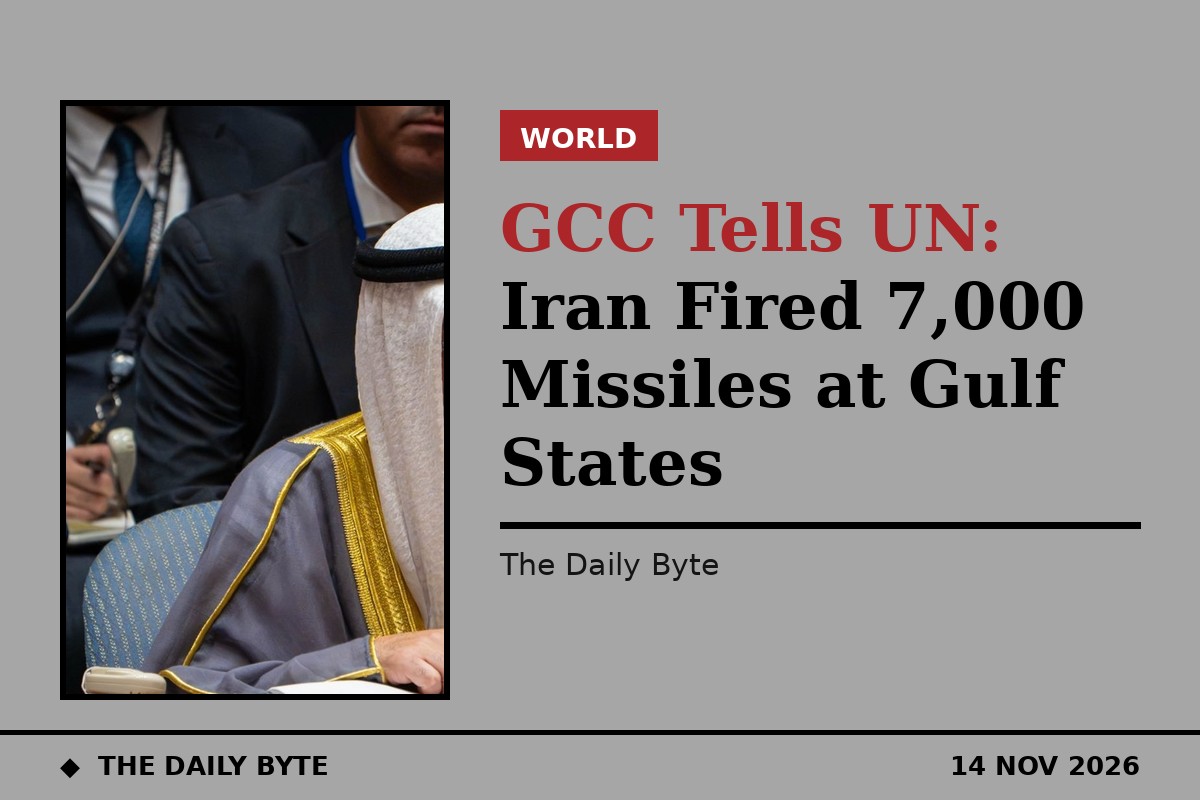
Gulf Arab states have told the United Nations Security Council that Iran has fired more than 7,000 missiles and drones at them since the war began on 28 February, and demanded that Tehran pay full compensation for the damage. The briefing, delivered in New York on Friday 13 November, was the first time the Gulf Cooperation Council has put the figure before the council in a formal session.
GCC Secretary-General Jasem Albudaiwi told the council that the strikes had hit airports, seaports, oil and gas facilities, power stations, desalination plants and residential areas across all six GCC member states. “The GCC holds Iran fully responsible for these attacks and their consequences,” he said, rejecting Iran’s argument for striking states that were not party to the war and had worked to keep the region out of it.
How the 7,000 figure was counted
The tally draws on a count first compiled by the newspaper Asharq Al-Awsat, which had recorded 7,028 Iranian attacks against GCC states by early June: about 1,716 missiles and 5,311 drones. The United Arab Emirates absorbed the heaviest share, with 2,846 recorded strikes, followed by Saudi Arabia with 1,234 and Kuwait with 1,194. Qatar recorded 737, Bahrain 700 and Oman 26. The bloc formally cited the figure of more than 7,000 at its ministerial council in Manama on 10 June.
Albudaiwi called for an immediate and unconditional end to Iranian attacks on GCC members and Jordan, whether carried out directly or through allied groups, and for guarantees that they would not be repeated. He also urged full implementation of Resolution 2817, which the council adopted in March to condemn Iran’s attacks and its threats to shipping. China and Russia abstained on that vote.
Hormuz shipping still far from normal
The Gulf chief also warned that disruption to shipping in the Strait of Hormuz was choking supplies of fertiliser on which developing countries depend, raising the risk of famine. He said shipping through the strait must return to the conditions that existed before 28 February, and rejected any attempt to block passage or impose transit fees.
UN Assistant Secretary-General Khaled Khiari told the same meeting that energy exports from the Gulf had largely recovered, partly through alternative routes, but that this “should not be mistaken for a return to normality”. Shipping volumes remain below pre-war levels, and October saw the highest monthly number of incidents against commercial vessels since February. As of 11 November, the International Maritime Organization had recorded 134 confirmed incidents in the Strait of Hormuz and the wider region, and 25 seafarers had been killed.
Albudaiwi also called for an end to Houthi attacks on Saudi Arabia and on merchant ships, and for strict enforcement of the UN arms embargo on the Yemeni group. He said any future agreement with Iran must deal with Gulf concerns over its nuclear programme, ballistic missiles, drones and support for armed groups.
The meeting was held at Bahrain’s request on behalf of the six GCC states. Iran’s deputy ambassador, Gholamhossein Darzi, clashed with Bahrain and the United States at the session and warned that Iran’s response to any renewed fighting would be “directed against the source of aggression, wherever it may be”. Hours before the meeting, the US military said it had shot down two Iranian drones launched towards Bahrain, and denied a Revolutionary Guards claim that they had destroyed a US early-warning radar there.
Khiari noted that there had been no major military exchanges since early September, but said the UN was deeply concerned by talk of renewed confrontation, and welcomed the resumption of diplomatic contacts in Doha and elsewhere. The GCC’s demand for compensation now puts the council under pressure to decide whether it will act on the resolutions it has already passed, or leave the Gulf states to absorb the cost of a war they say they did not start.


