Gen Z men lose £11bn to social media investment scams
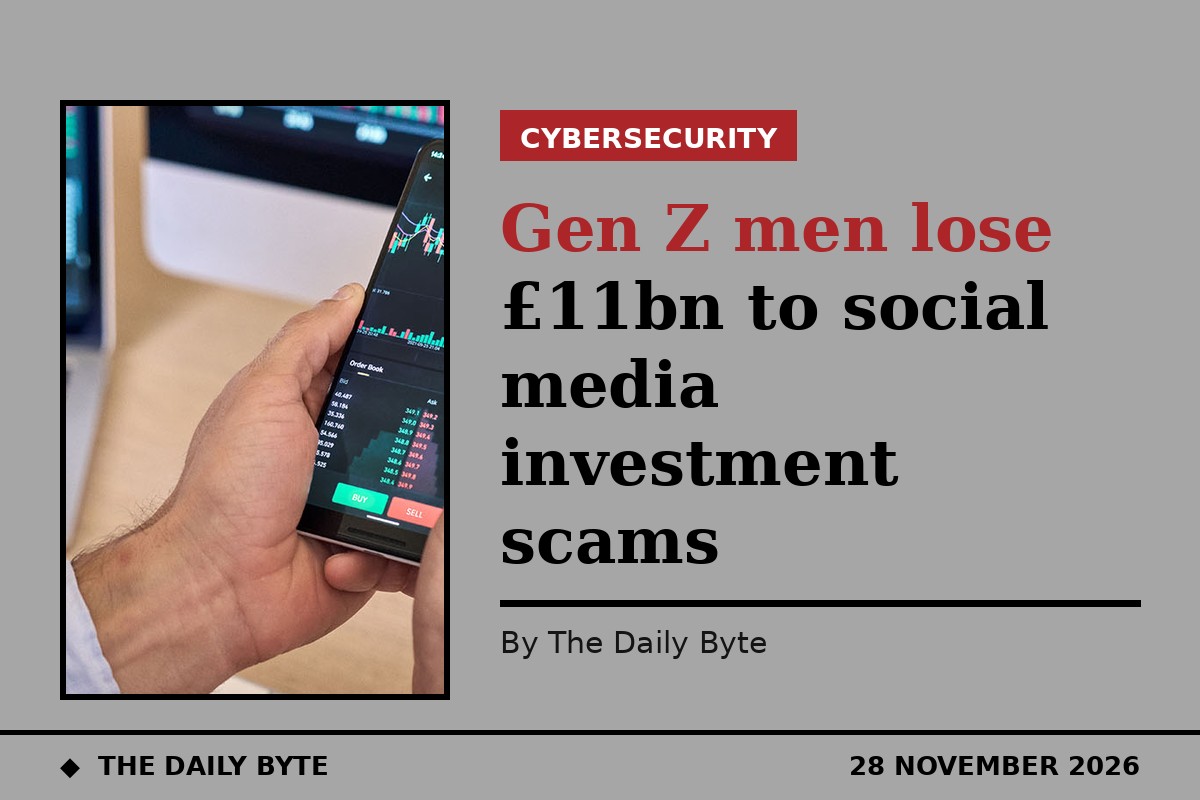
Almost half of young British men have fallen for investment scams pitched on social media, losing an estimated £11bn between them, according to new research from Starling Bank. The bank published the findings on 26 November 2026, warning that a flood of unregulated financial advice online is trapping young men in what it calls the Moneysphere.
The research, carried out by Censuswide among 2,001 UK respondents, found that 44 per cent of Gen Z men surveyed had been victims of social media investment scams, compared with 34 per cent of Gen Z women. The survey covered 1,501 nationally representative adults and a 500-person Gen Z sample, with data collected between 26 and 29 October 2026. Starling put the average loss among male victims at £5,370.35, and, applying that to official population estimates for Gen Z men, arrived at the £11bn collective figure. That total is an estimate extrapolated from the survey, not a counted sum of reported losses.
Pitches arrive several times a day
The exposure is relentless. Nearly three in four Gen Z men, 72 per cent, said they saw investment pitches on social media more than once a day, and 13 per cent said they saw them as often as every 15 minutes. The most common pitches were get-rich-quick schemes, cryptocurrency opportunities and stock market tips. Starling describes the Moneysphere as an unregulated online landscape where anonymous accounts, hyper-lifestyle influencers and AI creators promote pump-and-dump schemes, meme stocks and supposedly risk-free investment opportunities, often aimed at young men.
Most victims lost relatively small sums, but a minority lost a great deal. Starling found that 60 per cent of Gen Z investment victims lost less than £1,000, while 18 per cent lost more than £5,000 and 5 per cent lost more than £25,000. The bank’s own customer data points the same way: 18 to 24-year-olds were 1.64 times more likely than the average customer to fall victim to this type of scam.
Reported cases are rising
The wider picture is getting worse. UK Finance figures cited by Starling show investment scam cases rose 21 per cent in the first half of 2026, compared with the same period in 2025, to 7,805 cases, with losses up 29 per cent to £126.3m. Those are reported cases alone, so the true scale is likely larger.
What Starling is doing about it
Starling has teamed up with the rapper Professor Green, real name Stephen Manderson, for a short documentary, Inside the Moneysphere, speaking to victims of social media investment scams. Bernadette Smith, Starling’s chief customer and banking officer, said: “The Moneysphere is an increasingly powerful force threatening young men. Social media algorithms are consistently pushing younger consumers into dangerous echo chambers of unregulated financial advice, where extreme risk is normalised.”
The bank is urging people to pause before acting on any investment opportunity seen online, to look for red flags and to question anything that feels too good to be true. Its in-app Scam Intelligence feature lets customers upload screenshots of social posts, advertisements and message exchanges and checks them for known investment scam patterns. Starling has also published a red flag hub on its website setting out the warning signs. The message behind the campaign is simple: if a stranger on social media is promising risk-free riches, the riches are the bait.


