German investor morale jumps to 35.6 in November as ZEW survey beats forecasts
By aminah
·17 Nov 2026
·3 min read
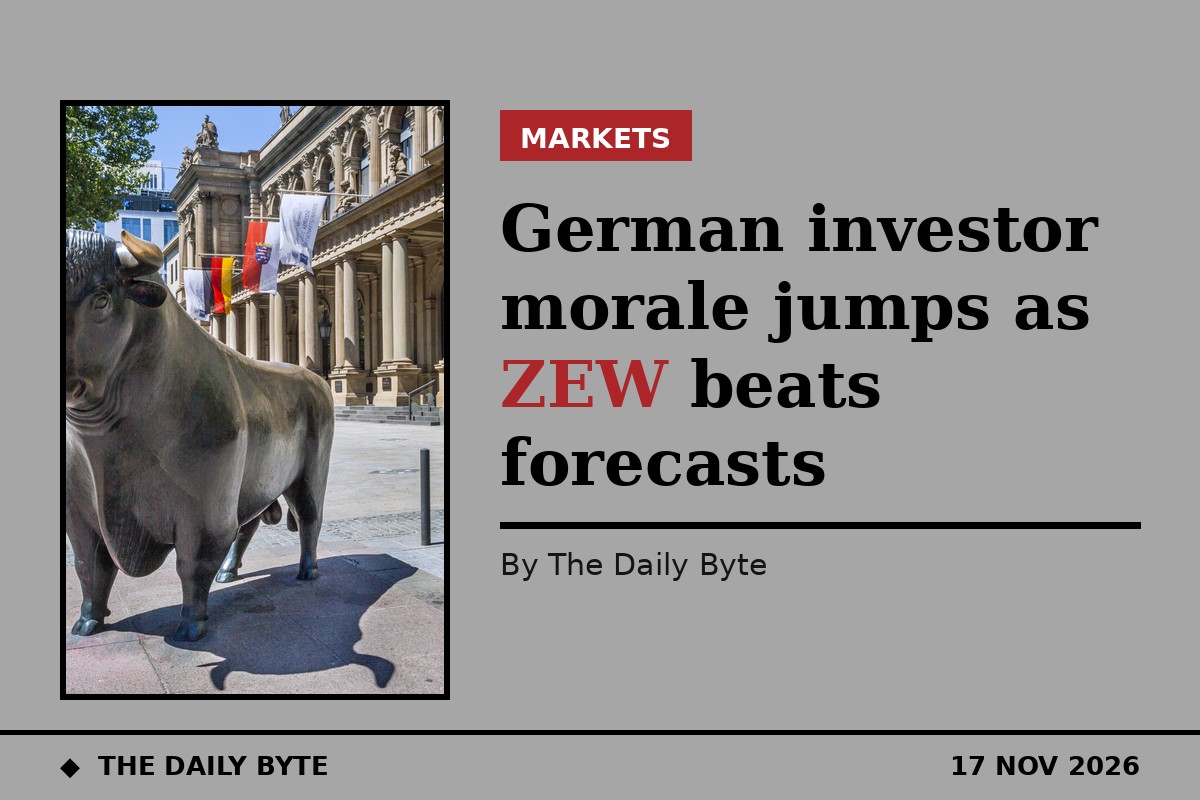
German investor morale rose more than expected in November, with the ZEW economic research institute's expectations index climbing to 35.6 points from 28.1 in October, its highest reading since February 2026.
The result beat the 28.3 reading analysts polled by Reuters had expected, and it came alongside an improvement in how investors judge Germany's current economic situation. The ZEW survey, published on Tuesday 17 November, is one of the most closely watched gauges of sentiment in Europe's largest economy.
## What the ZEW survey showed
The expectations index, which measures what financial market experts think the German economy will do over the next six months, rose by 7.5 points in November. The assessment of the present situation also improved, rising to minus 33.2 points from minus 35.9, its fifth consecutive monthly increase and its least pessimistic reading since April 2023.
Sentiment towards the wider euro area improved too. Expectations for the eurozone rose to 26.5 points in November, up from 18.5 the previous month, according to the survey results reported by [Democrata](https://www.democrata.es/en/economy/the-confidence-of-german-investors-rises-again-in-november-according-to-the-zew/).
## A slow recovery, driven by public spending
ZEW President Achim Wambach said the German economy "remains on its recovery track, albeit moving at a slow rate". He added that increasing manufacturing orders and falling oil prices were likely to underpin the upturn, while noting that government expenditure has so far been the mainstay of the recovery.
Not every economist was convinced the improvement will last. Alexander Krueger, chief economist at Bethmann HAL Bank, said the survey continued to signal growth, although the economy faces risks. "Greater confidence is exaggerated given the many risks, though less so due to fiscal stimulus" now flowing into the economy, he said.
## Why it matters for markets
The stronger-than-expected reading lands in a week when European markets have been under pressure from a sell-off in technology shares and worries about stretched valuations in artificial intelligence. A resilient German economy matters well beyond Berlin: Germany is the eurozone's largest economy, and its manufacturing orders and export demand feed directly into growth across the bloc.
The survey also fits with the picture painted by the European Commission's autumn forecast, published the same day, which raised its eurozone growth forecast for 2026 to 1.2 per cent. Falling oil prices, which Wambach cited as a support for the recovery, have eased costs for German industry after Brent crude slipped below $92 a barrel this week on expectations of a global supply surplus.
## What to watch next
Investors will now look to hard data to confirm the softer survey signal. German manufacturing orders, industrial output and the Ifo business climate index will show whether the improved mood among financial experts is matched by conditions on the factory floor. The ZEW survey is based on the views of financial market experts rather than businesses themselves, so it can move ahead of the real economy in both directions.
For now, though, the message from Mannheim, where ZEW is based, is that confidence in Germany is heading in the right direction, even if the recovery itself remains slow.
## Frequently asked questions
**What is the ZEW investor morale index?**
It is a monthly survey by the Leibniz Centre for European Economic Research (ZEW) of financial market experts, measuring their expectations for the German economy over the next six months. A positive reading means optimists outnumber pessimists.
**What was the ZEW reading in November 2026?**
The expectations index rose to 35.6 points, up from 28.1 in October and ahead of the 28.3 forecast in a Reuters poll. The current situation indicator improved to minus 33.2 from minus 35.9.