German Producer Prices Jump 8.1% on Energy Surge
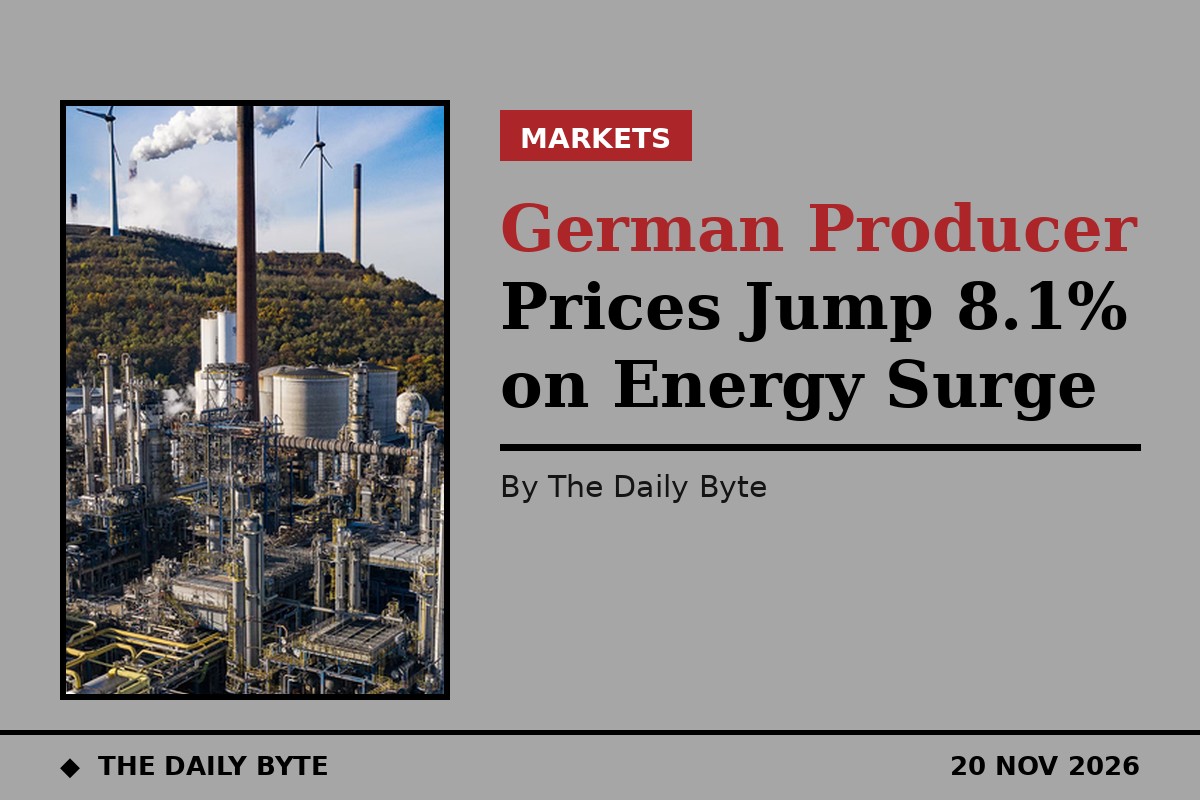
German producer prices rose 8.1% in October compared with a year earlier, the fastest annual increase since February 2023, according to the Federal Statistical Office. Prices were up 1.4% on the month, more than the 0.9% rise economists had expected.
The increase was driven above all by energy. Energy prices were 18.7% higher than in October 2025 and rose 3.8% on the month, and the statistics office pointed to the conflict in Iran and the Middle East as the reason for the sharp rise in the price of oil products.
Mineral oil products up more than 50%
Prices of mineral oil products were 51.9% higher than a year earlier, although they eased by 0.6% compared with September. Naphtha cost 76.7% more than in October 2025, heating oil was up 97.2% and motor fuels were 38.4% more expensive.
Natural gas cost 21.9% more than a year earlier across all consumer groups, and electricity prices were up 12.6%. District heating prices were unchanged year on year. Excluding energy altogether, producer prices rose by a much more modest 3.6% from October 2025 and were up 0.3% on the month.
Metals and chemicals add to the pressure
Intermediate goods, the materials manufacturers buy to make their products, rose 6.8% year on year. Metals were the main driver, up 12.9%, with copper and semi-finished copper products up 29.4% and basic iron, steel and ferro-alloys up 9.7%. Basic chemicals cost 12.5% more than a year earlier and fertilisers 11.3% more.
Capital goods were 2.4% more expensive than in October 2025, with machinery up 2.3% and motor vehicles, trailers and semi-trailers up 1.9%. Durable consumer goods cost 2.3% more than a year earlier.
Some relief for shoppers
Not every price rose. Non-durable consumer goods were 1.3% cheaper than in October 2025, and food prices fell 3.1% in total. Butter cost 25.0% less than a year earlier, pork 12.5% less and beef 9.4% less. Vegetable oils, by contrast, were 14.2% more expensive and sugar 3.9% more.
What it means for inflation
Producer prices measure what German factories, mines and energy suppliers charge for their products before they reach shops and consumers, so they are watched as an early sign of where consumer prices may be heading. The headline rate is the strongest since February 2023, when producer prices were up 13.9% year on year, but the picture underneath is split: energy and metals are surging while food prices are falling.
Businesses are already responding. The ifo Institute reported in October that more companies were planning to raise their own prices, with its price expectations indicator rising to 25.9 points from 23.0 in September. Its head of forecasts, Timo Wollmershäuser, said companies were reacting to the sharp increase in crude oil and natural gas prices and that inflation would continue to rise for both producer and consumer prices in the coming months.
For households and for the European Central Bank, the question now is how much of the producer-price surge reaches shop prices. Energy costs feed into almost everything a factory makes and moves, so a 18.7% annual rise in energy prices is hard for firms to absorb for long. But with food prices falling and the rise excluding energy running at 3.6%, the pressure is concentrated rather than broad-based — at least for now.
Frequently asked questions
What are producer prices? They are the prices charged by domestic producers in Germany for industrial products, measured before the goods reach wholesalers and shops. The index covers mining and quarrying, manufacturing and energy and water supply, and includes all charges and taxes except VAT.
Do higher producer prices mean higher shop prices? Not automatically. Firms may absorb some of the increase in their margins, and the link is weaker for goods where energy is a small share of the cost. But sustained rises in energy and materials costs usually feed through to consumer prices over time, which is why the figures are watched closely.
Source: Destatis (Federal Statistical Office of Germany)
Source: dpa-AFX via TradingView
Source: ifo Institute