Germany's AfD rethinks its anti-euro roots
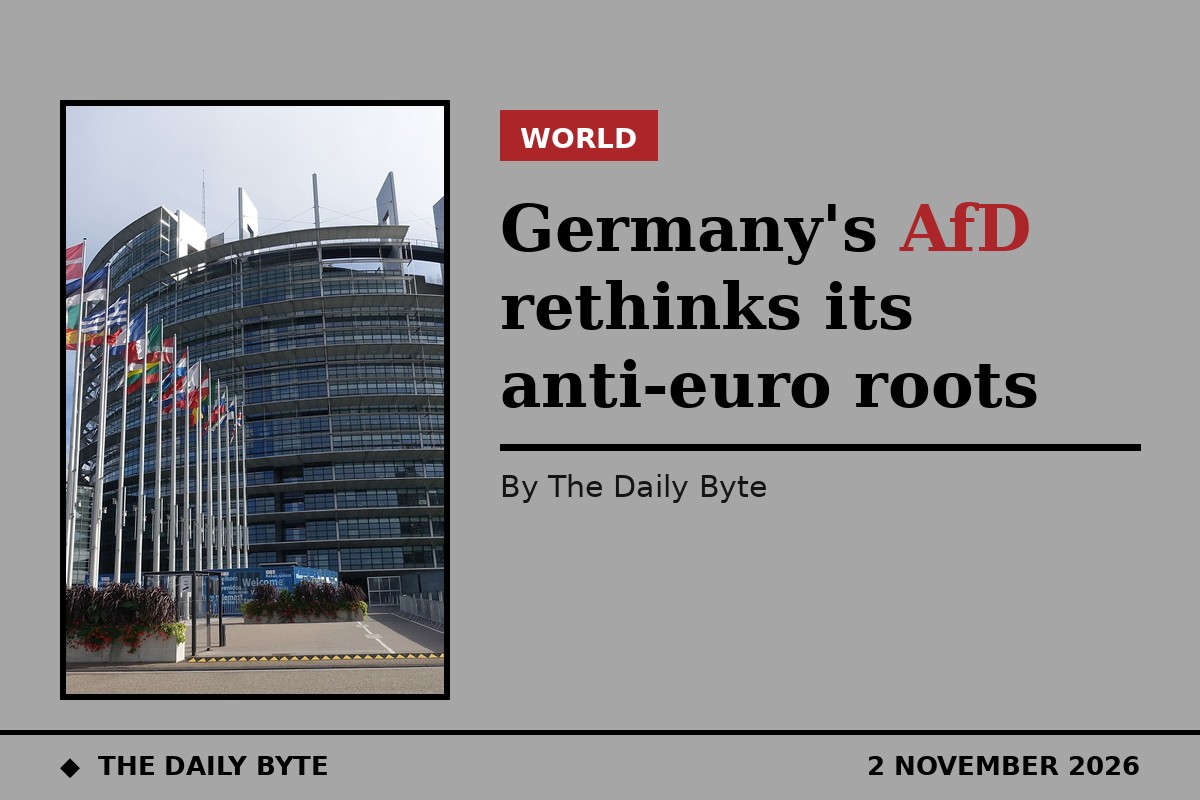
Germany's far-right Alternative for Germany (AfD), founded in 2013 in opposition to the EU's handling of the euro crisis, is recalibrating its vision for Europe as it and its right-wing allies gain influence.
After a historic victory in a regional election in Saxony-Anhalt in September, the AfD — described by Reuters as Germany's most popular party in nationwide surveys — appears closer than ever to entering government at national level before the end of the decade.
A New Deal for Europe
Last month, AfD co-leader Alice Weidel presented a strategy paper at the European Parliament in Strasbourg on a “New Deal for Europe”, alongside allies in the Europe of Sovereign Nations (ESN) grouping.
The paper shifts emphasis away from quitting the eurozone and the EU, focusing instead on renegotiating treaties to establish a looser union. It proposes an “opt-out” mechanism for members who reject common policies on defence spending or immigration, as well as stricter enforcement of budget rules — leaving open the possibility of retaining the euro.
Should reform efforts fail, the paper suggests Germany's future European direction would be decided by referendum.
What Weidel would not say
Weidel declined to say whether she still wanted Germany to leave the eurozone or the EU, telling journalists the AfD and ESN stood for “a European union, a Europe of fatherlands”.
The AfD rejects allegations of extremism. Chancellor Friedrich Merz's conservative Christian Democrats (CDU) currently rule out any alliance with it.
Sources: Reuters, 2 November 2026, via BusinessWorld and TradersUnion.