Germany Christmas Markets Open Under Tight Security
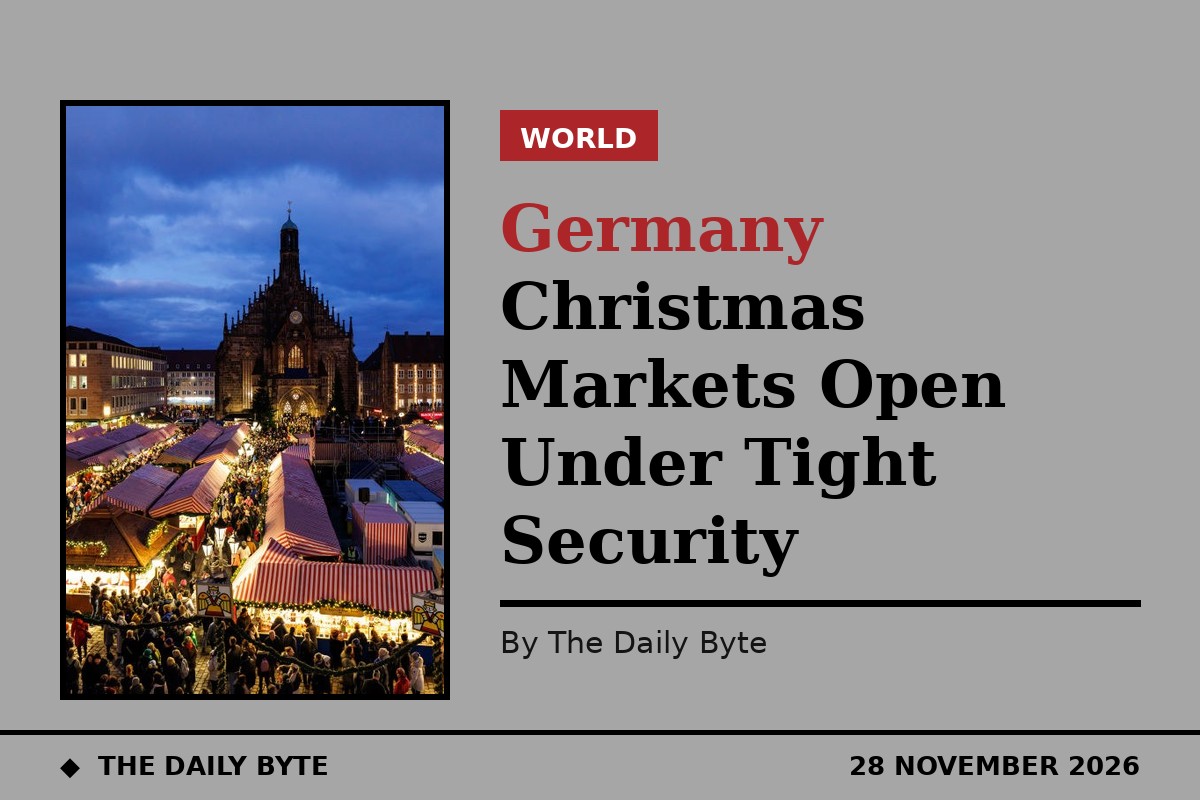
Christmas markets across Germany are welcoming visitors for the 2026 season, with about 3,000 festive venues preparing for an estimated 170 million visits. But behind the lights and mulled wine, organisers are spending more than ever on security, and some smaller towns have cancelled or scaled back their markets altogether.
In Munich, the Christkindlmarkt on Marienplatz, a tradition dating to the 14th century, has 138 stalls selling gingerbread, wooden carvings and holiday decorations. A dedicated nativity market and the traditional Krampus run are also part of the celebrations, which continue until Christmas Eve. More than 140 red-roofed stalls stand at the foot of Cologne Cathedral around a 25-metre fir tree adorned with about 50,000 lights. The Cologne market features traditional crafts, mulled wine and more than 100 free performances, and runs until 23 December.
Berlin, Nuremberg and Dresden open
Berlin has more than 80 Christmas markets, ranging from torchlit medieval fairs with fire shows to the Alt-Rixdorf charity market, which opens for just one weekend each December. Skaters glide beneath the television tower beside a brightly lit Ferris wheel. Nuremberg's Christkindlesmarkt, one of the best known in the country, opened on 27 November with its traditional prologue and runs until Christmas Eve. Dresden's Striezelmarkt opened on 25 November. Bremen is forecasting about three million visitors through 23 December, and Frankfurt expects up to roughly 2.5 million through 22 December.
The season is unfolding under heightened security following deadly attacks in Berlin in 2016 and Magdeburg in 2024. Organisers have rolled out hardened plans that include vehicle barriers or bollards, video surveillance, visible police and spot checks at crowded sites. Magdeburg has implemented one of the most visible responses, reconfiguring its market and installing roughly 500 bollards and other barriers at an estimated cost of 2.5 million euros.
Security costs reshape the season
The cost of keeping markets safe has become one of the biggest pressures on organisers. Typical security budgets run to between 100,000 and 200,000 euros, and some sites now spend up to about 25 per cent of their whole budget on safety. Financial and safety pressures have already forced cancellations or scaled-back formats in smaller towns, including Kirchheim, Trimburg and Thannhausen. Mering will run with just 17 booths, Mainz is holding a quieter so-called silent market with reduced live music, and Rotenburg has moved its market to the Schlosspark, opening on 3 December.
Visitors are also facing wide price variation. A mug of Gluhwein in Frankfurt costs between 4.50 and 5.00 euros, while a hotel-run Champagne Gluhwein in Munich is sold for 18 euros. Even so, cities are adjusting operations to support local trade, extending shop hours, staging special programmes and keeping fees low for vendors, in the hope that the safer, better-equipped markets will help revive weak retail sales this season.
Smaller towns adapt
The season also brings smaller changes that show how towns are adapting. Rostock replaced a live extra-large Christmas tree with a 30-metre light projection, a choice that has drawn strong public criticism. Foresters warn that bark beetle damage and climate stress have cut the pool of suitable giant spruces and will affect future tree supply. Berlin's Reichstag spruce was selected from the Harz mountains after a multi-stage official process and is lit each day from morning to midnight.
With the first Advent falling on Sunday 29 November, the weeks ahead are the busiest of the year for Germany's markets. For the big cities, the season is a major cultural and economic draw. For smaller towns, the rising cost of security is now the question that decides whether a market opens at all, and organisers say the balance between keeping crowds safe and keeping the tradition alive has never been harder to strike.


