Germany plans coal plants on standby for gas crisis
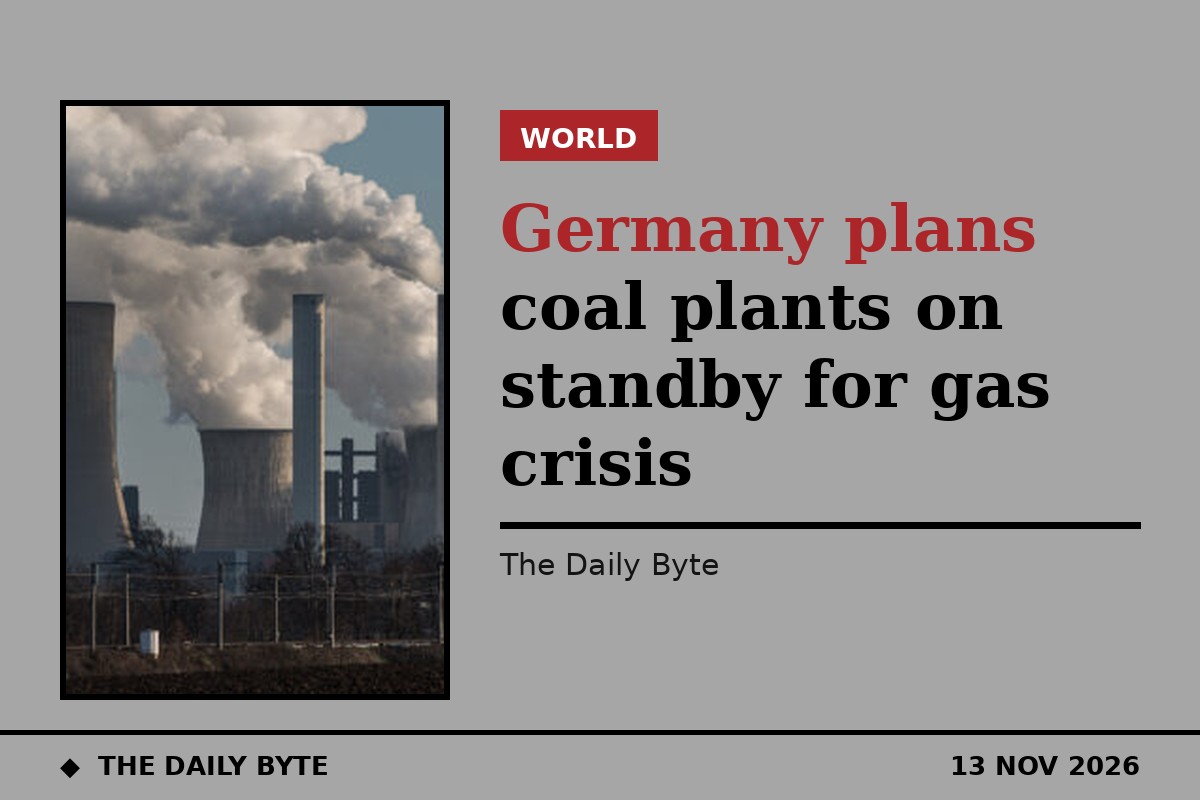
Germany plans to oblige operators of coal- and oil-fired power plants to stand ready for a possible gas shortage this winter and to stock up on fuel in advance, business daily Handelsblatt reported. The draft law, drawn up by Economy Minister Katherina Reiche, would let the reserve plants generate electricity in place of gas-fired stations, so scarce gas could go to industry and households.
Under the draft, the plants would only be used if the government formally declares a gas shortage. Operators would have to keep enough coal to run at full output for 30 days, or enough oil for 10 days. The rules would cover plants in Germany's grid reserve and units due to close in 2026 or 2027. The law would expire on 31 March 2028.
Strategic gas reserve approved alongside
The standby plan sits alongside a second measure approved this week: a strategic national gas reserve holding 24 terawatt hours, around 10 percent of the country's total storage capacity, to be drawn on only in exceptional circumstances. It is forecast to cost 247 million to 405 million euros a year over 10 years, and from 2027 it would replace the mandatory storage targets set after Russia's invasion of Ukraine. Reiche said the reserve would insure Germany against crisis situations, not high prices.
Why Berlin is acting now
German gas storage missed this year's 70 percent filling target by early November, and the war involving the United States and Israel against Iran has upended global energy markets. The economy ministry insists supply for this winter is secure, but ministers say the country can no longer rely on filling targets alone. The draft is still being discussed within the government and could still change. Sources: Clean Energy Wire and QNC News.


