Germany puts ID cards on phones with d-you wallet
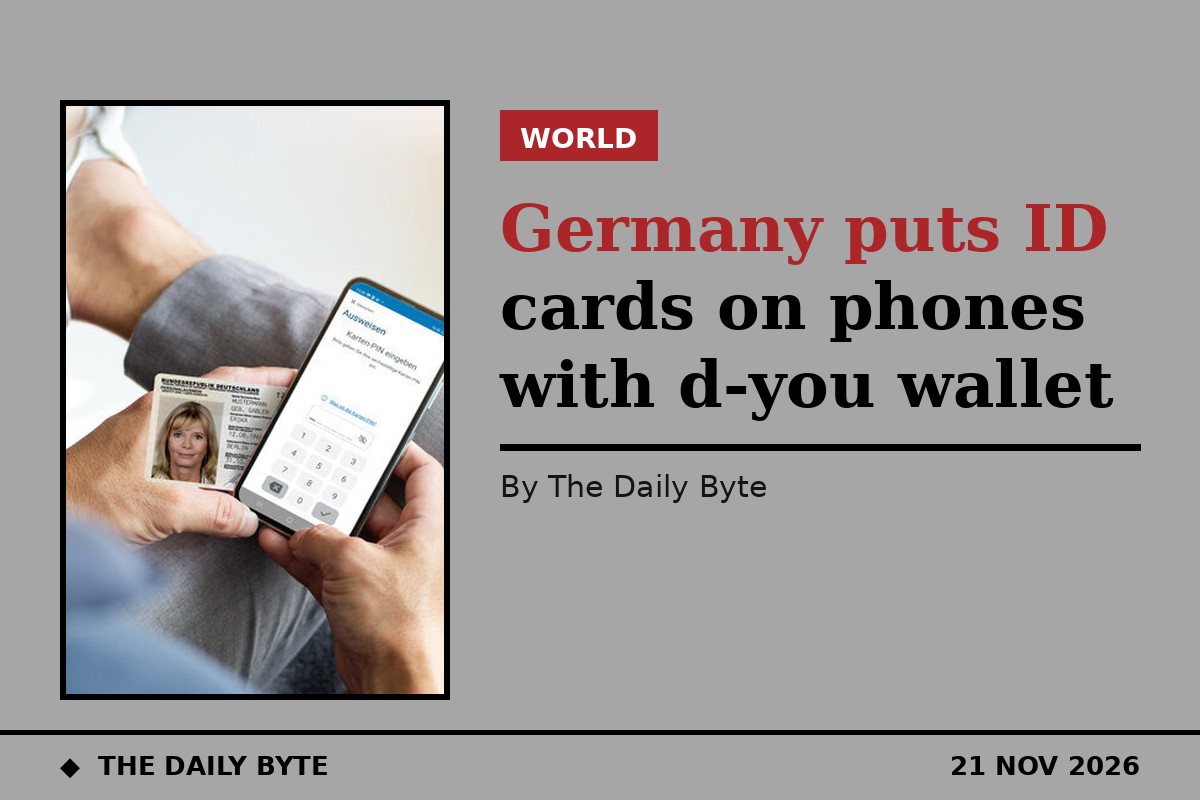
Germany has cleared the final parliamentary hurdle for putting its national identity card on a smartphone. The Bundesrat, the chamber representing the country's federal states, unanimously approved the Digital Identities Act on Friday, 20 November, paving the way for the launch of the state-backed digital wallet app d-you on 2 January 2027.
Once the law is signed and promulgated, it takes effect the following day. The vote completes the legislation's passage through parliament, after the Bundestag approved the same law in mid-October with the support of the governing CDU/CSU and SPD parties.
What the new law does
The act implements European Union rules that require every member state to offer its citizens a digital identity wallet. Germany's version is called d-you, short for digital you, and it is being built by SPRIND, the Federal Agency for Disruptive Innovations, on behalf of the Federal Ministry for Digital Transformation and Government Modernisation.
From launch, users will be able to identify themselves to government bodies and private services, prove their age, open bank accounts and sign legally binding contracts using the app. Use of the wallet will be free and voluntary, and plastic identity cards and paper documents will remain valid. The government has stressed that nobody will be forced to go digital.
How d-you will work
Setting up the wallet starts with the existing German ID card or an electronic residence permit with the online ID function activated. The card is read over NFC using its six-digit PIN, and the data is stored encrypted on the phone rather than in the cloud, so the user chooses which details to share in each transaction.
The app will require at least iOS 26.4 or Android 14 and a phone with NFC and the necessary security features. An internet connection will be needed when the wallet launches, with fully offline use planned for a later stage. Around 40 partners from industry, academia and government are involved, more than 300 use cases have been prepared, and about 50 are expected to be available on day one.
Driving licence and everyday uses
A digital driving licence is also scheduled to be available in d-you from 2 January. At a traffic stop, police would display a QR code that the driver scans with their phone; the wallet then shows which data is being requested and sends it only after the driver agrees. The digital licence is intended to supplement the plastic card rather than replace it.
Federal Digital Minister Karsten Wildberger said the aim was for the wallet to become usable step by step in more and more everyday situations, including identifying yourself when picking up a parcel or receiving a digital employee ID. Other documents, such as birth certificates and tickets, are to be added over time, along with electronic signatures.
Questions over privacy
The rollout has also drawn questions from privacy advocates over how much personal data each check reveals. Pseudonymous logins, which would let people prove something about themselves without disclosing their full identity, are envisaged under the EU's eIDAS 2.0 regulation but will only be added gradually, along with other credentials. The government says the wallet is designed around user control, with data held on the device and shared selectively.
The Digital Identities Act also makes two smaller changes. People who apply for an ID card at the age of 70 or older will be able to keep using it indefinitely, and the requirement to update the place of residence in a passport after moving house is being scrapped. The obligation to register a change of address with the local authorities remains unchanged.