Germany Faces Largest Bill Under Proposed EU Taxes
Germany would pay the largest share of the European Union's proposed new bloc-wide taxes, contributing more than 13 billion euros over the 2028-2034 budget period, according to updated estimates from the European Commission reported on Thursday. Italy would pay the second-largest share, at 8 billion euros, with France, the EU's second-largest economy, ranking third.
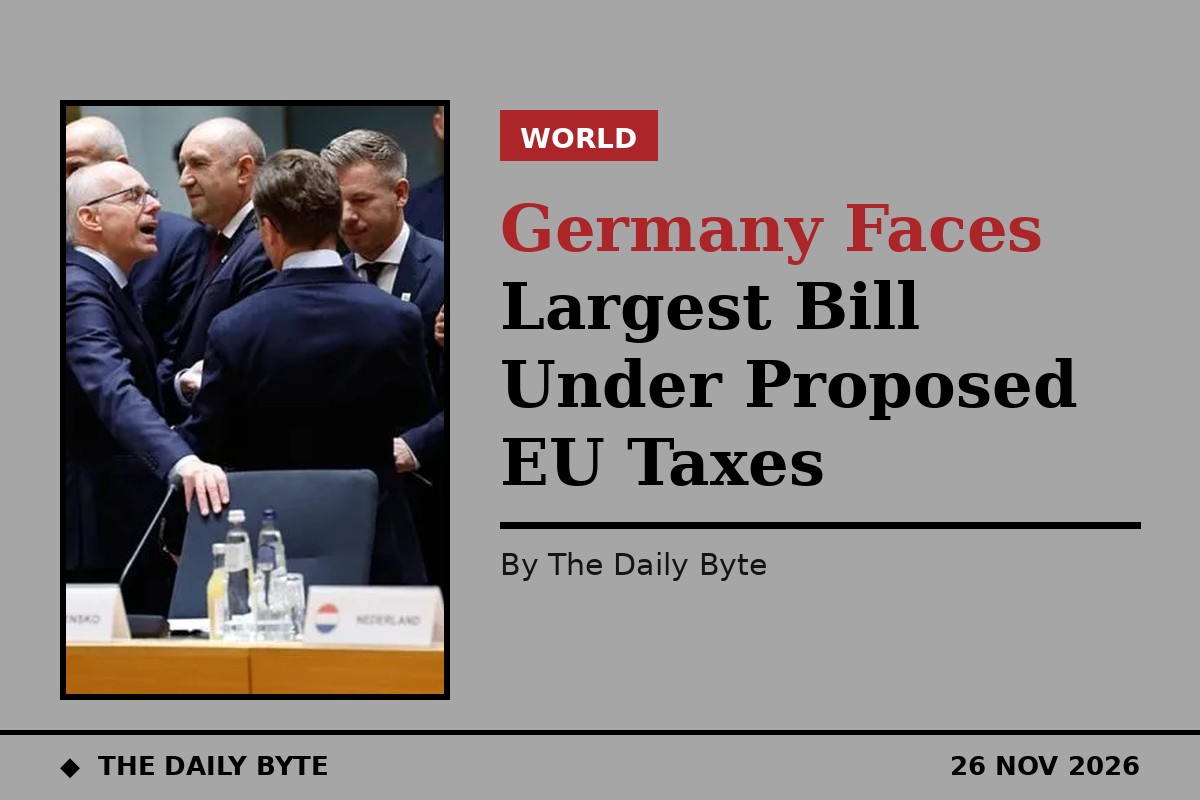
The figures were circulated by the Commission as EU leaders gathered in Brussels on Thursday for a two-day summit on the bloc's next seven-year budget and financing for Ukraine in 2027. The new taxes form part of a package put forward by European Council President Antonio Costa, which is intended to raise about 60 billion euros a year in EU revenue and reduce the bloc's reliance on direct contributions from national budgets.
Costa's draft budget sets total spending at about 1.58 trillion euros for 2028-2034, roughly 10 per cent below the Commission's original proposal. The European Parliament's budget negotiators have already said the plan is too small, warning that Parliament's consent, which is required before any long-term budget can take effect, cannot be taken for granted. Leaders are not expected to settle the budget at this week's meeting, with further talks due in December.
The single biggest revenue source in the package would be a charge of 2.25 euros per kilogram of uncollected electronic waste, which the Commission expects to generate more than 20 billion euros a year on average. Electronic waste would account for the largest contribution for most member states. Under the proposal, countries would contribute according to the share of electronic devices produced in their territory that are recycled: Germany, Italy and France together would provide more than 60 per cent of the revenue, while the Commission estimates Bulgaria would pay nothing.
A charge of 1.25 euros per kilogram on non-recycled plastic packaging waste would also fall mainly on the bloc's largest economies, with more than half of the projected revenue coming from France, Germany, Italy and Spain. The same four countries would provide more than 60 per cent of the revenue from an EU-wide digital services tax. France, Italy and Spain already impose national digital levies, so those governments would lose that revenue to Brussels under the proposal.
Revenue from tobacco excise duties would be concentrated in a smaller number of countries, reflecting consumption patterns and excise duty rates rather than population size. Luxembourg, despite its small size, would contribute substantially because it sells large volumes of cigarettes and related products to consumers from neighbouring countries at lower prices.
Allocating 30 per cent of Emissions Trading System revenue to the EU budget would particularly benefit France, which would rank fourth in contributions under that arrangement. The same arrangement would weigh more heavily on countries such as Poland and Bulgaria relative to the size of their economies. Italy would be the largest contributor to the Carbon Border Adjustment Mechanism, a levy on imports of carbon-intensive products, with Belgium and Poland also contributing more than their economic size would suggest. Receipts from that mechanism could more than double by 2034, according to the estimates.
The figures are estimates, not agreed payments, and the taxes themselves are proposals rather than law. Several of the levies would be adjusted for inflation, so the Commission expects some revenues to rise substantially over time. Costa also changed several of the tax measures to address objections from central and eastern European countries, leaving southern European states to shoulder the largest shares. The estimates are meant to be read alongside the contributions countries would otherwise make based on gross national income, the current main basis for funding the EU budget.


