German Growth Stronger Than Expected, Bundesbank Says
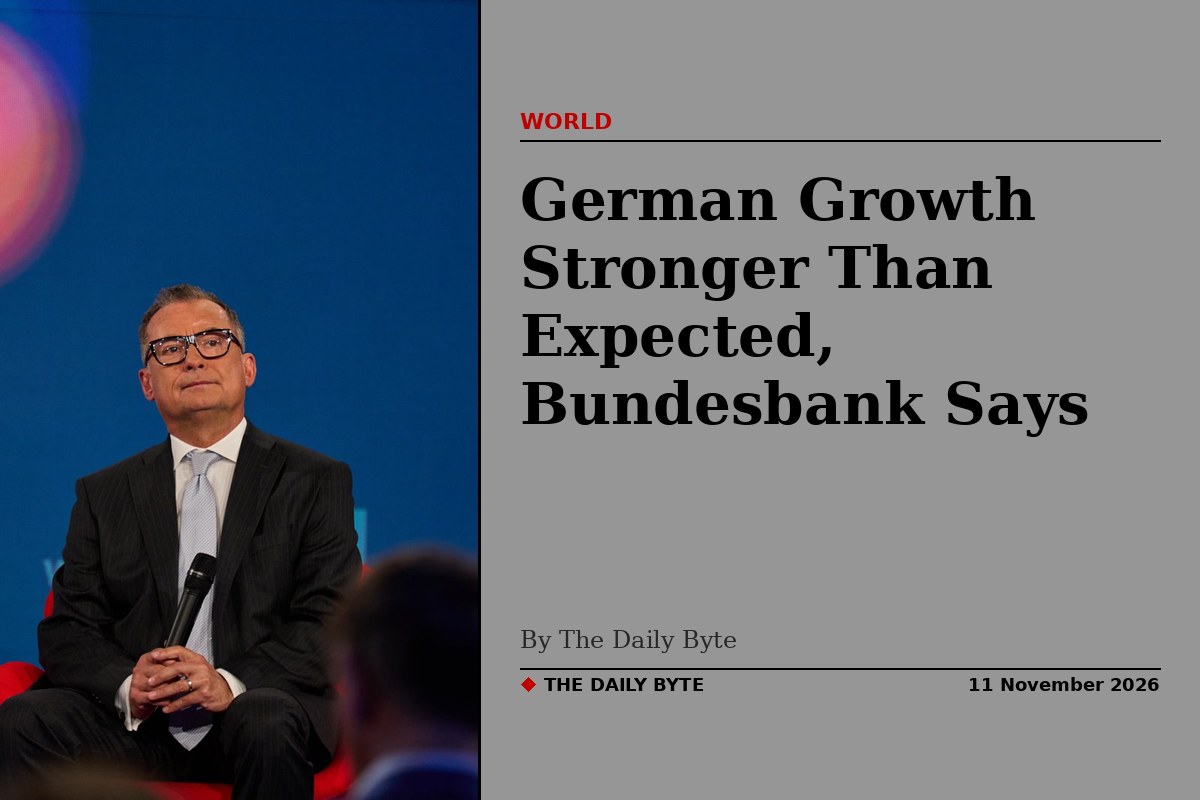
Germany's economy is recovering faster than expected and growth is likely to accelerate in the final quarter of 2026, Bundesbank President Joachim Nagel said on Wednesday. The assessment, delivered at a conference in Riga, marks a brighter outlook for Europe's largest economy after three years of near-stagnation.
Nagel said the Bundesbank's interim assessments pointed to a stronger recovery than it had been expecting in the summer. Germany, the world's third-biggest economy, has barely grown for most of the past three years as its vast industrial sector lost some of its competitive edge, but a recovery has started to take hold this year.
Defence and infrastructure spending drive the recovery
A surge in government spending on defence and infrastructure has given the recovery an additional boost, Nagel said. Exports and expansionary fiscal policy are also supporting activity, with growth in the second quarter revised upwards to 0.3%, according to the Bundesbank.
The real surprise this year has been the recovery of manufacturing, especially chemicals and electrical equipment output, and order levels suggest that trend is likely to continue. In June, the Bundesbank forecast economic growth in 2026 of just 0.5%, but most major forecasters now see a growth rate of more than twice that.
Recovery not yet broad-based, Nagel warns
Nagel cautioned that the recovery is not yet broad-based and that deep structural challenges continue to hold the economy back. Firms are still holding back on investment, and he noted that Germany's potential growth rate remains especially low, meaning deep structural changes are needed to lift it.
Even so, the Bundesbank chief's message was that the economy is likely to expand much more strongly this year than previously expected, offering some relief after a long period of stagnation. Further detail is available in Reuters' report on Nagel's remarks.


