Germany Plans Bigger Payouts to Speed Syrian Returns
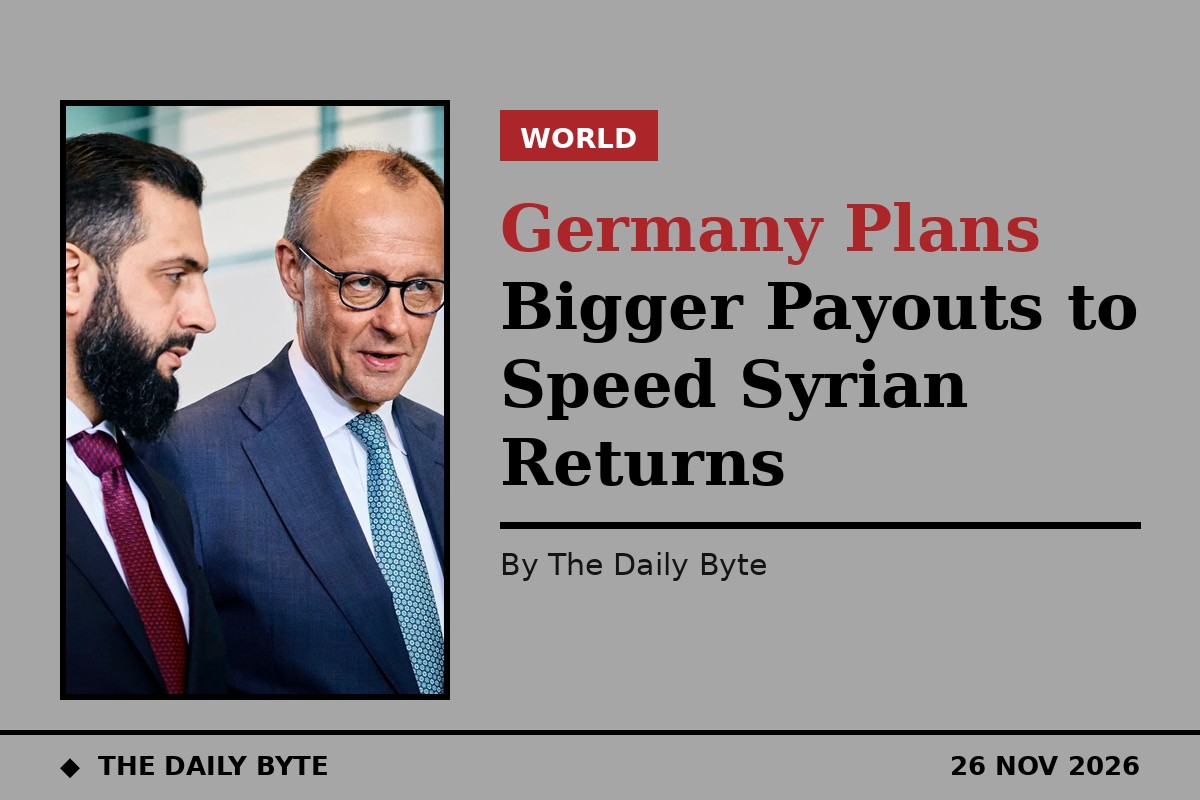
Germany is preparing a new package of measures to speed up the return of Syrians living in the country, with bigger cash incentives, direct flights to Damascus and funding for housing in Syria, according to German media reports published on Thursday.
The plan, reported by the Bild newspaper and covered by Welt, is aimed at 2027. It comes after a year in which only a small share of the Syrians living in Germany have left voluntarily, despite the government's stated goal of large-scale returns.
Chancellor Friedrich Merz said in the spring that he wanted 80 per cent of the more than 900,000 Syrians living in Germany to return within three years, a target he said came from a request by Syrian President Ahmed al-Sharaa. Between January and October 2026, 5,468 Syrians left Germany with government financial support, and about 3,000 more left without it. Between December 2024 and July 2026, at least 14,182 Syrians returned voluntarily, including 7,725 with financial help, according to Mediendienst Integration.
Bigger grants under discussion
At present, a family of four can receive up to 3,600 euros plus plane tickets under the voluntary return scheme. Bild reported that experts are discussing grants of up to 8,000 euros per adult, but the increase has not been decided and the government has not named any specific new figure.
The Federal Interior Ministry, led by Alexander Dobrindt, is planning a wider reform of the financial support system for returnees from 2027, aiming to simplify advice, speed up procedures and make the system more transparent. The ministry said it works with the Federal Office for Migration and Refugees to check whether the support on offer encourages voluntary return and lasting reintegration.
Direct flights and housing in Syria
From January 2027, Eurowings is expected to operate direct low-cost flights to Damascus. The first is planned for Monday 11 January 2027, from Hamburg, with a one-way ticket costing about 200 euros. Direct flights from Berlin, Dusseldorf and Stuttgart are also planned. Sundair already flies from Berlin to Damascus on Tuesdays and Saturdays, and Syrian Air serves the route on Tuesdays and Fridays.
Germany is also putting money into housing for returnees. The state development bank KfW is providing 20 million euros from the federal budget to build and renovate about 1,500 housing units, enough for around 10,000 people. Work is due to start in 2027 and finish by the end of 2029. A KfW spokesperson said the project restores existing housing and only selects properties with proven ownership, benefiting returnees and host communities alike. In February, the German development agency GIZ launched a pilot project in the Jobar neighbourhood of Damascus to protect housing and property rights, with an advice office to help returnees prove their rights.
Faster removals also on the table
Alongside the incentives, the state of Brandenburg is calling for the revocation of protection status and the residency permit to be handled in a single administrative procedure instead of two, arguing that this could shorten the time between revocation and deportation by at least 11 months. State interior ministers are expected to discuss the proposal in early December. It remains a demand from the state, not a decision.
The plan faces practical limits. The situation in Syria remains unstable, housing is scarce and reconstruction is slow. Syria's foreign minister has warned that mass deportations could cause chaos. Germany has also tightened controls on migration and social benefits more widely this year, including a ten-point plan against benefit abuse and a proposal for a rapid-response force within Frontex.


