Raccoon Roast Could Replace Germany's Christmas Goose
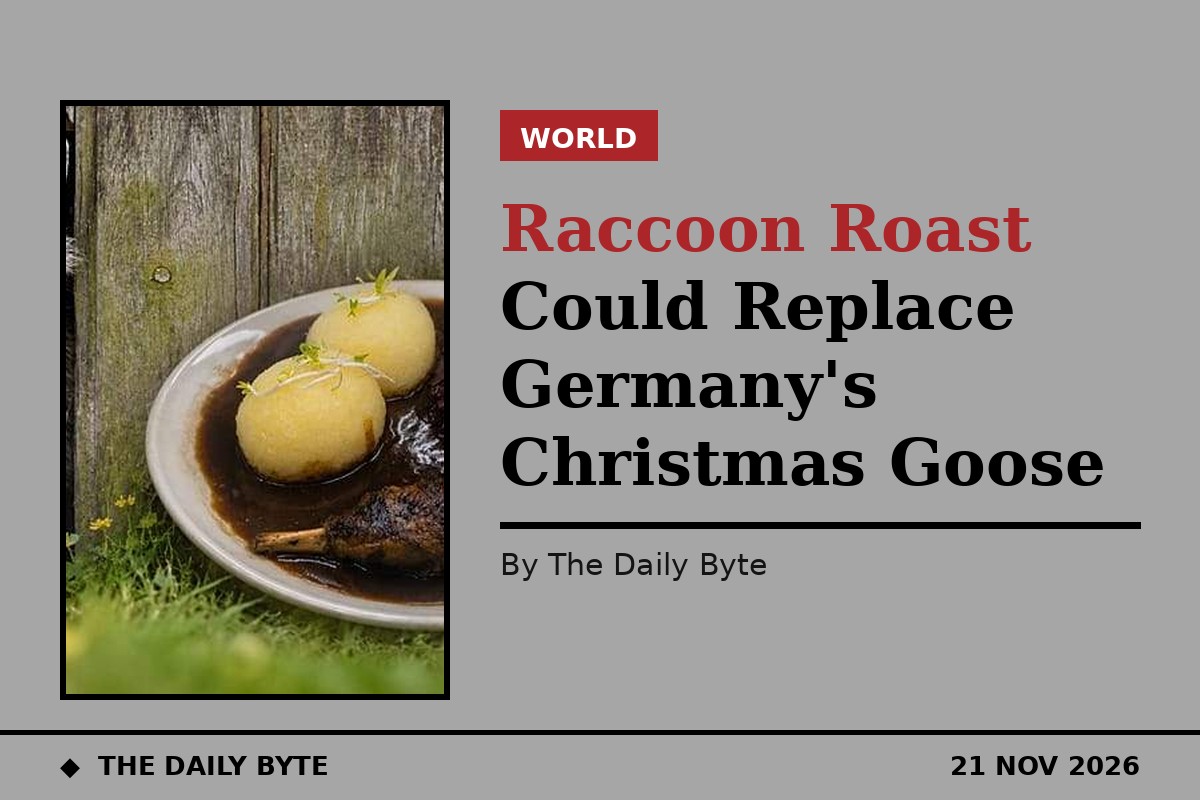
A chef in the German city of Weimar is putting an unlikely animal on the Christmas dinner table: the raccoon. Steffen Haaßengier, who runs the restaurant Zum Lindeneck, serves braised raccoon leg with dumplings and red cabbage, and argues it can stand in for the traditional roast goose.
Haaßengier first came across raccoons while out fishing. For more than two years the animals have been a fixture on his menu, even though he is a vegetarian in his private life. He also teaches cookery courses showing others how to prepare raccoon meat, and his restaurant has built a regular clientele who return every fortnight.
From barbecue days to the Sunday roast
The menu goes well beyond a single dish. On special raccoon barbecue days he butchers up to 35 animals, and his raccoon burger, served with homemade Canadian coleslaw and chips, has become a firm favourite. On Sundays he serves the classic raccoon leg with a red wine and lingonberry sauce, and he is currently working on a raccoon ragout. On 6 December his restaurant is hosting a St Nicholas feast at which badger will also be on the menu alongside raccoon, both at special prices.
Local hunters bring him the raccoons after shooting them, and the veterinary authorities test the meat for disease before it is cooked. The chef says feedback from guests is consistently positive, once diners get past the image of the small animal in their heads. Many come back several times, he says, bringing family and friends.
What raccoon tastes like
For those who have never tried it, Haaßengier describes the flavour as slightly sweet, somewhere between game and beef, tender and long-fibred, and comparable to rabbit. In Canada, he notes, raccoons have long been considered a delicacy. He recommends robust seasoning, such as rosemary, thyme, paprika, garlic and onion.
The pitch is not only about taste. Raccoons are an invasive species in Germany, and Haaßengier argues that eating them is food for a good cause. There is no factory farming involved, he says, and no need for force-fed geese or other animals raised for their meat. There are plenty of raccoons anyway, and they have to be culled. As for the price, he says there is not much difference from a conventional roast.
An invasive species out of control
Raccoons are originally native to North America, and in Germany they are classified as an invasive species. As omnivores they pose a threat to native amphibians, reptiles and birds, and during their lifetime they can cause considerable damage to buildings, through faeces and urine contamination, as well as to gardens and native wildlife. A raccoon can weigh between 3.6 and 13 kilograms and live for up to 16 years.
According to the German Hunting Association, almost 290,000 raccoons were shot across Germany in 2025. The numbers are also rising in Berlin, where 286 raccoons were shot in the 2024/25 hunting season, compared with just 103 in 2022/23. In neighbouring Brandenburg, around 30,000 raccoons were shot in 2022/23.
Could it replace the goose?
In Germany a festive meal is traditionally a must at Christmas. While many families serve potato salad with sausages on Christmas Eve, the main Christmas holidays often feature roast goose, duck or beef roulades, accompanied by red cabbage and potato dumplings. Haaßengier says braised raccoon leg can easily replace goose leg, roulade or duck, without abandoning tradition.
There is a precedent for eating an invasive species in Germany. In East Germany before reunification, nutria, known as the swamp beaver, was a popular item on the menu, its meat prepared much like rabbit or hare, as a roast, stew or pan-fried dish, or made into sausages. Whether raccoon follows the same path onto Christmas tables remains to be seen, but in Weimar at least, the alternative is already on the menu.
Sources: Euronews and Mondial News.


