Germany Raises Cyber Threat Level as AI Speeds Attacks
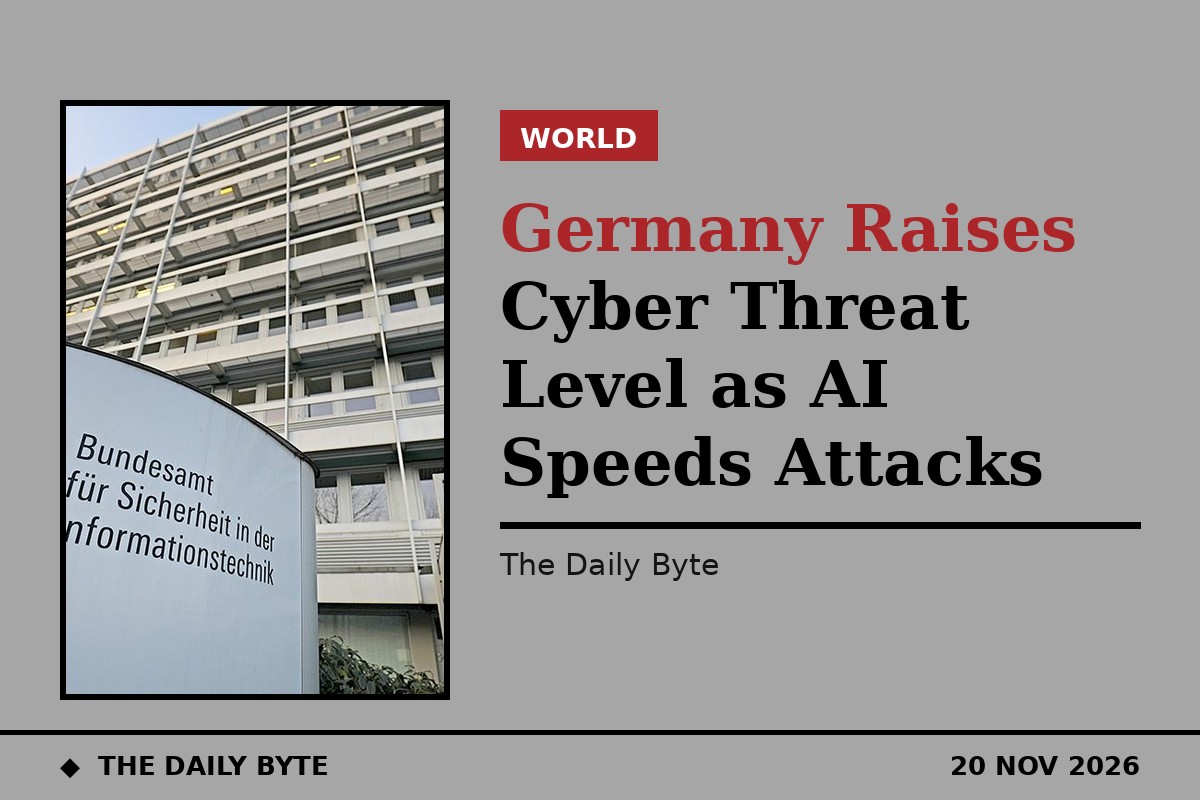
Germany's cybersecurity agency has raised its assessment of the threat to IT systems to "tense to critical", warning that artificial intelligence lets attackers find and exploit software flaws faster than defenders can patch them.
The Federal Office for Information Security (BSI) published the new assessment in its annual report on Thursday 19 November, a year after it described the situation as simply "tense".
Flaws exploited within days
The BSI's Cyber Index stood at 238 points in the middle of the year, up from 124 a year earlier — a rise of 83 per cent since January, as AI-assisted hacking tools have spread.
Attacks exploiting previously unknown vulnerabilities rose 48 per cent in Germany this year. The average time between a flaw becoming public and its exploitation has fallen from around two months at the end of 2024 to about eight days in the second quarter of 2026, and in some cases to hours.
"Where exploiting vulnerabilities used to require expert knowledge and took a certain amount of time, attacks are becoming ever faster, cheaper, and more targeted," the report said. Email-based attacks are declining as attackers use AI models to strike directly.
Small firms most exposed
The warning follows cyberattacks in recent months that disrupted supermarket cooling systems across Europe, French blood banks and German hospitals.
Interior Minister Alexander Dobrindt said: "The security situation, the threat level in cyber space, has significantly worsened. The threat level in cyber space is high, and the outlook is critical."
The report warned that many companies have been too slow to strengthen their defences. "Small and medium-sized enterprises form the backbone of the German economy, but often have little to counter attacks," it said. Critical infrastructure operators are generally better protected, but there is room for improvement, it added.
Sources: Reuters; Europe Says.


