Ghana's $10bn New Economy Plan Faces Budget Test
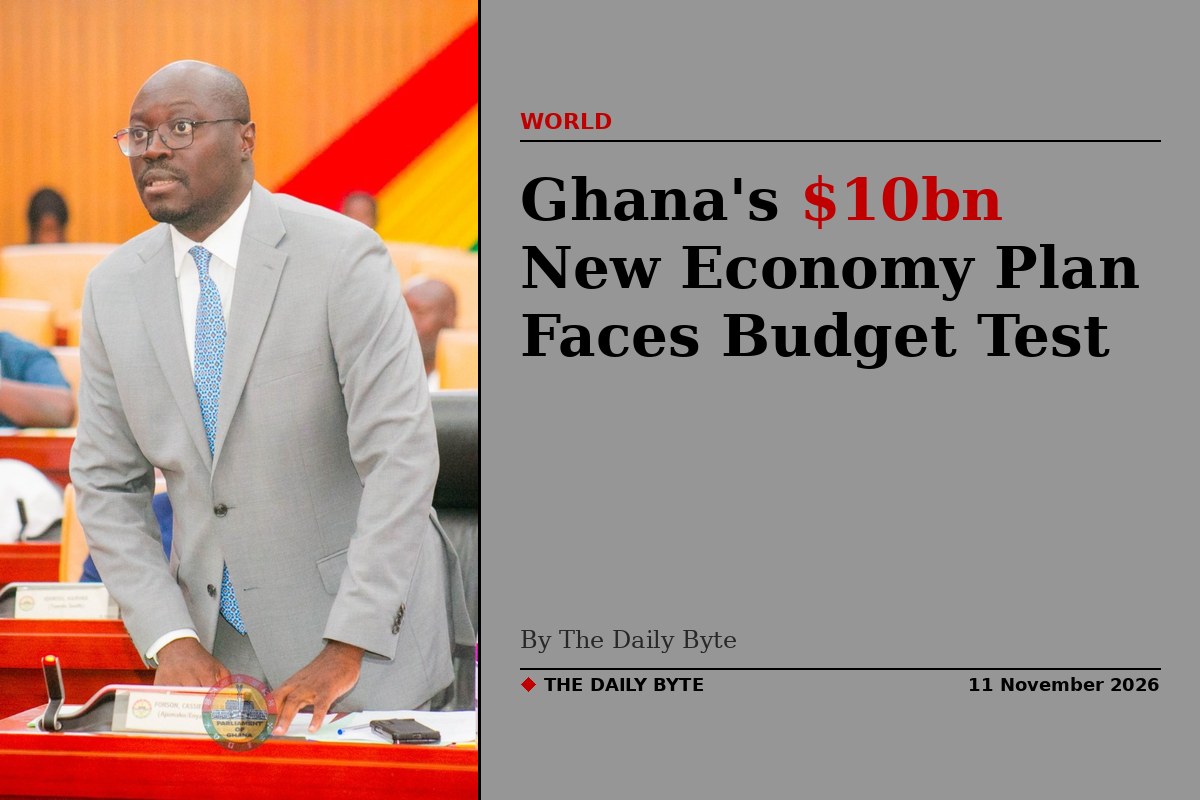
Ghana's Finance Minister, Dr Cassiel Ato Forson, will present the 2027 budget to Parliament on Thursday 12 November, unveiling a US$10 billion "New Economy" investment programme that will test how far the country's hard-won economic recovery can be turned into jobs. The statement is expected to mark a shift from stabilising the economy to spending on the sectors the government says can deliver growth.
The budget, themed "New Economy, New Ghana: Jobs and Prosperity", will set out the government's plan to turn recovery into higher incomes and business growth, according to the Ministry of Finance. At its centre is the New Economy Programme, a four-year investment plan covering 2027 to 2030 that was announced by President John Dramani Mahama, with seven pillars led by commercial agriculture, oil palm, pharmaceuticals and textiles.
A looser fiscal rule
To fund the programme, the government plans to trim its statutory primary fiscal surplus target under the Public Financial Management Act from 1.5 per cent of GDP to 0.5 per cent. The International Monetary Fund confirmed the 0.5 per cent target in a statement on 5 November. Analysts calculate that the change, holding other figures constant, would lift the overall cash deficit from about 2.5 per cent to about 3.5 per cent of GDP.
A Finance Ministry document reviewed by JoyNews Research indicates the plan commits 1.5 per cent of GDP each year from 2027 to 2030, with a further 0.5 per cent of GDP expected from revenue measures and the rest coming from the lower surplus target. The document does not yet name specific projects or say how the money will be shared out — details that will only become clear when the budget is read.
The recovery behind the pitch
The budget follows a period in which Ghana's main economic indicators have improved sharply. Figures from the Ghana Statistical Service showed the economy grew by 6 per cent in 2025, while inflation fell from 23.8 per cent in December 2024 to 5.4 per cent in December 2025, and now stands at around 5.5 per cent. The central bank has cut its policy rate in half, from 28 per cent to 14 per cent, and Ghana completed the final review of its three-year, US$3 billion IMF Extended Credit Facility programme in July 2026.
That turnaround is the foundation of the government's case: with stabilisation largely achieved, the argument runs, the state can afford to borrow a little more room to invest in production rather than simply paying down the past.
The questions hanging over Thursday
Analysts have raised three questions the budget must answer. First, how much of the announced US$10 billion is genuinely new investment, given that the 2026 budget had already projected capital spending of 4.6 per cent of GDP for 2027? Second, how will the government finance the larger deficit? And third, how will the spending be reconciled with the Ghana Accelerated National Reserve Accumulation Policy, which targets 15 months of import cover by 2028, when gross international reserves fell from US$13.83 billion in December 2025 to US$11.07 billion in August 2026?
Businesses are watching too. The Association of Ghana Industries wants President Mahama's pledge to inject US$2 billion into the economy each year to show up as real support for manufacturers, while traders in Cape Coast say they want growth figures to finally reach their stalls. The Women's Development Bank, a flagship campaign promise to widen credit for women in small businesses, is also on the watch list. On Thursday, the numbers will finally be on the table — and the debate over whether the New Economy is a genuine turning point, or a loosening of a discipline only just won, can begin in earnest.


