Ghana Launches $18.8m Rice Project to Cut Imports
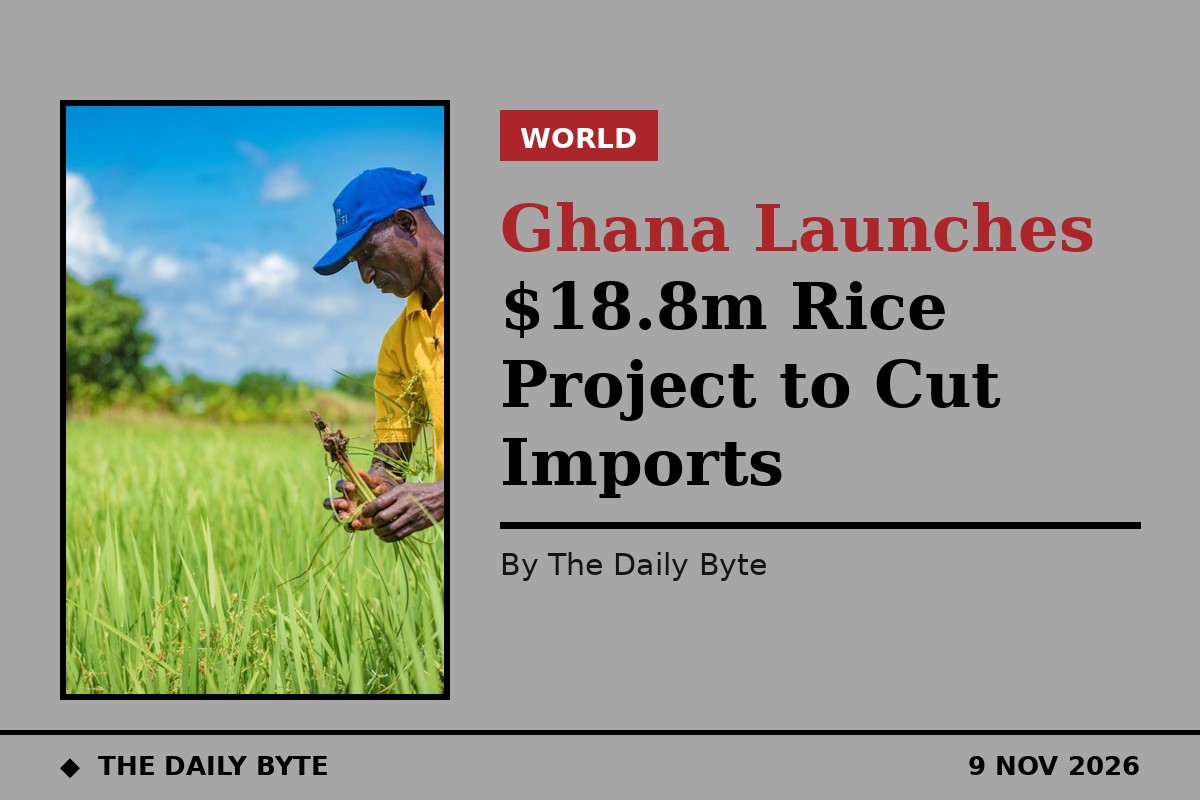
Ghana is formally launching a $18.8 million rice project in Tamale on Monday, 9 November, as the country steps up efforts to cut its heavy dependence on imported rice. The Regional West Africa Resilient Rice Value Chains Development Project, known as REWARD, is being launched at the Mariam Hotel at 10:00 am by the Minister for Food and Agriculture, Eric Opoku.
The project is funded by a $18.8 million grant from the African Development Bank and is expected to support Ghana's target of achieving rice self-sufficiency by 2028. National paddy production is projected to reach 3.31 million metric tonnes under the programme, according to the ministry's project documentation.
3,200 hectares and 20,000 farmers
Under REWARD, the government will develop 3,200 hectares of land for rice cultivation in the Northern Savannah Ecological Zone. More than 20,000 smallholder farmers are expected to benefit directly, alongside processors, aggregators and other businesses in the rice value chain.
The project will support seed centres with cleaning equipment, provide quality seed and mechanisation, and help raise yields from 3.5 to 4.5 metric tonnes per hectare. It is designed to strengthen climate-resilient rice production, improve access to inputs, and improve irrigation, land development and marketing.
Seven districts, four regions
The initiative covers seven districts across four administrative regions: Northern, Upper West, North-East and Savannah. The districts are Mion, Tamale Metropolitan, Savelugu, Mamprugu Moagduri, Nandom, Wa Municipal and West Gonja.
Opoku has called on entrepreneurs and private sector actors to explore the investment opportunities the project opens up, particularly for rural farmers and women. The launch is aimed at agribusinesses as well as farmers, with the ministry presenting the project as a route to stronger rural livelihoods.
Cutting a $500 million import bill
Ghana spends an estimated $320 million to $500 million a year on rice imports, leaving the domestic market exposed to international price swings and supply disruption. Milled rice production has risen from about 650,000 tonnes in 2024 to 960,000 tonnes in 2025, according to the minister, but still falls short of demand.
REWARD is a major pillar of the government's Feed Ghana Programme. Equipment for the project is expected to arrive in November 2026, with training for value-chain actors also planned, and implementation is timed ahead of the 2027 production season.
The project forms part of a wider regional programme backed by the African Development Bank to build resilient rice value chains across West Africa. For Ghana, the test will be whether the grant, the new land and the higher yields can close the gap between what the country grows and what it eats.