Ghana Ready to Adopt ECO Currency by July 2027
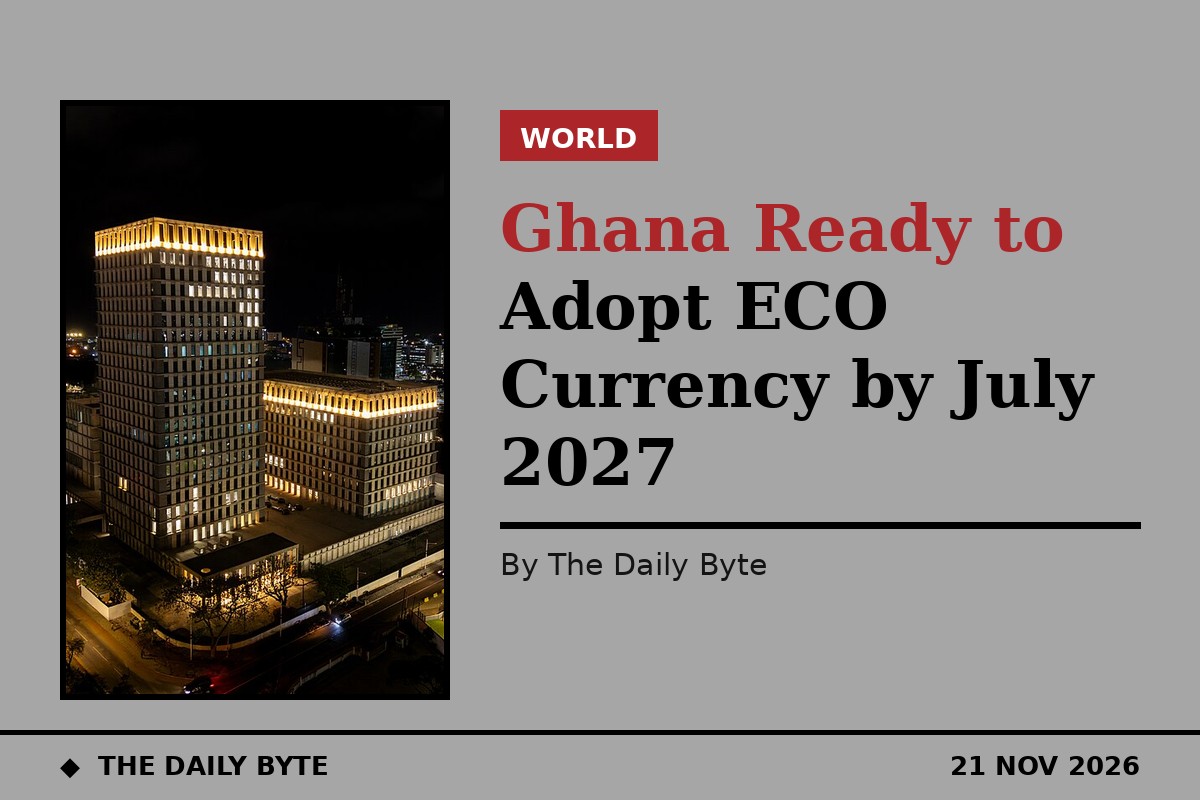
Ghana is ready to adopt the ECO, the proposed single currency for West Africa, the governor of the Bank of Ghana has said, as the region works towards a phased launch in July 2027.
Dr Johnson Pandit Asiama said the central bank had satisfied the convergence criteria set by the Economic Community of West African States (ECOWAS) for joining the currency, which is designed to cut the cost of cross-border payments and reduce West Africa's reliance on external currencies such as the US dollar and the euro.
“When you look at the convergence criteria, we (Bank of Ghana) are ready,” Dr Asiama said at the central bank's monetary policy briefing in Accra, adding that preparations for adoption were continuing.
A phased launch after decades of delay
The ECO is scheduled to be introduced in phases from July 2027, after earlier target dates of 2003, 2015 and 2020 were missed.
President John Dramani Mahama has backed a staged approach. Speaking at the West African Integration and Investment Summit in Freetown, Sierra Leone, he proposed that countries meeting the convergence criteria should be allowed to adopt the currency when they are ready, rather than waiting for every member state to qualify at the same time.
Dr Asiama said he would attend an ECOWAS meeting in Abidjan this weekend to discuss the outstanding issues, and stressed that thorough preparation would be needed for the project to succeed on time.
The ten tests countries must pass
ECOWAS has set 10 convergence criteria, four primary and six secondary, that member states must satisfy before adopting the currency.
The primary tests require inflation of no more than 5 per cent, a fiscal deficit including grants of no more than 3 per cent of GDP, central bank financing of the deficit of no more than 10 per cent of the previous year's tax revenue, and foreign reserves covering more than three months of imports.
The secondary tests cover public debt of no more than 70 per cent of GDP, positive real interest rates, exchange rate movements within 15 per cent, tax revenue of about 20 per cent of GDP, capital spending of at least 20 per cent of domestic revenue, and a wage bill of about 35 per cent of tax revenue.
Under the proposed system, national currencies would continue to circulate alongside the ECO, which would be used to settle trade between participating countries.
What still has to be settled
Dr Asiama cautioned that Ghana's readiness alone does not settle the launch. He identified logistical arrangements and the readiness of other member states to meet the convergence criteria as the critical factors, and said no final timetable could be separated from those preparations.
ECOWAS now has 12 members following the withdrawal of the Alliance of Sahel States bloc: Benin, Cabo Verde, Cote d'Ivoire, The Gambia, Ghana, Guinea, Guinea-Bissau, Liberia, Nigeria, Senegal, Sierra Leone and Togo.
The region has a market of more than 450 million people, economic growth of 4.7 per cent and an investment pipeline exceeding US$180 billion across four strategic pillars, the economic case, supporters say, for a shared currency.
At the 11th meeting of the ECOWAS Convergence Council in 2025, finance ministers and central bank governors recommended keeping the July 2027 target, while calling for stricter monetary and fiscal discipline and further legal and practical preparations.


