Gilt Yields Climb as Traders Bet on More BoE Hikes
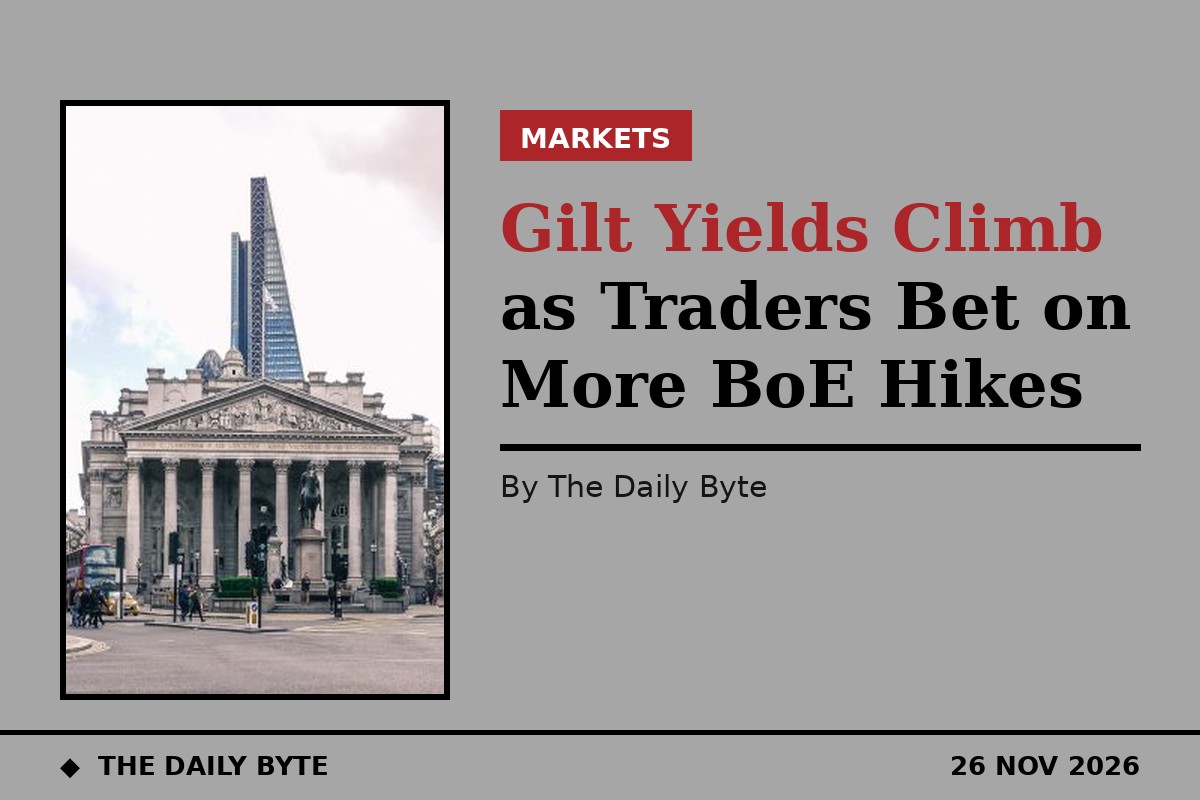
UK government borrowing costs rose on Thursday as traders increased their bets that the Bank of England will keep raising interest rates into next year. The yield on the benchmark 10-year gilt climbed 2.5 basis points to 5.159% on 26 November, according to Tradeweb data, as investors concluded that higher inflation could force the Bank to tighten policy further.
Market pricing tracked by the London Stock Exchange Group now points to three additional rate rises by July 2027, on top of the quarter-point increase the Bank delivered in November. That move took Bank Rate to 4%, its first rise in three years.
Rate-hike bets build after November rise
Traders also raised the odds of another increase at the Bank's December meeting. Market pricing put the chance of a December rise at 89% on Thursday morning, up from 80% on Wednesday, according to LSEG data reported by the Wall Street Journal.
The shift follows a run of hawkish signals from the Bank. Its November Monetary Policy Report projected inflation rising to around 5% by the middle of 2027, driven in large part by higher energy prices linked to the conflict in the Middle East. The Bank's Financial Stability Report, published on Thursday, warned that risks to the global financial system had intensified in recent months as the conflict dragged on and pushed up inflation and interest rates.
Energy costs remain central to the outlook. Brent crude prices stayed above $90 a barrel on Thursday, keeping upward pressure on inflation and strengthening the case for further rate rises, the Wall Street Journal reported.
Shares rally while bonds sell off
The rise in yields came on a day when London shares rallied. The FTSE 100 was up 1.6% at 10,590.90 by midday, helped by banks, miners and defence stocks, as investors concluded that the latest US tariff proposals were less damaging than feared. Trading was thinner than usual, with US markets closed for the Thanksgiving holiday.
The split between rising shares and falling bond prices captures the market's mood: relief over tariffs and a rebound from this week's AI-driven sell-off on one side, and growing unease about inflation and the path of interest rates on the other.
What higher gilt yields mean
Gilt yields are the interest rate the government pays to borrow, and they act as a benchmark for borrowing costs across the economy. When yields rise, the cost of new fixed-rate mortgages and business loans tends to follow, because lenders price those products off government bond yields.
That matters for households already facing higher repayments. The Bank said on Thursday that 6.5 million mortgage borrowers are likely to face higher monthly payments over the next three years as their fixed-rate deals expire, with a median increase of around £100 a month.
For now, traders are betting the Bank will move again in December, and twice more in 2027. If inflation proves stickier than expected, or energy prices climb further, those bets could harden still more. If the data softens, they could unwind just as quickly.
Sources: Wall Street Journal market coverage; Tradeweb data via Gate News; Bank of England Financial Stability Report, November 2026.


