Gold posts biggest weekly fall in four months
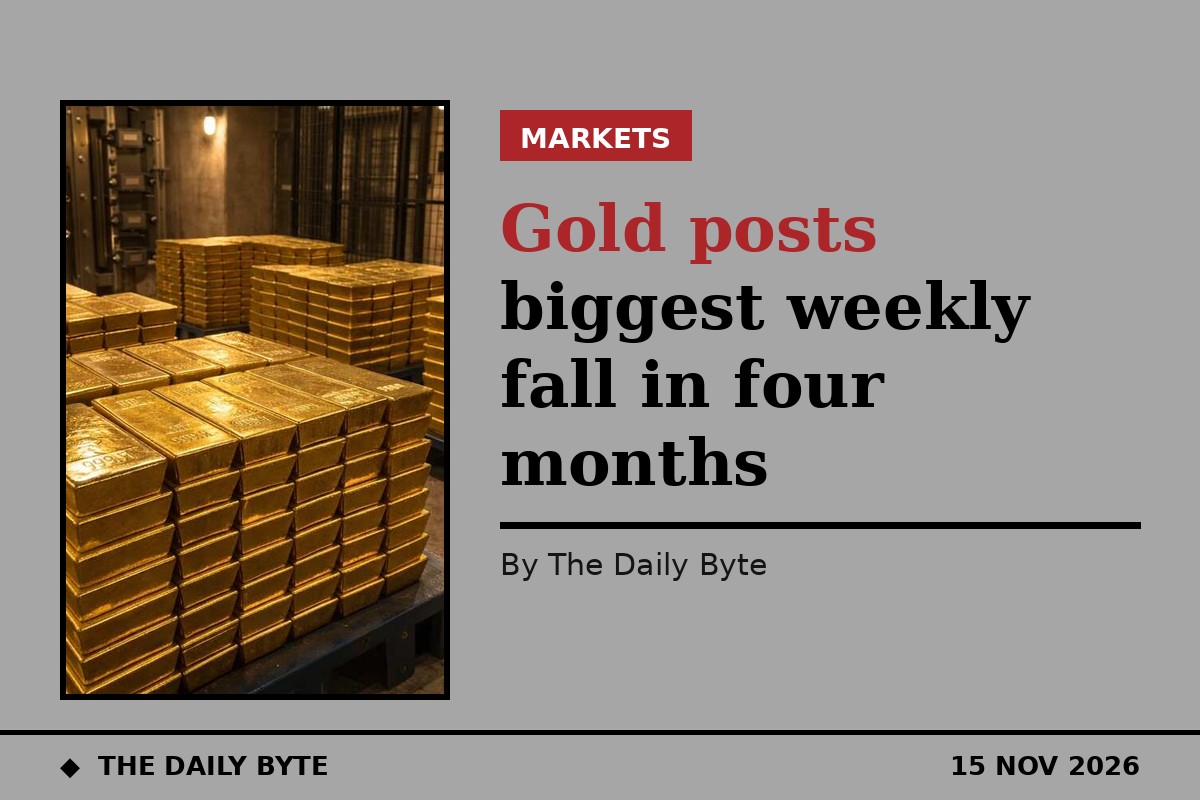
Gold suffered its worst week in about four months, falling around 4.5% as expectations of further interest-rate rises and a firmer dollar drove investors out of the metal.
Spot gold was at about 3,879 dollars an ounce late on Friday 13 November, up 0.14% on the day, according to FXStreet. The small Friday gain did little to repair a week in which bullion lost nearly 4.5%, its biggest weekly decline since early June.
Reuters put spot gold at 3,879.71 dollars an ounce in the Friday session, up 0.1%, while US December gold futures were virtually unchanged, settling at 3,886.30 dollars an ounce. Kitco recorded spot gold ending the session at 3,883.40 dollars, up 7 dollars or 0.18%, within a trading range of 3,867 to 3,924 dollars.
Lowest level of 2026
The damage was done on Thursday, when gold fell to 3,852 dollars an ounce, its lowest level of 2026, FXStreet reported. The metal has now given back a large part of the gains that carried it to record highs earlier in the year.
Silver fared worse, falling more than 6% over the week, according to a weekly market review of the 9 to 14 November trading week. The scale of the drop in both metals underlines how quickly sentiment has turned against precious metals as the outlook for interest rates has shifted.
Gold had already been under pressure before Thursday. It fell 3% in the Thursday session alone, and Friday's modest recovery on bargain hunting, as Reuters described it, was not enough to change the weekly picture.
Rate expectations behind the sell-off
The sell-off has been driven by growing expectations that central banks will keep interest rates higher for longer, or even raise them further. Higher rates reduce the appeal of gold, which pays no interest, and tend to support the dollar, in which gold is priced.
US producer-price data published on Friday showed wholesale prices rising 0.3% in October, below the 0.4% forecast by economists surveyed by Dow Jones, according to the Bureau of Labor Statistics. Spot gold briefly reached 3,922.97 dollars after the release before easing back, Invezz reported.
Even so, the softer inflation reading was not enough to reverse the week's losses. Gold ended Friday at 3,875.14 dollars an ounce in late trading, down 0.03% on the day, with US gold futures for December delivery down 0.14% at 3,880.10 dollars, according to Invezz.
What to watch next week
Traders will now watch the minutes of the US Federal Reserve's latest meeting and American retail sales figures, both due next week, for clues on the path of interest rates. FinanceFeeds, citing FXStreet, put the levels to watch at 4,000 dollars on the upside and 3,800 dollars on the downside.
A break below 3,800 dollars would put the metal at its weakest in more than a year and raise questions about how much further the correction can run. A recovery back above 4,000 dollars would suggest the week's selling was a pause rather than a turn.
For now, the market's message is clear. After a year in which gold was one of the strongest-performing assets, the metal has entered its sharpest correction since the summer, and the direction of interest rates will decide what happens next.