Gold Fields Plans $7.5bn Tarkwa Spend If Leases Renew
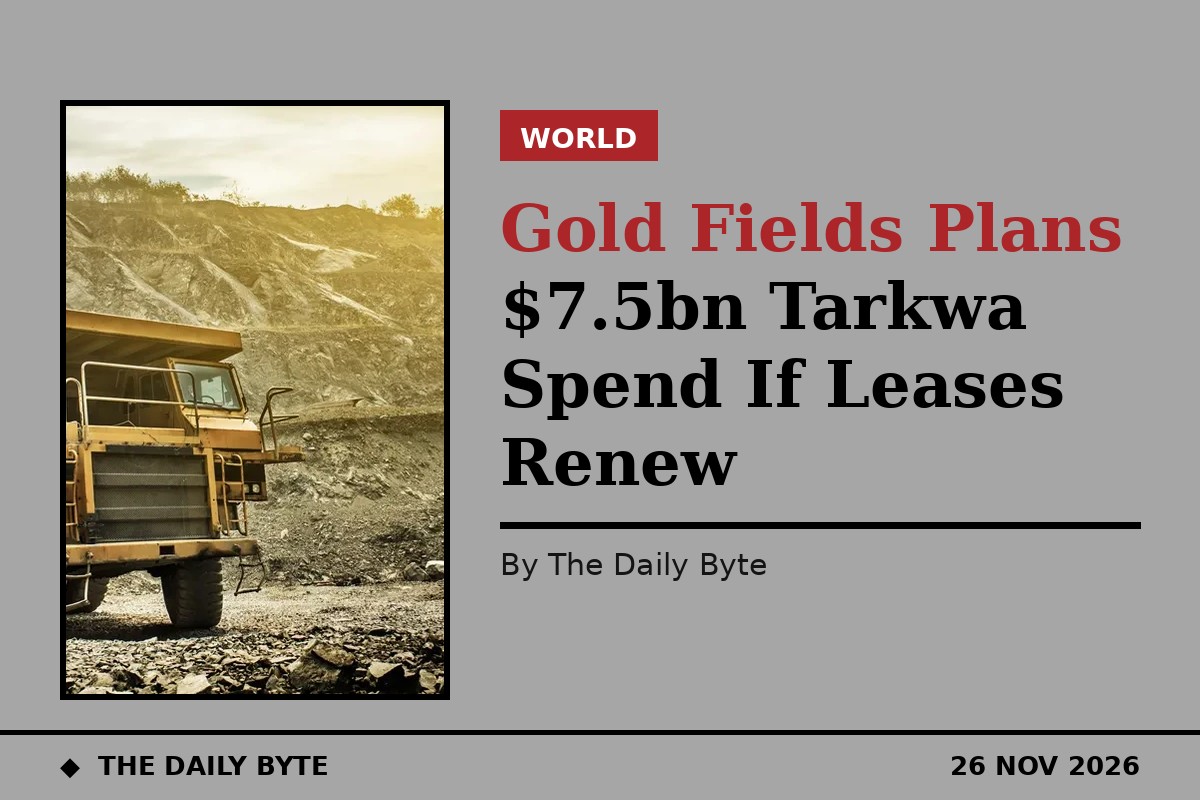
Gold Fields Ghana says it would invest about US$7.5 billion in its Tarkwa gold mine over the next 20 to 21 years, but only if the government renews the mining leases that expire in April 2027. The figure is a projection of what the mine's next phase would require, not a signed spending commitment, and no renewal decision has yet been taken.
Elliot Twum, the senior vice-president and managing director of Gold Fields Ghana, set out the estimate in an interview with Channel One TV on Monday, 23 November. He said sustained investment and technological improvements were needed to keep the mine efficient and to support its next operating phase.
What the money would cover
The proposed spending would cover the expansion of mining infrastructure and processing facilities, the replacement of equipment, waste stripping and the management of mining residues, all aimed at prolonging the working life of the operation. The company has not published an annual spending profile, a breakdown of funding sources or a firm start date for each part of the work, and the timetable for committing capital will depend on the operating rights and commercial terms agreed for the mine's future.
Twum said Gold Fields had invested more than US$5 billion in Tarkwa over the past three decades. The mine produced 474,500 ounces of gold in 2025 and generated approximately US$490 million in payments to the Ghanaian state. In the first half of 2026 it produced about 192,000 ounces, roughly 15 per cent of the wider Gold Fields group's output. The company says Tarkwa supports more than 5,000 employees and contractors.
Renewal still undecided
Five of the six mining leases covering Tarkwa are due to expire in April 2027. Gold Fields submitted an early renewal application in November 2025 and presented a detailed commercial proposal to the government in July 2026. In its third-quarter operational update, filed with the US Securities and Exchange Commission, the company said it was still awaiting formal feedback and had no confirmed timetable for further negotiations.
The same update acknowledged significant uncertainty over the timing, outcome and terms of any renewal. Gold Fields has said it is examining all its options, including exercising its legal rights under the existing leases, its development agreement and Ghanaian law, if the outcome is unfavourable.
Host communities divided
The renewal debate has divided people living around the mine. The Wassa Fiase Traditional Council has opposed renewal and called for a Ghanaian operator, citing dissatisfaction with the development benefits delivered so far. The Wassa Professionals Network has sought a 10 per cent community stake and 2 per cent of mineral-sales revenue, demands that have not been agreed.
Other residents have argued for continuity with stronger conditions. Supporters of renewal, led by assembly member Richard Nsor, have demonstrated in favour of the company staying, citing employment and business activity while seeking firmer commitments on local jobs, procurement, skills and environmental rehabilitation.
What happens next
Gold Fields Ghana is 90 per cent owned by the South African-headquartered Gold Fields Limited, with the Government of Ghana holding the remaining 10 per cent. The government has maintained that no final decision on renewal has been taken, despite reports suggesting it might decline to extend the leases.
The situation follows Gold Fields' departure from its Damang mine, where operations returned to the Ghanaian state after the mining lease expired in late 2025. A formal renewal decision setting out the operating period and conditions would be the next milestone for Tarkwa, and only a detailed investment schedule would allow the US$7.5 billion estimate to be tested against specific works, funding commitments and delivery dates. Until then, the proposal is a statement of intended long-term investment, not an operating-licence extension.


