Gold rebounds above $3,650 after hitting 15-month low
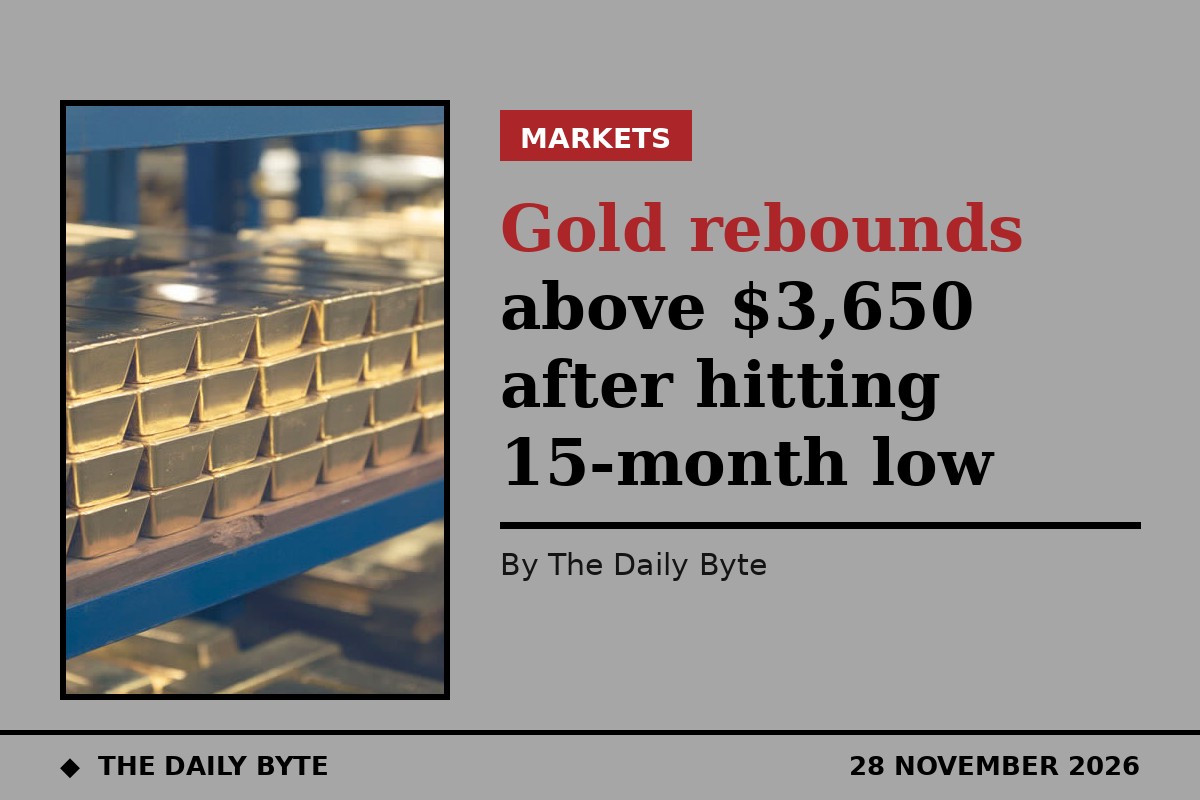
Gold rebounded sharply on Friday, recovering from a 15-month low hit earlier in the week as a rally in technology and artificial intelligence stocks eased the forced selling that had dragged bullion down. Front-month gold futures rose 2.9 per cent in New York to 3,639.60 US dollars a troy ounce, for a weekly gain of 3.5 per cent, while spot gold closed at 3,652.33 dollars an ounce, up 2.41 per cent from 3,566.30 dollars at the previous close.
The metal had fallen to its lowest level since August 2025 on Wednesday, and it has traded below 4,000 dollars an ounce since 11 November. Gold is on track for a third straight monthly decline of more than 5 per cent, a reminder that Friday's bounce came after a bruising few weeks rather than at the end of a steady climb.
Why gold rose with stocks
The immediate reason for the rebound was the recovery in risk appetite. Earlier in the week, heavy selling in technology and AI shares had forced some investors to sell gold to raise cash and meet margin calls, so bullion fell alongside stocks despite its safe-haven reputation. As AI-related shares steadied and Asian markets rose for a second day, that pressure eased. Analysts at Saxo Bank described precious metals as an ATM in times of market stress, saying that with AI stocks rebounding and broader risk appetite improving, the queue at the cash machine appeared to be thinning.
Silver rose even more sharply, gaining 7.8 per cent to 43.167 dollars a troy ounce, its largest single-day percentage gain since 3 February, and finishing the week 5.1 per cent higher. Platinum rose 6 per cent to 1,313.90 dollars a troy ounce. The rally also lifted mining stocks in London, with the sector leading gains on the FTSE 100 on Friday as Antofagasta, Glencore, Fresnillo and Anglo American all rose by more than 4 per cent.
Headwinds have not gone away
Gold's rise came even though the forces that had pushed it down have not gone away. The metal gained more than 1.6 per cent on Friday despite rising US Treasury yields and a strong US dollar, and it stayed below the week's high of 3,689 dollars, with buyers now watching whether it can push through 3,700 dollars. Physical demand also helped: demand for gold rose in key Asian hubs this week, with Indian jewellery and investment buying picking up and strong Chinese retail purchases keeping local premiums firm.
The headwinds remain formidable. Traders are pricing in a quarter-point rate rise at the Federal Reserve's next policy meeting on 8 and 9 December, and attention is turning to whether the US central bank will signal further tightening in 2027. Higher interest rates weigh on gold because it pays no interest, making interest-bearing investments relatively more attractive. The 10-year US Treasury yield stood at 4.92 per cent on Friday, and the dollar index held near a 20-month high.
Zain Vawda, market analyst at Audacity Capital, told Reuters the bounce looked more like short covering and profit taking than a change in trend. Short covering happens when traders who bet on lower prices buy back to close those bets, and that buying can lift prices for a time without new long-term buyers arriving. Vawda pointed to three conditions that have not shifted: the Federal Reserve is still raising rates, real yields are high, and the dollar is near multi-month highs. Until one of those changes, he said, rallies towards 3,750 to 3,800 dollars could attract sellers.
In Britain, gold was quoted at 2,789.70 pounds an ounce on Friday, up 2.45 per cent on the session, or 89.69 pounds a gram. The next big test for the metal is the November US jobs report on 4 December, followed by the Federal Reserve meeting the week after. Whether Friday's rebound marks the start of a recovery or only a pause in the slide will depend on those numbers, and on whether the technology rally that lifted it can hold.


