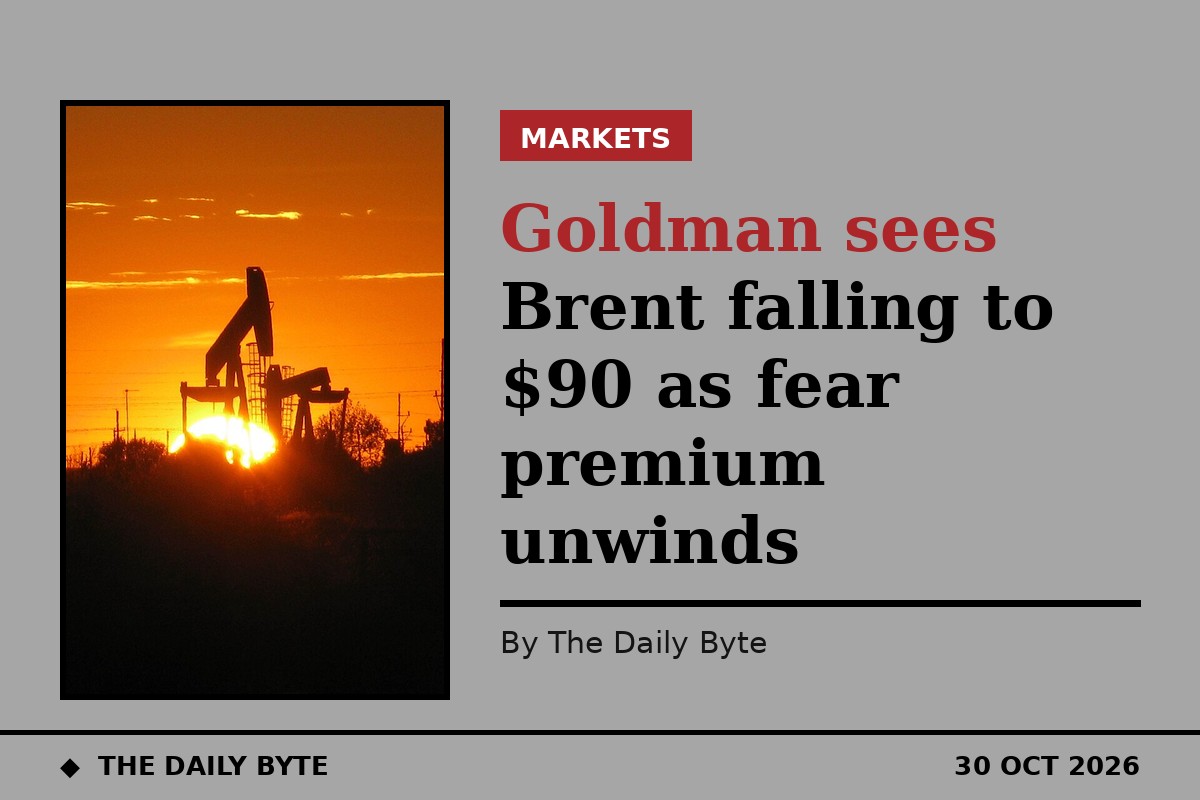
Goldman sees Brent falling to $90 as $27 of "fear premium" unwinds
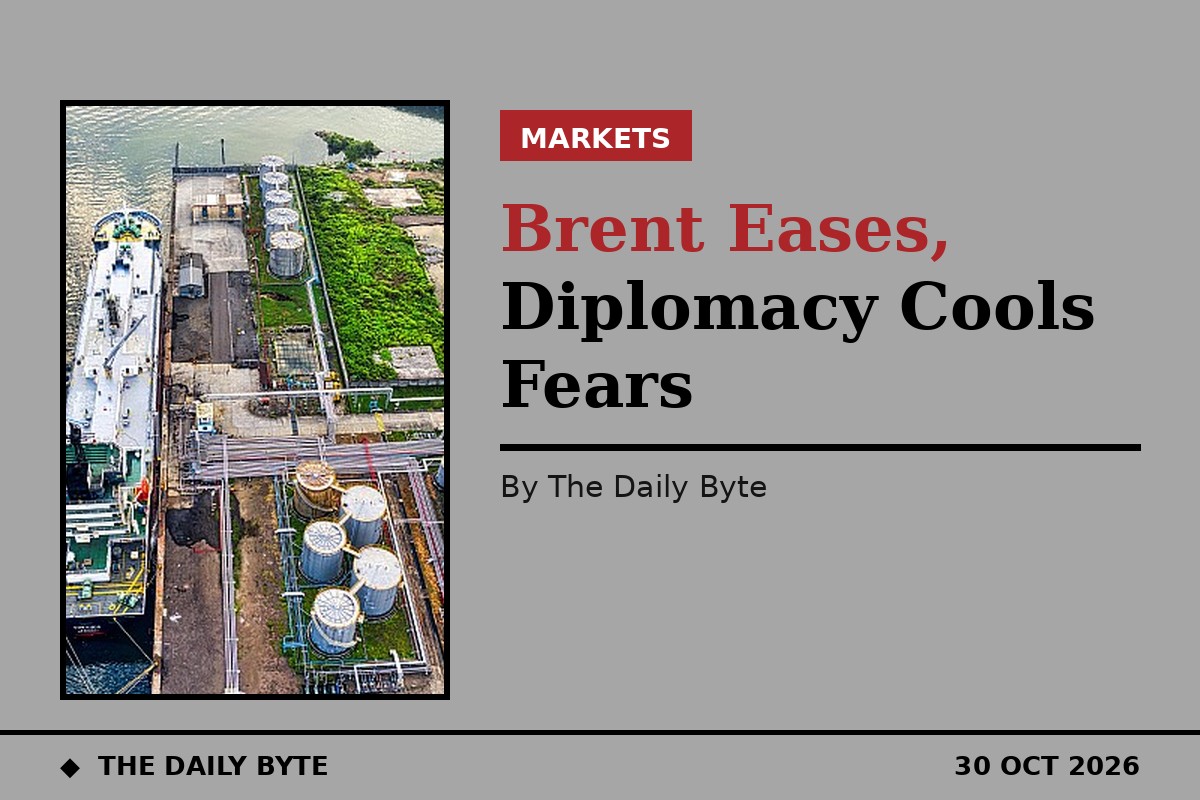
Oil traders spent Thursday weighing two stories: a market priced for a Middle East supply shock, and analysts who say it has not happened. Brent eased to about $114.10 in early trading on 29 October, down 1.1%, while US West Texas Intermediate slipped 1.3% to about $101.45.
The sharper call came from Goldman Sachs. The bank estimates that roughly $27 a barrel of Brent's price is a fear premium — the extra amount traders pay to insure against future disruption, rather than actual shortages. Strip that out, Goldman argues, and Brent's underlying fair value sits near $85, with a path back towards $90 by the end of the year.
Why the premium is so large
Goldman's reasoning rests on behaviour, not just headlines: refiners have been securing barrels early in case supplies tighten, while investors have bought oil as a hedge against energy-driven inflation. That buying lifts prices before any pipeline or shipping lane is actually hit. JPMorgan agrees in part, putting Brent's fair value near $94.
UBS disagrees, recently raising its year-end Brent forecast from $100 to $110 on high transport costs and Gulf risk. The split matters for fuel buyers: if Goldman is right, prices overstate the real supply picture; if UBS is right, the risk premium is still worth paying.
What the physical market is saying
US data gave both camps ammunition: commercial crude stocks fell 1.9 million barrels in the week to 23 October, to 410.6 million — a fourth weekly fall — yet petrol stocks rose 3.9 million, suggesting drivers are cutting back. Russian refinery runs are also up about 350,000 barrels a day since mid-October, JPMorgan says.
The OPEC+ meeting on 1 November is the next checkpoint, and any diplomatic headline could move prices faster than any forecast. For now, the market pays a large premium for insurance — and Goldman bets it will prove unnecessary.