Google buys 50MW volcano geothermal power in Oregon
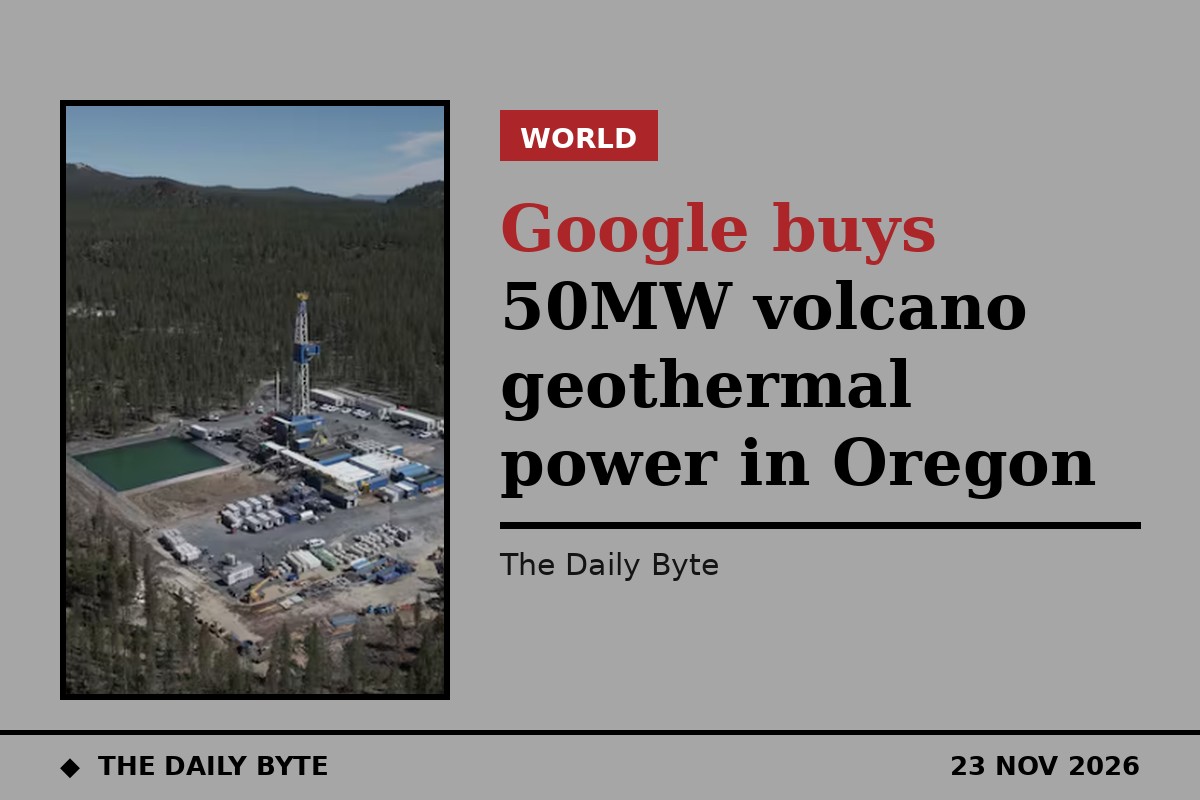
Google has signed a deal to buy 50 megawatts of superhot geothermal power from Quaise Energy's Project Obsidian near Newberry Volcano in central Oregon, in what the companies describe as the world's first commercial-scale superhot rock geothermal agreement. The power is expected to support Google's existing data centre operations in The Dalles, Oregon, as early as 2030.
Quaise Energy announced the power purchase agreement on 17 November 2026. Under the deal, Google will buy 50 megawatts of always-on, carbon-free electricity from Project Obsidian, Quaise's flagship project on the southern flank of Newberry Volcano. TechCrunch reported the deal is worth more than $500 million, while Quaise said the project itself will cost about $350 million to build.
What is superhot rock geothermal?
Unlike wind or solar, geothermal provides continuous power, in the same way burning natural gas does. Historically it was limited to places with a natural reservoir of hot water or steam near the surface. Superhot rock geothermal digs miles underground to reach temperatures of nearly 800 degrees Fahrenheit, then injects cold water to bring the heat back up as steam, which drives a turbine to generate electricity.
Quaise is developing a millimetre-wave drilling technology that essentially vaporises rock without making contact, which could save developers from repeatedly replacing drill heads dulled or broken by hard rock. The company plans to start with conventional drilling before introducing the newer technology. The project will also need a 10-mile transmission line from the Newberry Volcano site to the nearest substation in La Pine, from where the power will travel up the grid to The Dalles.
Why Google is buying it
The agreement comes as power-hungry AI data centre developments have increasingly strained the electrical grid. In Oregon, tech companies also need renewable sources to comply with state environmental rules. Google's head of advanced energy technologies, Lucia Tian, described superhot geothermal as a "clean, firm" resource that is "incredibly valuable to the grid".
Quaise president and chief executive Carlos Araque said: "This is the beginning of humanity tapping into the largest source of energy. It happens to be clean energy on Earth, and it's happening in Oregon." The partnership is Quaise's first commercial geothermal agreement, and the company is seeking buyers for a further 200 megawatts of future capacity at the Oregon site. Araque estimates Project Obsidian could generate about one gigawatt of energy, enough to power about one million homes, within the next decade, and says the wider Newberry basin could produce 10 gigawatts.
Geothermal is currently a tiny share of power generated in the United States, at just 0.1% of energy used in Oregon in 2024, according to the Oregon Department of Energy. But the US Energy Information Administration says there is enormous potential to generate more, and Quaise is one of at least 20 companies worldwide working on new ways to reach the heat beneath our feet.
What still has to be proven
The drilling technology remains unproven at commercial scale, and the 2030 delivery date depends on development milestones being met. The companies have not disclosed the price Google will pay for the electricity. Even so, the deal is a signal that superhot geothermal is moving from research towards commercial use, with a major customer willing to pay for power that does not yet exist.
How much power will Google buy? 50 megawatts from Project Obsidian, enough for about 50,000 average households, according to Oregon Public Broadcasting.
When will the power start flowing? Deliveries are possible as early as 2030, once the project is built and connected to the grid.
What makes this geothermal different? It targets superhot rock miles underground at nearly 800 degrees Fahrenheit, using millimetre-wave drilling, rather than relying on natural hot water near the surface.
Source: Business Wire / Quaise Energy. Second source: TechCrunch.


