Falling pupil numbers: DfE says schools cannot be fully shielded
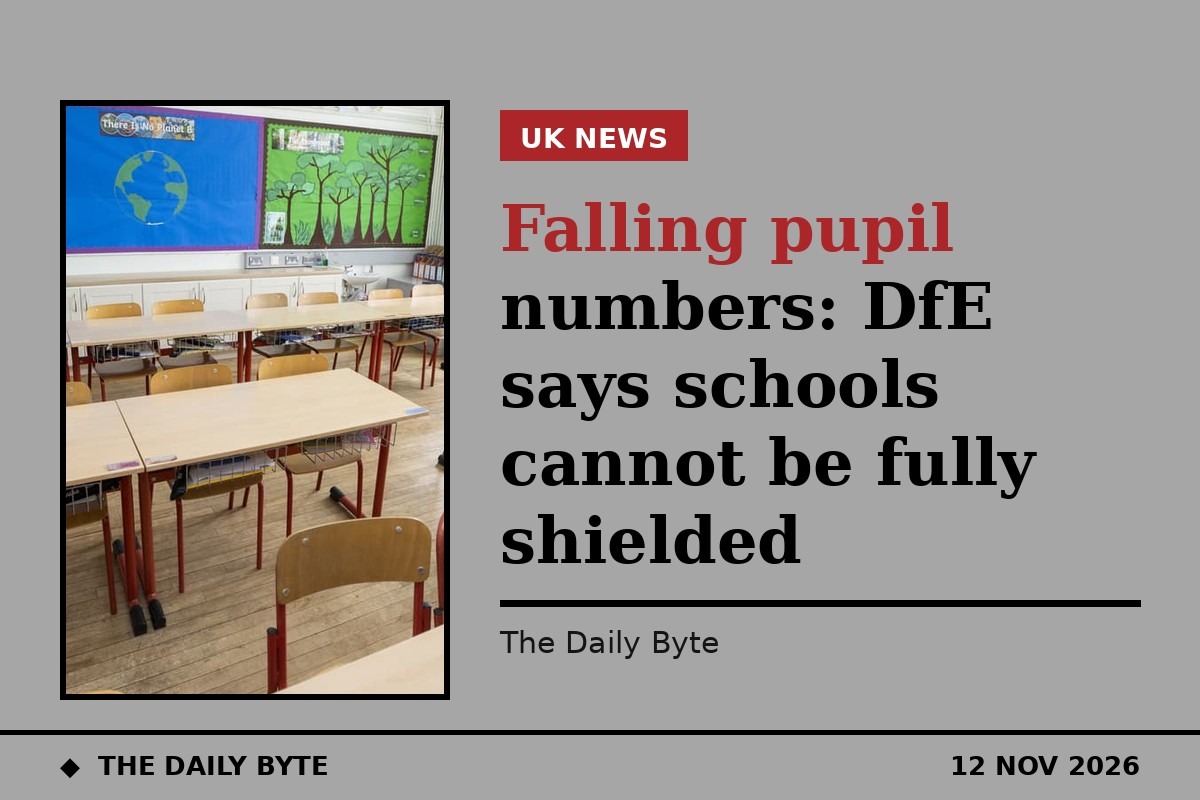
The Government has told Parliament it cannot “completely insulate” schools in England from falling pupil numbers, warning that temporary funding can cushion a short-term dip in rolls but is not designed for a permanent decline. The Department for Education (DfE) set out its position in a response to the House of Lords Public Services Committee’s inquiry into falling primary school rolls, reported on 12 November 2026.
The warning matters because school funding in England is largely allocated per pupil. When rolls fall, budgets shrink even though many of a school’s costs — buildings, heating and staffing — do not fall at the same pace. The DfE’s own projections show the decline is large and lasting: the number of pupils in state-funded nursery and primary schools is expected to fall by 473,000, or 10.7 per cent, from 4.424 million in 2026 to 3.951 million in 2031.
What the Department told the committee
In its response, the DfE said it was “not possible or desirable to completely insulate schools from demographic pressures”. Temporary directed funding, it said, could help schools manage short-term falls in pupil numbers, but it was not appropriate where the decline was “longer-term and permanent”.
The scale of the spare capacity is already visible. The National Audit Office found that the proportion of unfilled primary places rose from 10 per cent in 2018-19 to 14 per cent in 2024-25. The DfE told the committee it has allocated £155 million in growth and falling-rolls funding to local authorities in 2026-27 through the Dedicated Schools Grant, to help councils manage places where numbers are changing.
The Department also said it would investigate whether declining pupil numbers are associated with key stage 2 attainment, particularly among disadvantaged pupils. It added that it is “undertaking analysis this year to examine the scale and distribution of falling rolls across state-funded primary schools, including how this varies by school characteristics and geography, and examine current and forecast trends at regional and local authority level”.
Why rolls are falling
Pupil numbers in state-funded nursery and primary schools peaked in 2019 and have been falling since, driven by a lower birth rate. The DfE’s national pupil projections, published in July 2026, show the fall accelerating: across all state-funded schools, pupil numbers are projected to drop by 726,000, or 9.3 per cent, from 7.81 million in 2026 to 7.08 million in 2031. Secondary schools are expected to lose 249,000 pupils over the same period, falling to 2.967 million by 2031.
The January 2026 school census had already recorded a fall of 112,000 pupils, or 1.2 per cent, across all school types and ages up to 19, compared with the previous year. The DfE noted that, because of increased uncertainty in long-term net migration assumptions, the latest projections are published only five years ahead, to 2031, rather than ten years as in previous releases.
School leaders have warned for some time that the funding system needs to adapt. Paul Whiteman, general secretary of the National Association of Head Teachers, said when the projections were published in July: “We need an approach to school funding that supports schools experiencing falling rolls and recognises that trends can change over time.”
What happens next for schools
The issue is already forcing difficult local decisions. In Enfield, north London, the council has paused the launch of a six-week public consultation on the proposed closure of three schools — Bishop Stopford’s School, Starks Field Primary School and Suffolks Primary School — after the schools said they had further information, including updated evidence on pupil numbers, for the council to consider. The pause was raised in the House of Commons during Prime Minister’s Questions on 11 November.
Councils facing sustained falls in rolls typically consider mergers, federations, reducing a school’s published admission number or, as a last resort, closure. None of those steps is automatic, and any closure proposal must go through a formal consultation. Parents who are concerned about a school in their area should check their local authority’s school organisation plans and respond to any consultation while it is open.
The DfE’s message to the committee is, in effect, that demographic change on this scale cannot be funded away. Temporary support will continue for short-term dips, but schools and councils in areas of permanent decline will have to plan for fewer pupils — and fewer pounds per school — in the years ahead.
Sources: Twinkl; Department for Education, National pupil projections 2026; TES.