Greece Expects €50bn in EU Funding for 2028-2034
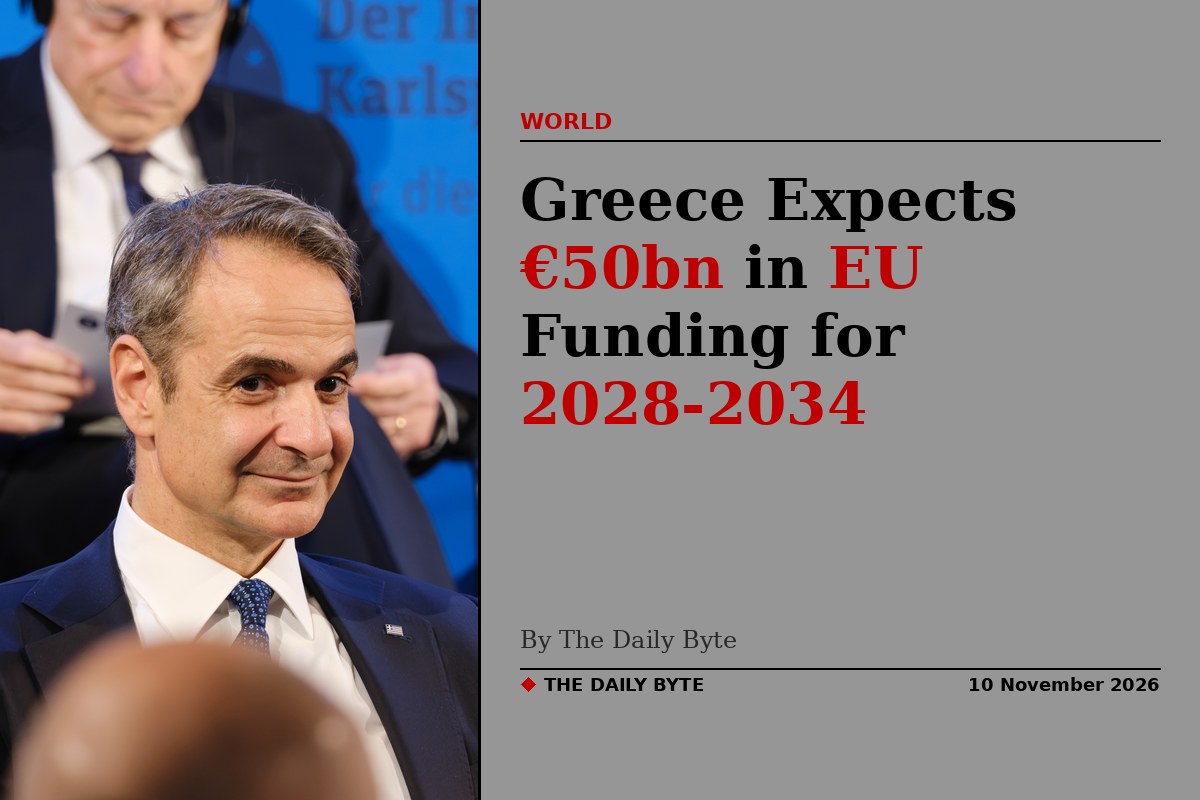
Greece expects to secure around €50 billion in European Union funding for the 2028–2034 period, Prime Minister Kyriakos Mitsotakis has said, as negotiations over the bloc’s next long-term budget continue.
Speaking at the annual conference of the Central Union of Municipalities of Greece (KEDE) in Kalamata, Mitsotakis said the amount could be even higher. “Greece will secure around 50 billion euros from the next European funding instrument, possibly more. That is our current estimate,” he told local government leaders.
The funding would flow through a new National and Regional Partnership Plan, known in Greece by its initials EPES, which will form part of the EU’s next Multiannual Financial Framework. The new arrangement will replace the current system of funding programmes, including Greece’s Partnership Agreement for the Development Framework, known as NSRF or ESPA.
Money tied to milestones
Mitsotakis told the conference that the next funding period will follow an implementation model similar to the EU’s Recovery and Resilience Facility, with payments linked to specific milestones, reforms and targets rather than handed over upfront. He urged municipalities and regions to prepare now so they can make full use of the money when it becomes available.
The prime minister also set out an economic ambition to match: the Greek economy should grow over the next four years at rates at least twice the eurozone average, he said, with growth accompanied by regional convergence so that lagging municipalities and regions can catch up with the national average.
Negotiations over the EU’s 2028–2034 framework are still under way, and the new funding arrangements are expected to be finalised in 2027. Greece’s presidency of the Council of the EU in the second half of 2027 will coincide with efforts to complete the legislative and regulatory framework governing how the money is allocated and disbursed.
Support for municipalities now
Alongside the long-term funding outlook, Mitsotakis announced six immediate measures and two further initiatives to support municipalities, covering energy costs and project financing. They include €240 million within November for the repayment of overdue municipal debts to energy providers, €300 million for recycling projects, and €200 million a year for the next four years for urban road construction, funded through a special fee to be applied once the fuel market is normalised.
He pointed to the new sewage sludge treatment plant in Kalamata, which he visited before his speech, as an example of what EU money has already delivered. Four sewage treatment plants were operating in Greece by 2023, he said, and a further 18 have been built since then with funding from the Recovery Fund.
Mitsotakis has also made clear Greece’s red lines in the budget talks. At the European Council in October he said Athens is one of 16 “friends of cohesion” countries that will not accept cuts to cohesion policy or the Common Agricultural Policy, and he expressed hope that negotiations could close at the December summit.
The €50 billion estimate is the government’s own projection, not a figure agreed in Brussels, and the final allocation will depend on the outcome of the budget negotiations among all 27 member states. But with Greece holding the Council presidency in the second half of 2027, Athens will have a central role in shaping the rules that decide how the money is shared.


