Flemish Greens Vote to Drop Nuclear Opposition
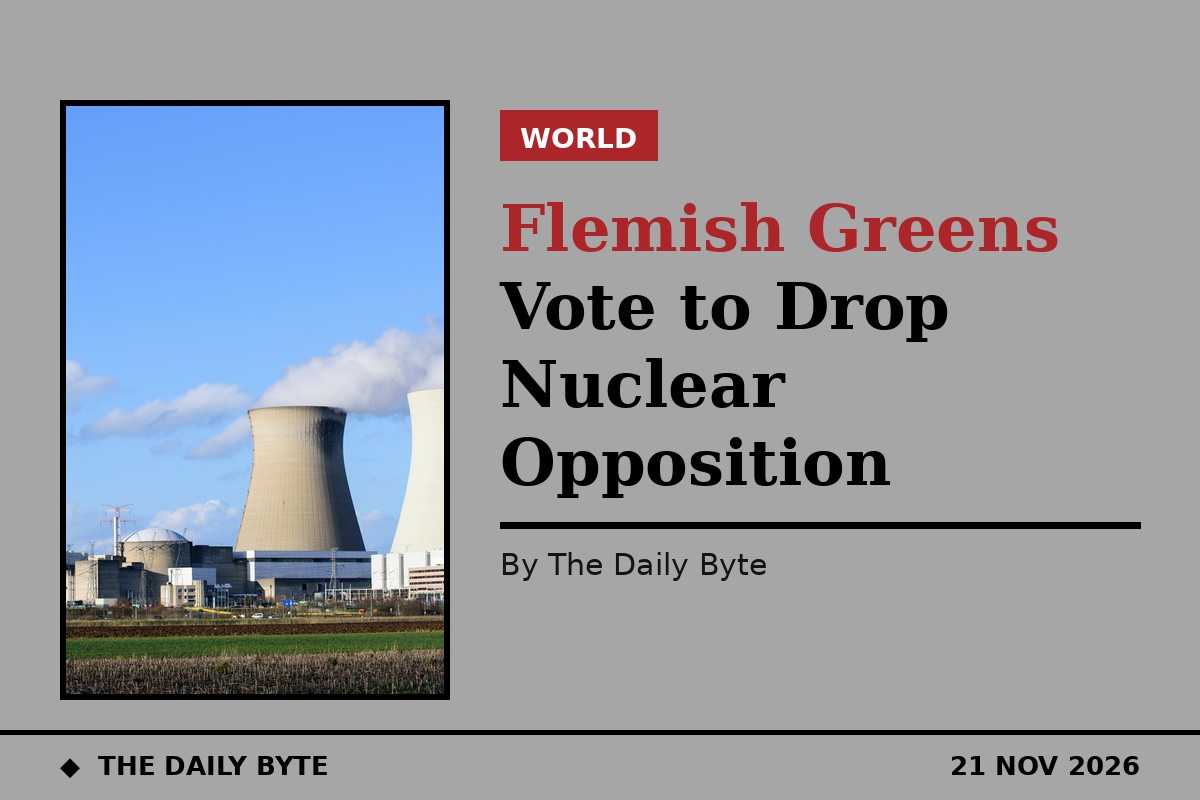
Belgium’s Flemish Greens have voted to end their decades-old opposition to nuclear power, approving a proposal to treat atomic energy as a transitional technology on the road to a fully renewable electricity system.
Members of Groen backed the change at the party’s “Over Hoop” congress in Antwerp on Saturday, with 394 of the 566 members present — 70 per cent — voting in favour. The decision overturns a position that has defined the party since the 1990s and opens the way for it to support extending the lives of existing reactors.
Under the new text, nuclear energy can play a role in the transition only if it is available quickly, safely and affordably, and with limited environmental impact — and only temporarily. Renewable energy remains the main building block, and the party’s ultimate goal is still a fossil-free and climate-neutral electricity supply, powered entirely by renewables.
A historic break
The shift is a historic break for Groen, which, then known as Agalev, made phasing out nuclear power a central condition of entering federal government in 1999. That commitment led to Belgium’s 2003 law setting out a nuclear exit, a law the party defended for two decades.
The context has changed. Groen’s defence of the phase-out became a liability in the June 2024 federal elections, in which the party and its French-speaking sister party Ecolo suffered heavy losses and were relegated to the opposition. In May 2025, the centre-right coalition led by Prime Minister Bart De Wever repealed the 2003 phase-out law, setting a target of at least four gigawatts of nuclear capacity.
In April 2026, the federal government signed a letter of intent with French utility Engie to negotiate a state takeover of Belgium’s nuclear operations. The talks have since missed two deadlines, on 1 October and 4 November, over the valuation of the plants and liabilities for nuclear waste, and the parties have given themselves until 12 December to agree the main terms. De Wever has ordered draft legislation that would allow the state to nationalise the plants if the talks collapse.
Belgium’s two youngest reactors, Doel 4 and Tihange 3, were already given ten-year extensions under the previous De Croo government. Nuclear power supplied about a third of Belgium’s electricity in 2025, generating 23.8 terawatt-hours, according to industry figures.
Divisions in the party
The change was contested inside the party. Former Ghent alderman Tine Heyse had publicly hoped members would vote the proposal down, arguing that Groen should remain the only party critical of nuclear energy. Former party chair Mieke Vogels also opposed it, questioning why the issue was being reopened and arguing that energy storage, stronger links between national power systems and conservation could support the renewable transition.
Others backed the leadership. Flemish parliamentary leader Mieke Schauvliege supported the proposal, saying renewables remain the future and gas-fired plants need not be defended during the transition. Party chairman Aimen Horch, elected eight months ago, had called the proposal a daring position for part of the green base and accepted that members might reject it. He welcomed the result as part of the party’s renewal.
Ecolo, the French-speaking green party, remains committed to meeting energy needs through renewables but is open to another extension of Doel 4 and Tihange 3 under close safety scrutiny. Changing its own programme is not currently on its agenda. Gilles Vanden Burre of Ecolo rejected building new reactors, citing radioactive waste and energy security, and put their cost at about 100 euros per megawatt-hour, compared with roughly 50 euros for renewables.
What happens next
The vote was one of nine proposals put to members to update the party programme, alongside a cheaper basic electricity package for households and a call for data centres to pay a fair share of taxes and face limits on their impact. Members will now decide how the new energy position shapes Groen’s platform for the next elections — and whether a party built on opposing nuclear power can carry its voters with it.


