South Korea breaks ground on Donghae AI data centre
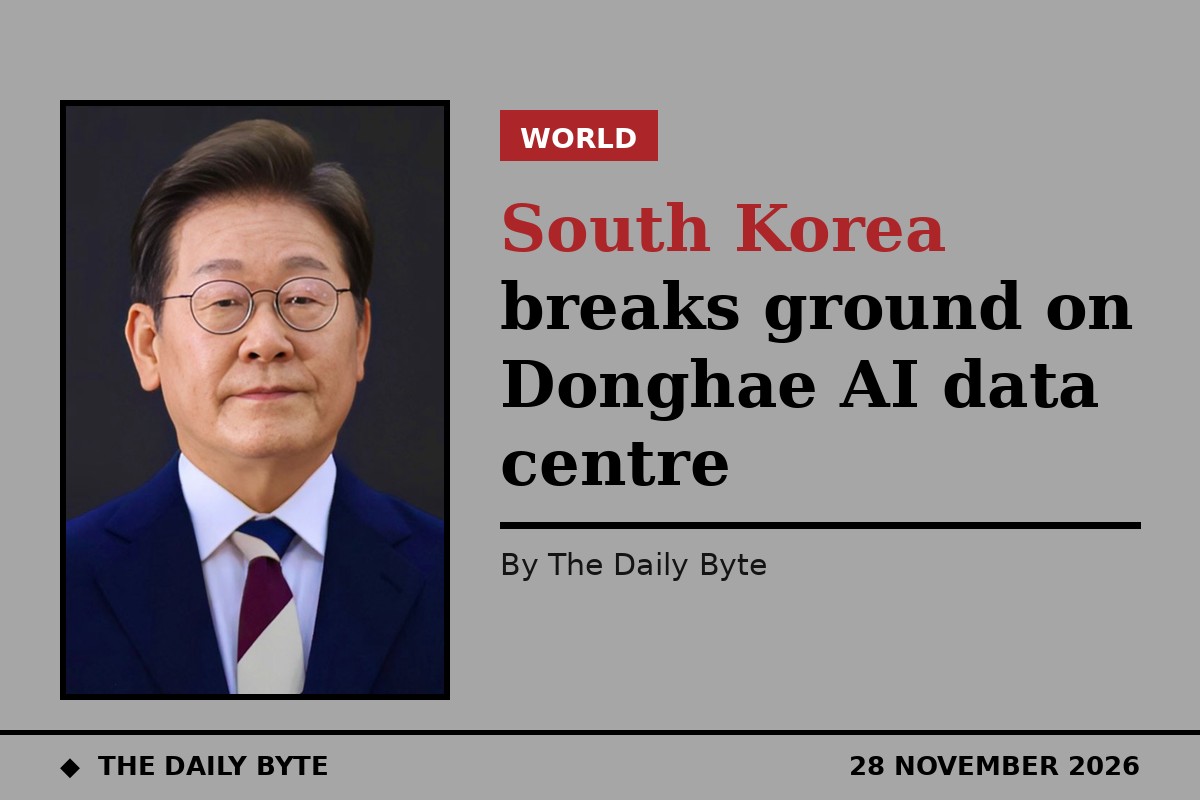
South Korea has broken ground on its first gigawatt-scale artificial intelligence data centre, a 1.2-gigawatt facility in the eastern coastal city of Donghae that the government hopes will anchor the country's bid to become a leading AI power. President Lee Jae Myung attended the ceremony on Saturday, 28 November, and pledged the full support of the state behind the project.
GS Group, one of South Korea's large conglomerates, is building the campus at the Bukpyeong No. 2 General Industrial Complex in Donghae, in Gangwon Province. The first phase will have a capacity of 1.2 gigawatts, with the full campus planned to reach 2.4 gigawatts in two phases. The company is investing 15 trillion won, about 10.2 billion US dollars, in the first phase, and the cost of the full 2.4-gigawatt build is estimated at about 30 trillion won. Including graphics processing units and memory chips, the total project could reach as much as 120 trillion won.
The ceremony marks the first gigawatt-class AI data centre to start construction under the government's Three Mega Projects for Korea's Great Leap, a national programme announced in June. President Lee described the global AI race as a war without gunshots and promised government backing for construction, power supply and cooling industries, as well as for local suppliers.
What is being built in Donghae
The first phase will occupy about 80,000 pyeong, roughly 264,000 square metres, inside the Bukpyeong industrial complex. GS will divide that land into three zones to build a 700-megawatt centre, and will develop a 500-megawatt centre on an additional site. Together, those facilities make up the 1.2 gigawatts now under construction.
Work will proceed in stages. The company aims to complete a 100-megawatt centre in the second quarter of 2028 first, then finish the remaining facilities in sequence so the first phase is in operation by 2029. The second 1.2-gigawatt phase is scheduled for completion in 2030.
GS Group Chairman Huh Tae-soo told the ceremony that the company would do its utmost to make Donghae a destination people visit not only for the sunrise but to see the future of the AI industry, and a model for how AI infrastructure develops together with the region. He said the investment would create local jobs, open opportunities for local businesses and allow young local talent to dream of the future.
Jobs and local impact
The Seoul Economic Daily reported that the company expects the 1.2-gigawatt first phase to require a cumulative total of about 70,000 workers during construction, and about 1,000 direct and indirect workers once it is operating. GS has formed a joint body with the city of Donghae to discuss how the construction and operation of the centre can translate into local employment and economic activity.
The project has also been shaped by local concerns. The underground transmission line connecting the Bukpyeong substation to the data centre was designed to bypass the area around the Bukpyeong fifth-day market, reflecting the views of residents.
GS prepared the business by combining the group's experience in power generation and energy with the design and construction capabilities of its engineering arm. In June it set up GS AI Infra as a dedicated entity under GS Holdings, signed memorandums of understanding with Gangwon State and the city of Donghae, and completed permitting steps including a power grid impact assessment and construction approval. It has also signed cooperation agreements on equipment, design and operations with LS Electric, POSCO, LG Uplus and Honeywell Technologies.
Permits to be eased outside Seoul
The government will hold a public hearing on 9 December on a draft decree that would ease permits for AI data centres outside the Seoul metropolitan area, a step intended to spread large AI infrastructure beyond the capital region.
The Donghae centre is the first of the government's three megaprojects to reach construction. Its progress will be watched closely as a test of whether South Korea can build the power-hungry infrastructure the AI race demands, and whether a regional city can share in the benefits.


