GSK Drug Wins Japan Orphan Status for Rare Cancer
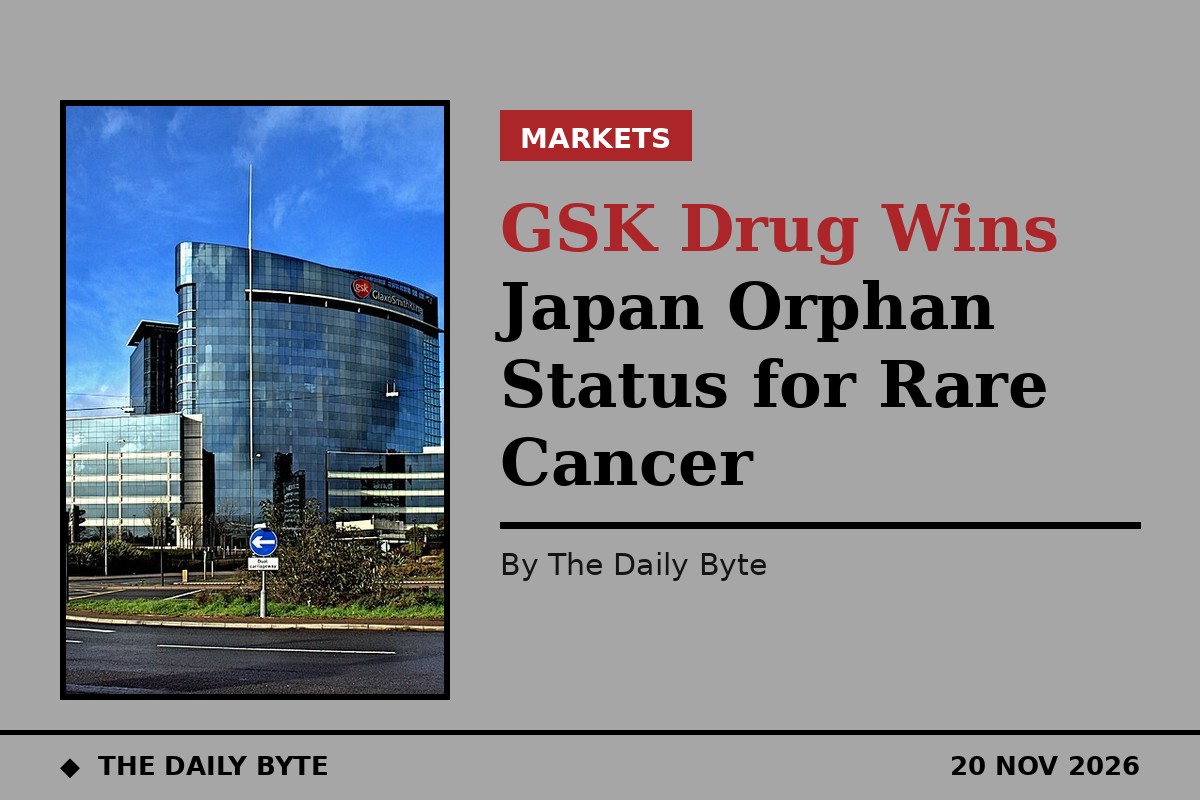
GSK has won orphan drug designation in Japan for velzatinib, its investigational targeted treatment for gastrointestinal stromal tumour (GIST), a rare cancer of the digestive tract.
The London-listed drugmaker announced on Thursday 19 November that Japan's Ministry of Health, Labour and Welfare had granted the designation. Velzatinib is a novel, highly selective KIT inhibitor, also known as IDRX-42, designed specifically for GIST. The designation was supported by data from the ongoing phase I/Ib StrateGIST 1 trial in advanced GIST, which showed promising anti-tumour activity and a promising tolerability profile.
Building on US and EU designations
The Japanese designation adds to velzatinib's existing regulatory incentives. The drug has already been granted Fast Track designation by the US Food and Drug Administration, as well as orphan drug designation in the United States and the European Union. Orphan drug designation is a development incentive for rare diseases with high unmet medical need; it does not itself constitute marketing approval.
GSK said it is accelerating development of the drug, with phase III trials under way in first- and second-line advanced or metastatic GIST. Enrolment in the second-line trial is tracking ahead of schedule, which the company attributed to strong interest from the GIST community, with data expected in the second half of 2027. A separate phase II trial, StrateGIST J, is under way in Japan for patients whose disease has progressed or who cannot tolerate available treatments.
A rare cancer with limited options
GIST is uncommon but serious. GSK's announcement put the global patient population at roughly 80,000 to 120,000 new cases a year, with about 80% of cases driven by KIT mutations and about 90% of patients developing secondary KIT mutations over time. In Japan, incidence is around four cases per 100,000 people.
Further data on velzatinib will be shared at the Connective Tissue Oncology Society annual meeting in Seoul, which runs from 18 to 21 November. GSK said seven abstracts on the drug would be presented, covering clinical analyses by KIT mutation as well as preclinical and translational research.
The designation is a further step in building GSK's oncology pipeline, where targeted therapies for rare cancers sit alongside its larger respiratory, HIV and vaccine businesses. The company cautioned that forward-looking statements about the drug's development are subject to risks and uncertainties.
The drug is designed to hit the mutations that drive the disease. Velzatinib targets all clinically relevant primary and key secondary KIT mutations, the genetic changes that allow GIST tumours to grow and, in many patients, to become resistant to earlier treatments. That breadth of activity is the reason GSK is testing it in both first- and second-line settings, rather than only after other therapies have failed.
Sources: GSK; Morningstar (Alliance News).