Guinea orders Conakry clean-up by 31 December
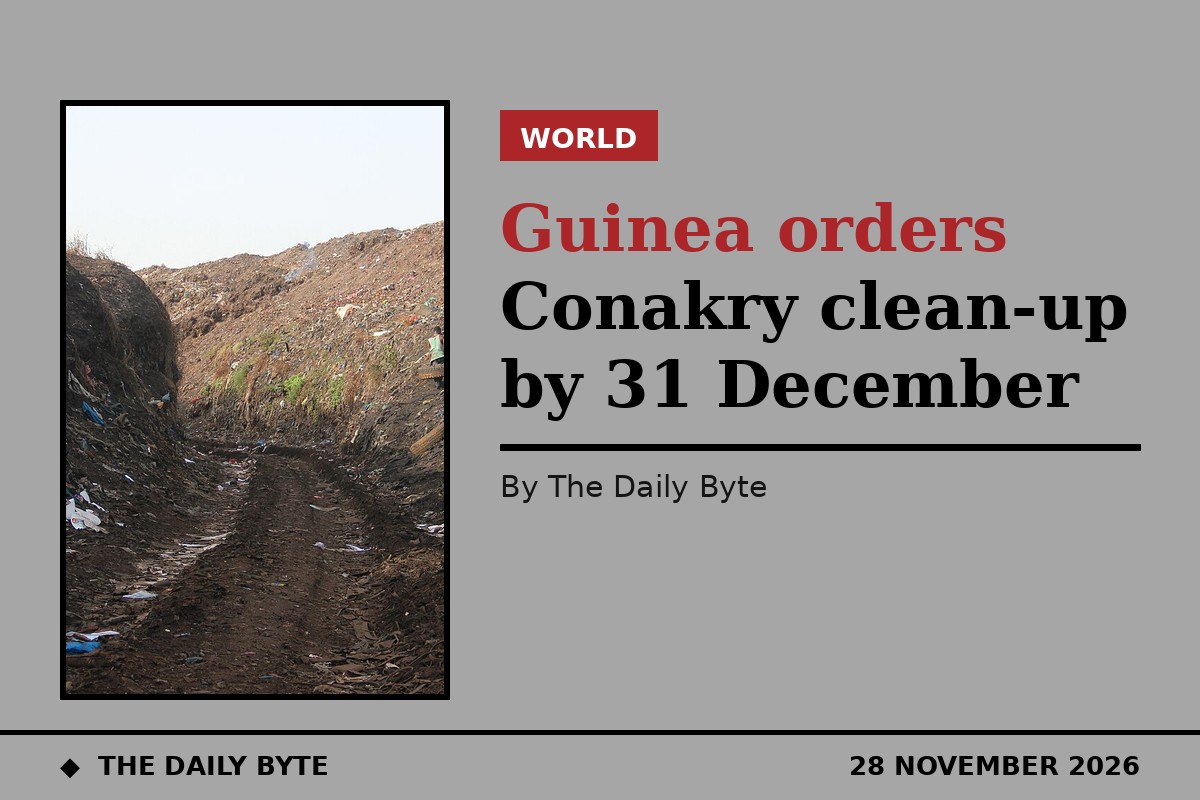
Guinea has ordered residents of its capital, Conakry, to clear rubbish from the streets across the city and its suburbs by 31 December, months after the collapse of the city's main landfill killed 31 people and left Conakry without a working disposal site.
Prime Minister Amadou Oury Bah announced the deadline on Wednesday 25 November at a public forum on sanitation, saying it carried a directive from President Mamady Doumbouya that the capital must be cleaned up before the end of the year. "Conakry must be completely clean by the end of December," Bah said.
The order is the government's response to a waste crisis that has grown steadily since the disaster in August, with rubbish piling up outside homes, beneath bridges and along streets across the fast-growing city.
The dump that closed a city
The crisis dates from 23 August, when heavy rain triggered a landslide at the Dar es Salaam landfill, the main waste dump serving Conakry. Rubbish collapsed onto homes below, killing 31 people and injuring others. The site, in the city's Dar es Salaam area, was subsequently closed permanently.
The closure left Conakry without a working disposal site, and illegal dumping has increased in recent months as waste has had nowhere organised to go. Sanitation Minister Aboubacar Camara told the forum that the city generates about 3,000 tonnes of waste every day, and that much of it is ending up in the streets because of weaknesses in the collection system.
The August tragedy was not the first at the site. Ten people were killed there in a collapse in 2017, and the authorities had ordered nearby residents to move, but many stayed.
A new system for the city's waste
The government says talks with a waste collection operator have been finalised, and that rubbish will be moved through transit and sorting centres to a new disposal site at Baretode, outside the capital, so that collection can restart in an organised way rather than relying on dumping at the closed site.
Bah called on local authorities to take a larger role in organising collection, saying the work could also create employment. "The state will do its part, but the municipalities must also organise themselves to ensure waste collection and provide jobs for young people," he said.
The plan also includes a national sanitation fund intended to guarantee financing for the sector, so that collection, sorting and recycling can be sustained once the immediate drive ends. The first phase of the national clean-up policy, which runs to 2030, is costed at 5.4 billion Guinean francs, about 610,000 dollars.
Under the plan, the old Dar es Salaam site will be converted into an urban park once it has been cleared and made safe, turning the scene of the disaster into public space for the communities that lived beside it.
What happens next
Officials say the 31 December deadline will depend on residents and businesses cooperating with the new collection system, and on enforcement against the illegal dumping that has spread across the capital since the landfill closed.
In the coming weeks, the government is expected to finalise arrangements with the operator chosen to overhaul waste collection and to coordinate with local authorities. If the target is met, it could set a precedent for rapid municipal sanitation reform in the capital; if it is missed, Conakry will enter the new year still living with the piles of rubbish that have accumulated since August. QNC News report | KeNews report


