Guinea Plans $1.9bn Deep-Water Port with US and Chinese Backing
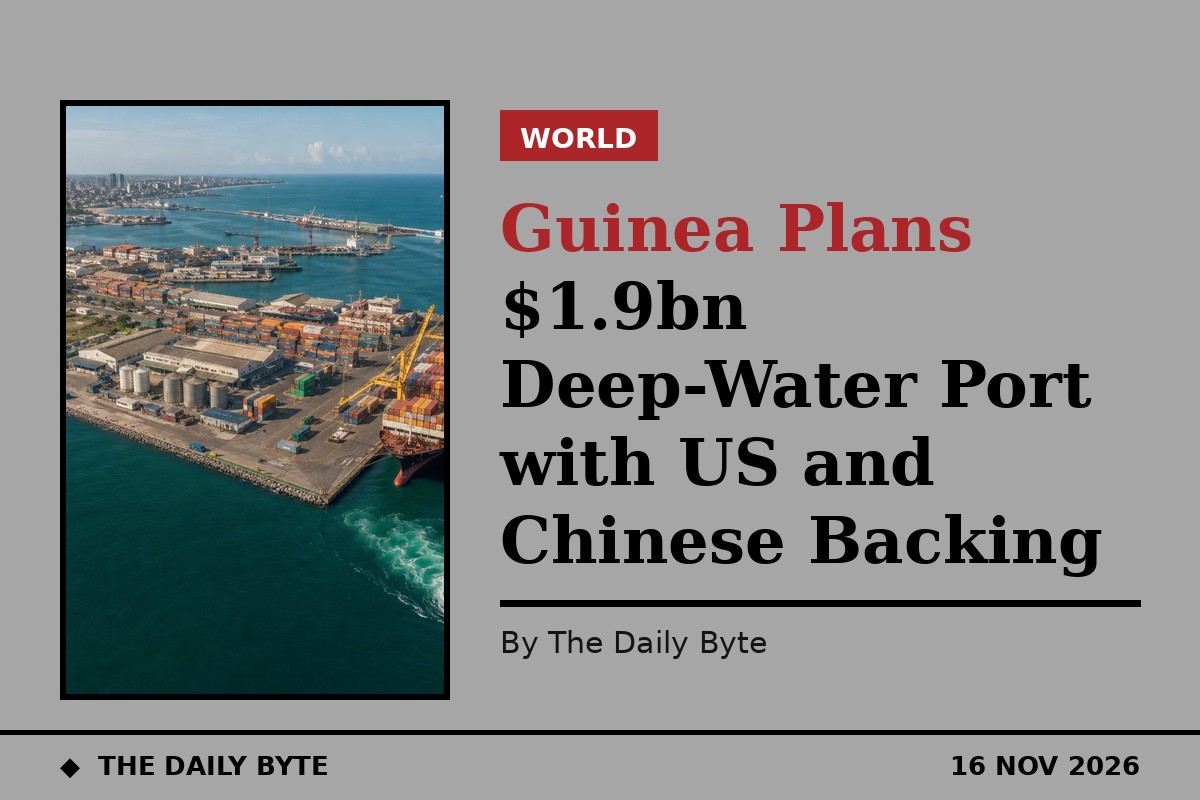
Guinea is seeking backing from the United States, China and multilateral lenders for a planned $1.9 billion deep-water port, aiming to build on the giant Simandou iron ore project and turn the West African country into a regional trade hub.
Mines Minister Bouna Sylla told Reuters that the government had completed feasibility studies for the port and was now engaging a broad group of potential financiers. They include the US International Development Finance Corporation, Chinese investors, the World Bank, the African Development Bank, the Africa Finance Corporation and the International Finance Corporation.
Sylla gave no timeline for selecting investors or for the start of construction. The project is therefore at the financing stage: the design work is done, but the money and the building schedule are not yet settled.
Built for the biggest ships
The planned port would have a 20-metre draft, deep enough to receive Capesize vessels of up to 200,000 metric tons, among the largest bulk carriers in the world. Project documents published by the African Development Bank identify Kouffin, near Kamsar in Boke Prefecture, as the selected site.
The port would be among Africa's largest, and it would be Guinea's biggest infrastructure project since Simandou, the roughly $20 billion iron ore development that shipped its first output last year after decades of delays. Simandou, jointly developed by Rio Tinto, China's Baowu Steel and other partners, includes a 600-kilometre railway and a deep-water export terminal.
Unlike Simandou's infrastructure, which was built mainly to move iron ore from one of the world's largest untapped deposits, the proposed port is intended as a multi-user facility serving miners, container traffic and industrial operators. Sylla said the shift reflected Guinea's broader goal of converting its mineral wealth into a platform for trade.
"Simandou has shown the importance of large-scale infrastructure," he said. "Our objective now is to develop infrastructure that can support mining, trade and industrial development on a much broader scale."
A shift from dedicated terminals to shared infrastructure
Guinea, the world's largest bauxite producer, has largely seen mining companies build dedicated railways and export terminals tailored to individual projects. The new port would mark a shift towards shared infrastructure that could also serve other industries and regional users.
Sylla said the project's economics should make it a compelling alternative to bauxite miners' dedicated rail and port facilities. "It is a port for everyone," he said. "We want to diversify the sources of funding rather than rely on a single source."
The plan also comes as governments and investors compete for influence over the infrastructure behind global mineral supply chains. Guinea's mineral wealth has long drawn outside interest, and the port proposal courts American, Chinese and multilateral backers at the same time, rather than depending on any one of them.
Whether the project moves forward will now depend on financing. Until investors are chosen and construction dates are announced, the $1.9 billion port remains a plan, not a building site, but it is the clearest sign yet of how Guinea intends to use the Simandou boom to reshape its economy beyond a single mine.


