Guinea mining ban clashes kill 10 in Siguiri gold region
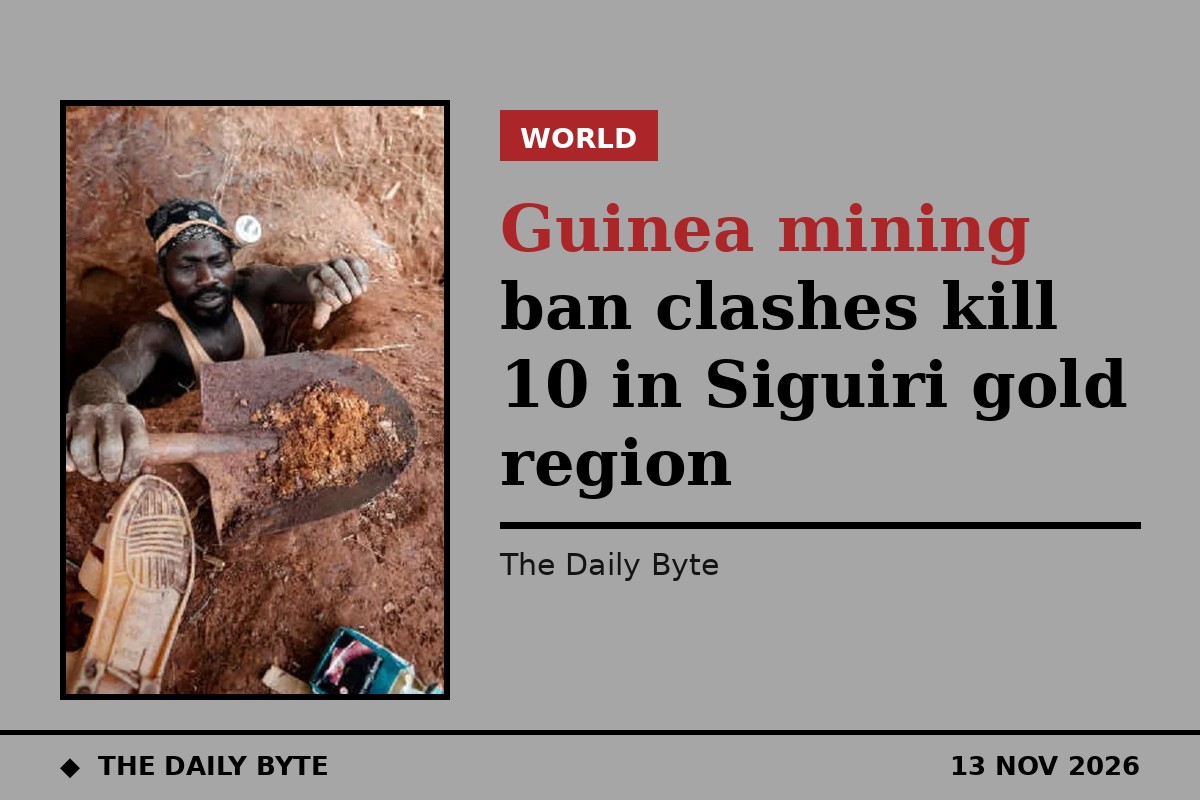
Ten people have been killed in violent clashes with defence and security forces in Guinea's gold-producing region of Siguiri, the country's Ministry of Territorial Administration said, as a government crackdown on artisanal mining triggers a growing exodus into neighbouring countries.
The ministry said late on Thursday that the clashes occurred on Wednesday, when defence and security forces were verifying implementation of the ban on artisanal gold mining in Siguiri, in north-eastern Guinea. Ten people, including five foreign nationals, died and 13 were injured, according to the ministry's provisional figures.
A ban imposed on 2 November
Guinea banned artisanal gold mining in Siguiri on 2 November. Authorities blamed unregulated mining operations for extensive environmental damage, including the contamination of agricultural land and rivers and the destruction of vegetation.
Artisanal mining, driven by growing demand for metals and rising prices, is a common activity across much of West Africa, and the ban has abruptly cut off livelihoods for large numbers of miners, many of them migrants from neighbouring countries.
Thousands cross into Mali and Burkina Faso
The crackdown has produced rapid displacement. Neighbouring Mali said last week that around 100,000 people had arrived in the capital Bamako and nearly 60,000 more in the border town of Kouremale after they were forced to leave Guinea when the ban was announced.
Burkina Faso said on Friday it had repatriated 45,406 of its citizens who were forced to leave Guinea as a result of the ban.
The figures underline the scale of the disruption in a region where informal gold mining supports entire communities, and where the sudden enforcement of the ban has left tens of thousands of people without income and on the move.
Why the ban was imposed
Guinea imposed the ban after authorities blamed unregulated mining operations for extensive environmental damage, including the contamination of agricultural land and rivers and the destruction of vegetation. Siguiri, in the country's north-east, is one of Guinea's main gold-producing areas, and informal mining there supports large numbers of workers, including migrants from Mali, Burkina Faso and other neighbouring states.
Artisanal mining, driven by growing demand for metals and rising prices, is a common activity across much of West Africa. For many families it is the main source of income, which is why a sudden ban enforced by security forces can quickly turn into confrontation and displacement, as it has in Siguiri.
A humanitarian strain across borders
The crackdown has produced a growing humanitarian strain in neighbouring countries, where tens of thousands of people have arrived with little warning and host communities are under pressure. Mali reported around 100,000 arrivals in Bamako and nearly 60,000 more in the border town of Kouremale, while Burkina Faso has begun repatriating its citizens from Guinea.
The casualty figures released by Guinea's Ministry of Territorial Administration are provisional, and the ministry has not yet given a fuller account of the circumstances of the clashes or the identities of those killed, beyond confirming that five of the dead were foreign nationals.
Sources: Reuters and Mining.com.


